


Asparagus Risotto: The Ultimate Spring Recipe & Wine Pairing Guide
Asparagus Risotto: The Ultimate Spring Recipe & Wine Pairing Guide
When spring arrives and fresh asparagus hits the farmers markets, there's one dish that truly captures the essence of the season: asparagus risotto. This elegant Italian classic transforms humble ingredients into something genuinely magical—a creamy, luxurious dish that tastes far more complicated than it actually is. Whether you're cooking for a dinner party or treating yourself to something special on a weeknight, asparagus risotto recipe techniques are surprisingly approachable once you understand the fundamentals.
What makes asparagus risotto truly special isn't just the delicate flavor of fresh spring asparagus—it's the interplay of textures and the rich, umami-forward profile that makes this dish an absolute dream to pair with wine. The creamy rice base, tender asparagus, and sharp Parmesan create a complex flavor landscape that opens up exciting possibilities for wine lovers. Whether you're exploring California whites, Italian Pinot Grigios, or something unexpected from Oregon, asparagus risotto serves as the perfect canvas for discovering new favorite pairings.
In this comprehensive guide, we'll walk you through everything you need to know about making restaurant-quality risotto with asparagus at home, share professional cooking techniques, and help you discover the perfect wines to elevate your dining experience.
About This Dish
Asparagus risotto, or risotto agli asparagi in Italian, represents the heart of spring Italian cuisine. This dish celebrates a very specific moment in the culinary calendar—when fresh asparagus is at peak flavor and local markets overflow with vibrant green spears. The beauty of this asparagus risotto recipe lies in its simplicity and elegance, embodying the Italian philosophy of letting quality ingredients speak for themselves.
The technique of making risotto itself is distinctly Italian, developed over centuries in the rice-growing regions of Northern Italy, particularly Lombardy and Piedmont. Unlike other rice dishes where grains cook independently, risotto demands constant attention and a gradual addition of warm broth. This method releases the rice's natural starches, creating that signature creamy texture without any cream whatsoever—a technique that separates authentic risotto from its imposters.
Asparagus earned its place in Italian cuisine as the quintessential spring vegetable. The Romans cultivated asparagus, and medieval European nobility considered it a delicacy. When combined with risotto, asparagus brings more than just flavor—it brings a certain refinement, a marker of seasonal eating and culinary sophistication. The vegetable's natural sweetness and subtle earthiness complement the rich, buttery rice in ways that feel both comforting and refined.
What makes asparagus risotto particularly compelling for wine enthusiasts is how the dish's flavor profile creates natural bridges to wine pairing. The umami-rich Parmesan, the delicate asparagus notes, and the creamy texture all interact with wine in fascinating ways, making this dish an excellent vehicle for exploring wine pairing principles.
Key Ingredients & Their Role
Understanding each ingredient in asparagus risotto helps you appreciate why this dish works so beautifully and how it pairs with wine.
Asparagus is the star of this show. Fresh, tender asparagus brings a distinctive flavor profile—slightly sweet, with grassy and vegetal notes that hint at spring itself. The vegetable's natural sugars caramelize slightly during cooking, adding depth. When selecting asparagus for your risotto with asparagus, choose firm spears with tight tips and vibrant green color. Thinner asparagus tends to be more tender, though thicker spears offer more substantial texture. The woody ends must be trimmed away, but don't discard them entirely—they add wonderful flavor to the cooking broth.
Arborio Rice is the foundation of any proper risotto. This short-grain Italian rice variety contains high levels of amylopectin starch, which releases gradually during cooking to create that signature creamy consistency. Carnaroli rice serves as an excellent alternative, offering slightly firmer grains. These rice varieties are essential; using long-grain rice or other varieties will not produce authentic risotto texture. The rice should be toasted briefly in fat before adding broth—this step seals the grain's exterior and prevents mushiness.
Parmesan Cheese (Parmigiano-Reggiano, ideally) provides umami depth and richness. This aged cheese brings salty, nutty, savory notes that transform simple rice and broth into something luxurious. The cheese's crystalline structure and complex flavor profile make it irreplaceable in risotto. Always grate it fresh—pre-grated cheese contains anti-caking agents that prevent smooth melting. The Parmesan's umami character is particularly important for wine pairing, as it creates the savory anchor that allows certain wines to shine.
Butter and Olive Oil work together to create richness and mouthfeel. The butter adds a creamy, luxurious quality, while quality extra-virgin olive oil contributes fruity, grassy notes that echo the asparagus. Together, they create the rich base that makes risotto so satisfying. This fat component is crucial for wine pairing—the richness requires wines with sufficient body and acidity to cut through and complement.
White Wine (typically a dry white like Pinot Grigio or Sauvignon Blanc) adds acidity and subtle flavor complexity. The wine's acidity prevents the dish from becoming one-note and adds brightness. During cooking, the alcohol burns off, leaving behind the wine's flavor compounds and acidity.
Vegetable Broth serves as the liquid foundation, gradually absorbed by the rice. Homemade broth made from asparagus trimmings, onion, celery, and carrot creates deeper flavor than store-bought options, though quality vegetable broth works well. The broth's temperature matters—it should be warm when added to the rice, as cold broth interrupts the cooking process.
Shallots replace standard onion in this recipe, offering a more delicate, slightly sweet flavor than yellow onions. Their refined taste complements asparagus better and won't overpower the dish.
Recipe
| Prep Time | 40 minutes |
|---|---|
| Cook Time | 10 minutes |
| Total Time | 50 minutes |
| Servings | 4 |
| Difficulty | Moderate |
Ingredients
- 400 g Asparagus
- 320 g Arborio rice
- 100 g (finely grated) Parmesan cheese
- 2 (finely chopped) Shallots
- 2 tbsp Olive oil
- 125 ml White wine
- 1 liter (warm) Vegetable stock
- 1 (zest and juice) Lemon
- 2 tbsp (fresh, chopped) Parsley
- 50 g Butter
- to taste Freshly ground black pepper
- to taste Salt
Instructions
- Wash and prepare the asparagus by trimming the woody ends. Cut 2/3 of the asparagus into bite-sized pieces and leave the rest whole for garnishing.
- Heat 1 tbsp olive oil in a large pan over medium heat. Add the asparagus pieces (save the whole ones for later) and sauté for 3–4 minutes. Set aside.
- In the same pan, heat the remaining 1 tbsp olive oil and 25 g butter over medium heat.
- Add the finely chopped shallots and cook until soft and translucent, about 3 minutes.
- Add the Arborio rice to the pan and stir well to coat the grains in the oil and butter mixture. Toast the rice for 2–3 minutes.
- Pour in the white wine and stir until it has been completely absorbed by the rice.
- Add the warm vegetable stock, one ladle at a time, stirring frequently and allowing the stock to be absorbed before adding the next ladle. Repeat until the rice is creamy and cooked al dente, about 18–20 minutes.
- While the risotto is cooking, grill the whole asparagus spears for 2–3 minutes on each side until lightly charred and tender. Set aside.
- Once the risotto is ready, stir in the sautéed asparagus pieces, grated Parmesan cheese, the remaining 25 g butter, lemon zest, and chopped parsley. Season with salt and freshly ground black pepper to taste.
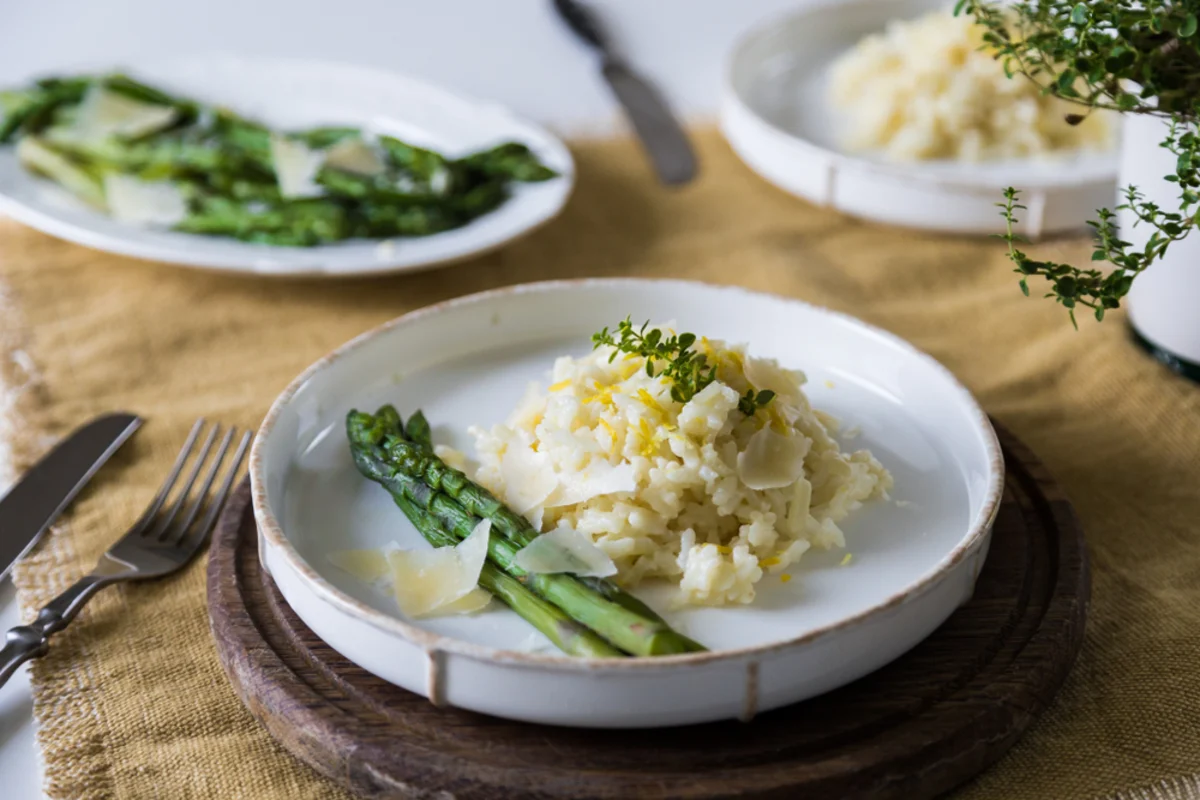
- Serve the risotto on plates, garnished with grilled asparagus spears, a sprinkle of lemon zest, parsley, and additional Parmesan shavings. Enjoy your meal!
Nutrition Facts (per serving)
- Calories: 450 kcal
- Protein: 12.0g
- Fat: 22.0g
- Carbohydrates: 45.0g
- Salt: 2.2g
Dietary Information
Contains gluten, Contains dairy, Nut-free
Perfect Wine Pairings
One of the greatest pleasures of serving asparagus risotto is exploring wine pairings that complement this elegant dish. The combination of creamy rice, umami-rich Parmesan, and delicate asparagus creates multiple flavor bridges that work beautifully with various wine styles.
Why Wine Pairing Matters with Asparagus Risotto
The creamy texture and rich butter and cheese in asparagus risotto demand wines with sufficient acidity to cut through the richness and cleanse the palate between bites. The asparagus brings subtle grassy, vegetal notes that pair naturally with wines exhibiting similar characteristics. The umami from Parmesan requires wines with enough body and complexity to stand up to savory intensity. Meanwhile, the lemon zest in this particular recipe adds brightness that opens up additional pairing possibilities.
Top Wine Recommendations
Sauvignon Blanc represents the classic pairing with asparagus risotto. The wine's herbaceous notes echo the asparagus's grassy character, while its crisp acidity cuts through the creamy rice beautifully. Look for California Sauvignon Blancs from Napa Valley or Sonoma, which tend toward riper fruit while maintaining vibrant acidity. Trader Joe's consistently offers excellent values in this category ($12-18), and you'll find premium options at Total Wine ($20-30). The wine's natural affinity for asparagus makes this pairing feel inevitable—it's a pairing that works because the ingredients seem designed for each other.
Pinot Grigio from Italy or Oregon offers another excellent choice, particularly if you prefer a lighter, more delicate wine. Italian versions bring mineral qualities and subtle stone fruit notes, while Oregon Pinot Grigios often display more body and texture. The wine's clean profile won't compete with the dish's subtle flavors. A quality Pinot Grigio from Trader Joe's ($15-20) or BevMo ($18-25) provides excellent value and pairs beautifully with the lemon-forward asparagus risotto.
Vermentino or other Italian white wines from Sardinia and coastal regions bring wonderful salinity and mineral character that complements the Parmesan's umami notes. These wines are becoming increasingly available at specialty wine shops and Total Wine locations. The slight bitterness in some Vermentinos actually enhances the asparagus's vegetal character, creating a harmonious pairing that feels sophisticated and considered.
Oregon Pinot Noir (yes, a light red!) offers an unexpected but delightful option, particularly if you prefer red wine. The wine's silky tannins, bright red fruit, and subtle earthiness complement the grilled asparagus garnish beautifully. Oregon Pinot Noir has become increasingly accessible in American markets, with excellent options available at Total Wine and specialty retailers ($18-35). The wine's medium body means it won't overwhelm the delicate risotto, while its acidity keeps the pairing fresh and lively.
Cooking Tips & Techniques
Mastering asparagus risotto recipe techniques separates good risotto from exceptional risotto. Here are professional insights that will elevate your cooking.
Temperature Control is Everything: Maintain a steady medium heat throughout cooking. Too high, and the rice cooks unevenly; too low, and it never develops proper texture. The broth should be at a gentle simmer, not a rolling boil. This consistency allows the rice to absorb liquid gradually and release starches evenly.
The Constant Stirring Myth: While risotto requires frequent stirring, you don't need to stir constantly. Stir every 30 seconds or so, ensuring rice doesn't stick to the pan bottom. This rhythm prevents scorching while allowing proper starch release. Constant stirring can actually break down rice grains excessively.
Broth Temperature Matters: Always add warm broth to the rice. Cold broth shocks the cooking process and can result in unevenly cooked grains. Keep your broth at a gentle simmer in a separate pot throughout the cooking process.
Toast Your Rice: Don't skip the step of toasting rice in fat before adding broth. This crucial technique coats each grain and prevents them from becoming mushy. Toast for 2-3 minutes until you hear a faint clicking sound—the grains rubbing together.
Taste as You Go: Begin tasting rice after 15 minutes of cooking. Risotto is done when grains are creamy on the outside but still slightly firm (al dente) at the core. This texture typically takes 18-20 minutes but varies based on rice variety and heat level.
Asparagus Preparation: Trim woody asparagus ends by bending each spear until it breaks naturally—this reveals where the tender part begins. Don't waste those trimmings; add them to your broth for extra flavor.
The Finish is Critical: The final steps transform good risotto into exceptional risotto. Remove from heat before adding the final butter and cheese—the residual heat melts these ingredients perfectly without risking overcooking the rice. This final enrichment creates the signature creamy texture.
Serving Suggestions
How you present and serve asparagus risotto matters as much as how you prepare it. This dish deserves a thoughtful presentation that honors the care you've taken in cooking it.
Use Warm Bowls: Risotto cools quickly, so warm your serving bowls in a low oven for five minutes. This keeps the dish at proper serving temperature and maintains that creamy texture longer.
Plate Immediately: Risotto is best served immediately after finishing. Unlike many dishes, it doesn't improve with sitting. Have guests ready to eat as soon as you plate.
Garnish Generously: The grilled asparagus spears, fresh parsley, lemon zest, and Parmesan shavings aren't just decoration—they add flavor, texture, and visual appeal. Use a vegetable peeler to create delicate Parmesan shavings that look elegant and melt on the tongue.
Pair with Your Chosen Wine: Serve your selected wine in appropriate glasses—white wines in smaller glasses that concentrate aromatics, red wines in larger bowls that allow the wine to breathe. Pour when guests are seated, allowing them to experience the wine's evolution as it warms slightly.
Accompaniments: While asparagus risotto stands beautifully on its own as a first course, you might follow it with a simple green salad dressed with lemon vinaigrette, or serve alongside grilled fish or chicken for a more substantial meal. The risotto's richness means it doesn't need heavy accompaniments.
Create the Dining Experience: Set the table thoughtfully—fresh flowers, proper linens, and unhurried pacing elevate the meal from dinner to an experience. Risotto invites conversation and leisurely eating, so allow time for multiple courses and wine appreciation.
Conclusion
Asparagus risotto represents everything wonderful about seasonal cooking—it celebrates spring's arrival, honors Italian culinary traditions, and creates a dish that feels both comforting and refined. Whether you're cooking this asparagus risotto recipe for the first time or perfecting a technique you've mastered, the combination of creamy rice, tender asparagus, and umami-rich Parmesan never fails to impress.
The true magic emerges when you pair your risotto with asparagus with a wine that complements its flavors. From crisp Sauvignon Blancs to elegant Pinot Grigios, the right wine transforms dinner into something memorable. Use tools like Vinomat to explore pairing possibilities, discover wines from regions you haven't explored, and build your wine knowledge while enjoying exceptional food.
This spring, embrace the season's best ingredient and create asparagus risotto that rivals any restaurant. Your guests—and your palate—will thank you.