


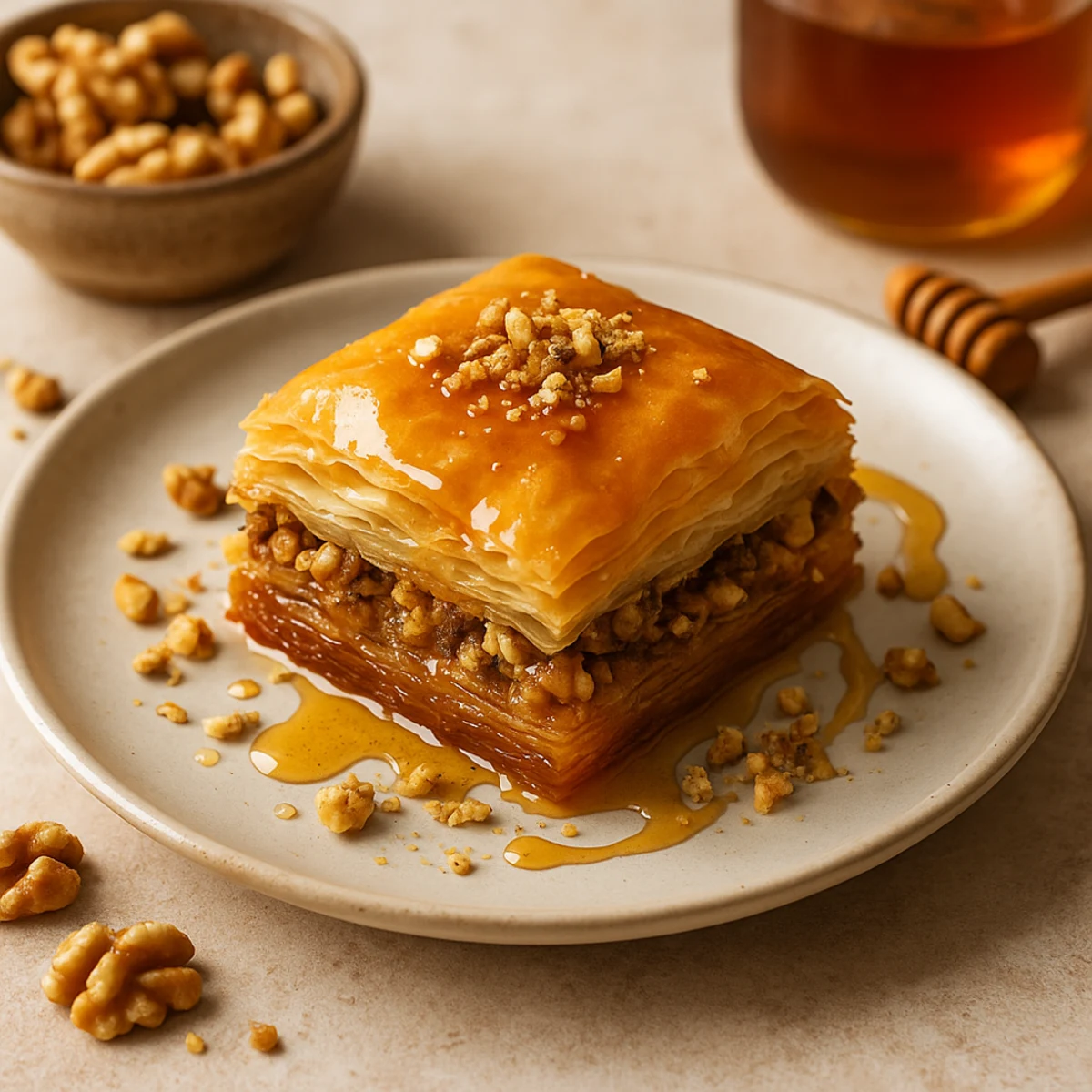
Baklava & Wine Pairing: The Sweet, Flaky Dessert You’ll Love
Introduction
There are desserts that whisper, and then there’s baklava—all crunch, honeyed drip, and toasted walnut aroma in every bite. This classic layered pastry looks like something you’d only find in a great Mediterranean bakery, but with a little patience, you can absolutely make it at home. Even better, baklava is a dream for wine pairing: its sweet, caramelized layers and warm spices are tailor‑made for a glass of dessert wine.
In this guide, you’ll learn how to make a rich, nutty baklava with flaky phyllo dough, a silky honey syrup, and a hint of cinnamon. Then we’ll dive into the best wine for Baklava, from California late harvest wines to luscious European classics you can easily grab at Total Wine, Trader Joe’s, BevMo, or your local shop. By the end, you’ll have both a show‑stopping dessert recipe and a smart wine recommendation for a truly memorable finish to any meal.
About This Dish
Baklava traces its roots to the regions of the former Ottoman Empire, with strong ties to modern‑day Turkey, Greece, and the broader Middle East. It’s long been a celebratory dessert, served at holidays, weddings, and big family gatherings, where trays of golden diamond‑shaped pieces are passed around with strong coffee or sweet wine.
At its heart, baklava is all about contrast: paper‑thin layers of phyllo dough brushed with melted butter and stacked high, wrapped around a core of toasted nuts and finished with a honey‑based syrup that soaks into every layer. Once it rests, the pastry becomes a perfect balance of crispy top, tender interior, and sticky‑sweet, spiced syrup.
In American kitchens, baklava has become a favorite for potlucks, holiday dessert tables, and “wow” moments when you want something beyond the usual pies and cakes. It keeps well for days, travels beautifully, and feels both exotic and comforting. The sweet, caramelized profile—honey, toasted walnuts, buttery pastry, cinnamon—makes it incredibly versatile for wine pairing, especially with late‑harvest whites, fortified wines, and gently spiced dessert wines.
Because this dessert leans sweet and rich, the key is choosing a wine that’s at least as sweet as the baklava itself; otherwise the wine can taste flat or even bitter by comparison. That’s why baklava and wine are such a fun playground for wine lovers: you can explore everything from California dessert wines to classic European bottles and find your own perfect match.
Key Ingredients & Their Role
Baklava looks simple—just pastry, nuts, and syrup—but each component plays a specific role in both flavor and texture, and in how the dish interacts with wine.
Phyllo (Yufka) Dough – Structure & Crunch The incredibly thin sheets of phyllo dough (also called yufka) bake into crisp, shattering layers that give baklava its signature crunch. They don’t bring much flavor on their own, but they act like a sponge for butter and syrup. That buttery, toasty quality is what makes baklava feel so luxurious in the mouth—and what invites wines with good acidity to cut through the richness.
Walnuts – Earthy, Nutty Depth Walnuts are the star nut here, bringing an earthy, slightly bitter edge that keeps the dessert from becoming cloying. They toast in the oven, adding roasted, almost caramelized notes that echo flavors in oak‑aged wines. When you’re thinking about wine pairing, that walnut character works especially well with wines that show nutty, dried‑fruit tones—think tawny port or certain sherries.
Butter – Richness & Aroma Melted butter brushed between every sheet of phyllo is what turns the pastry golden, fragrant, and flaky. It adds depth and a creamy mouthfeel. This natural richness is why you want wines with some freshness and lift—acidity in dessert wines keeps the experience bright instead of heavy.
Honey & Sugar – Sweetness & Glossy Finish The syrup—made with honey, sugar, and water—is what gives baklava its glossy sheen and signature sticky sweetness. Honey adds floral notes and complexity, while sugar locks in that sweet, caramelized profile. Because the dessert is firmly on the sweet side, the wine for Baklava needs to be at least equally sweet, or it will seem sharp or thin.
Cinnamon & Lemon – Warm Spice & Balance Ground cinnamon in the walnut mixture and a touch of lemon juice in the syrup add balance. Cinnamon brings warmth and a hint of spice; lemon provides bright acidity that keeps the syrup from feeling one‑note. These flavors open the door to wines with citrus, spice, or even honeyed notes—late harvest Riesling, Sauternes, and some Italian passito wines are all excellent examples.
Together, these ingredients create a sweet, caramelized, nutty dessert with enough structure and complexity to stand up to serious wines. Understanding these elements makes it much easier to zero in on a wine recommendation that will be a perfect match.
Recipe
| Prep Time | 70 minutes |
|---|---|
| Cook Time | 20 minutes |
| Total Time | 90 minutes |
| Servings | 4 |
| Difficulty | Advanced |
Ingredients:
- 300g Yufka pastry sheets (phyllo dough)
- 200g Walnuts (finely chopped)
- 200g Butter (unsalted, melted)
- 1/2 cup Honey
- 1 cup Granulated sugar
- 3/4 cup Water
- 1 tbsp Lemon juice (freshly squeezed)
- 1 tsp Ground cinnamon
Instructions:
- Preheat the oven to 180°C (350°F). Place the oven rack in the middle position.
- Melt the butter gently in a saucepan over low heat or in the microwave. Set aside to cool slightly.
- Finely chop the walnuts using a knife or food processor and mix them in a bowl with 1/2 tsp ground cinnamon. Set aside.
- Grease a rectangular baking dish (approximately 9x13 inches) with a thin layer of the melted butter using a brush.
- Lay out one sheet of yufka (phyllo dough) into the dish. Brush the sheet evenly with a thin layer of melted butter. Repeat the process until you have layered 5 sheets, brushing each sheet with butter, making sure they remain even and smooth.
- Spread 1/3 of the walnut and cinnamon mixture evenly over the top layer of yufka.
- Repeat the layering process with another 5 sheets of yufka, brushing each with melted butter, followed by another 1/3 of the walnut mixture. Do this until you have three layers of walnuts and end with the final 5 sheets of yufka brushed with butter on top.
- Using a sharp knife, carefully score the top layer of the baklava into a diamond or square pattern. Cut all the way through the layers for easier serving.
- Bake the baklava in the preheated oven for 40-45 minutes, or until golden and crisp. Rotate the dish halfway through to ensure even baking.
- While the baklava is baking, prepare the syrup. In a saucepan, combine the granulated sugar, water, and 1/2 cup honey. Heat over medium heat, stirring until the sugar dissolves.
- Add 1 tbsp lemon juice and bring the syrup to a simmer. Reduce heat and let it cook for 8-10 minutes until slightly thickened. Remove from heat and let it cool to room temperature.
- Once the baklava is out of the oven, immediately pour the cooled syrup evenly over the entire surface. Let the baklava sit for at least 4-6 hours (preferably overnight) to absorb the syrup completely.
- Garnish with a light dusting of ground cinnamon (optional) or additional finely chopped walnuts. Serve at room temperature as individual diamond-shaped pieces on a plate.
Nutrition Facts (per serving):
- Calories: 600 kcal
- Protein: 8.0g
- Fat: 45.0g
- Carbohydrates: 65.0g
- Salt: 0.2g
Dietary Information: Contains gluten, Contains dairy, Contains nuts
Perfect Wine Pairings
Because baklava is both very sweet and quite rich, the perfect wine pairing usually comes from the dessert or fortified wine shelves. The golden rule: choose a wine that is at least as sweet as the baklava, with good acidity to keep everything in balance.
What to Look For in a Wine for Baklava
- Sweetness: Medium‑sweet to lusciously sweet, so the wine doesn’t taste sour next to the dessert.
- Acidity: Enough brightness to cut through butter, nuts, and syrup.
- Body: Medium‑full body to match the density and texture of baklava.
- Flavor profile: Notes of honey, dried apricot, citrus peel, nuts, and warm spice are a perfect match for the dessert.
You can find all of the styles below in the $15–$30 range at Total Wine, Trader Joe’s, BevMo, and well‑stocked local shops.
1. Late Harvest Riesling (California, Washington, or Germany)
A late harvest Riesling is one of the most reliable choices for wine for Baklava. These wines are sweet, but with vibrant acidity and flavors of apricot, peach, and honey that echo the dessert’s honey syrup.
- Look for: Bottles from California or Washington State, or classic German Spätlese/Auslese.
- Why it works: The bright citrus and stone fruit cut through the butter and nuts, while the honeyed finish lines up with the syrup.
2. Sauternes or Other Botrytized Dessert Wines (France & U.S.)
If you want a more luxurious wine recommendation, Sauternes from Bordeaux or domestic botrytized wines are stunning with baklava.
- Flavor profile: Honey, candied citrus peel, marmalade, dried apricot, sometimes a hint of saffron.
- Why it works: These wines have both intensity and acidity, mirroring the dessert’s sweetness while adding layers of complexity.
3. Vin Santo or Passito (Italy)
Italian dessert wines like Vin Santo (Tuscany) or Passito (dried‑grape wines from various regions) bring dried fruit, almond, and caramel notes that resonate with walnuts and baked phyllo.
- Find them: Often in the dessert section at Total Wine or BevMo; Trader Joe’s frequently stocks good value Italian passito wines.
- Why it works: Nutty, raisined flavors and a slightly oxidative character pair beautifully with the toasted walnuts and cinnamon.
4. Tawny Port or Moscatel (Portugal & Spain)
For something more robust, a 10‑year Tawny Port or Spanish Moscatel is a bold, crowd‑pleasing wine pairing.
- Tawny Port: Think caramel, toffee, toasted nuts, and dried figs—flavors that feel tailor‑made for baklava’s sweet, caramelized profile.
- Moscatel: Floral, grapey, orange‑blossom notes that lift the spices and honey.
All of these wines are widely available in the U.S. and slot nicely into the $15–$30 range, especially at big retailers like Total Wine, Trader Joe’s, and BevMo. If you’re unsure where to start, you can plug “baklava” into Vinomat and let the app suggest a perfect match from bottles you can actually buy near you.
Cooking Tips & Techniques
Baklava is labeled “advanced” more for technique and patience than for actual difficulty. A few pro tips will dramatically improve your results:
- Thaw and handle phyllo correctly. Keep it covered with a barely damp kitchen towel while you work so it doesn’t dry out and crack. Work steadily but don’t rush.
- Brush, don’t drench, with butter. Each sheet should be lightly and evenly coated. Too much butter can make the layers heavy and greasy instead of flaky.
- Chop the walnuts finely, not into a paste. You want small, even pieces that layer easily and give a uniform texture.
- Score before baking. Cut your diamonds or squares all the way through the layers before the pan goes into the oven. Once baked, the pastry will be too crisp to cut cleanly.
- Bake until deeply golden. Color equals flavor. Aim for a rich golden brown; too pale and the baklava will be soft instead of crisp.
- Cool syrup, hot baklava. Pour cooled syrup over hot pastry right out of the oven. This contrast helps the pastry soak up the syrup without turning soggy in the wrong places.
- Be patient with resting time. Let the baklava sit at least 4–6 hours, preferably overnight, so the syrup fully absorbs and the flavors meld.
Follow these steps and you’ll get crisp top layers, tender interiors, and that irresistible honeyed shine every time.
Serving Suggestions
Baklava is rich, so a little goes a long way. Cut it into neat diamond‑shaped pieces and serve at room temperature, when the texture is at its best—crisp on top, tender and syrupy inside.
For a simple but elegant presentation:
- Arrange pieces on a large platter or slate board, slightly overlapping.
- Garnish with a sprinkle of finely chopped walnuts or a light dusting of cinnamon.
- Add a few lemon slices or curls of lemon zest on the side to hint at the citrus in the syrup.
To turn baklava and wine into a full dessert moment:
- Serve with small cups of strong coffee or espresso.
- Pour 2–3 oz pours of your chosen dessert wine in small glasses so the sweetness doesn’t overwhelm.
- If you’d like a contrast, a dollop of unsweetened Greek yogurt on the side adds a tangy, creamy counterpoint to the sweet, caramelized pastry.
For gatherings, set up a baklava and wine pairing station: a tray of baklava, 2–3 different dessert wines, and note cards describing each bottle. Use Vinomat to guide your guests toward their ideal wine recommendation, then let them taste and compare to find their personal perfect match.
Conclusion
Baklava is one of those desserts that instantly transforms an ordinary evening into something special: crisp phyllo, toasted walnuts, and silky honey syrup all layered into a slice of pure comfort. Paired with the right bottle, it becomes a showcase for how powerful and fun wine pairing can be.
Whether you pick up a late harvest Riesling from Washington, a California dessert wine, or a classic European sweet wine from your local shop, there’s a wine for Baklava that fits your taste and budget. Use Vinomat to explore new bottles, get a tailored wine recommendation, and discover your own perfect match for this sweet, caramelized classic.