


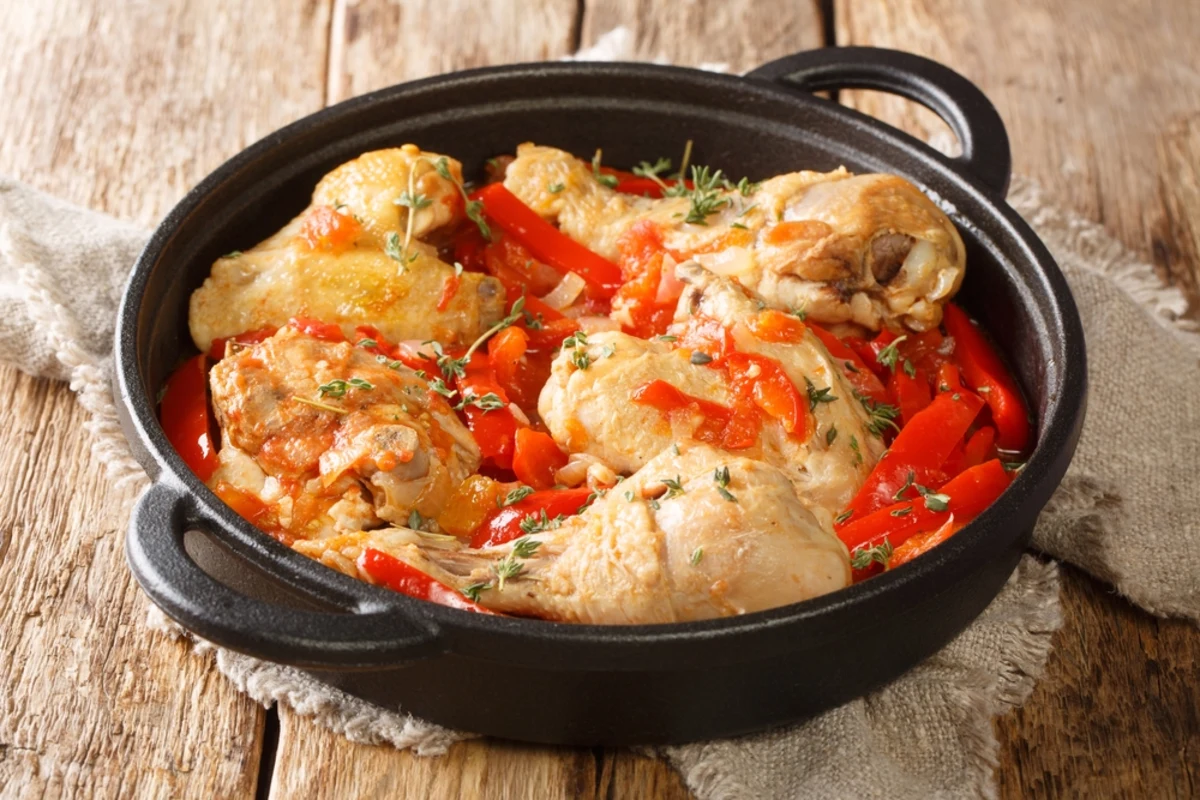
Basque Chicken & Wine Pairing: A Cozy One-Pan Classic
Basque Chicken & Wine Pairing: Your New Favorite Cozy Dinner
If you love the idea of a rustic, one-pan chicken dinner that tastes like it simmered all afternoon in a French farmhouse kitchen, Basque Chicken belongs on your table. Tender chicken thighs, silky bell peppers, and juicy tomatoes come together in a sweet-savory sauce that begs for bread – and for a great glass of wine.
This is the kind of recipe that instantly feels special but is absolutely doable on a weeknight. Even better, its layers of umami and natural sweetness make it a dream for wine lovers. Whether you’re just starting to explore wine pairing or you already have a favorite corner at your local shop, Basque Chicken offers a perfect match for a wide range of bottles.
In this post, you’ll get a straightforward, US-friendly Basque Chicken recipe plus clear, no-jargon guidance on choosing the best wine for Basque Chicken. With the help of Vinomat, you can explore pairings from California, Oregon, Washington, and classic European regions – all in the very reasonable $15–$30 range from places like Total Wine, Trader Joe’s, and BevMo.
About This Dish
Basque Chicken, or poulet basquaise, comes from the Basque Country, a region that straddles the border between France and Spain along the Atlantic coast. It’s a place known for bold flavors, generous hospitality, and simple ingredients treated with real care.
At the heart of this dish is piperade, a traditional Basque mixture of peppers, tomatoes, onions, and garlic, gently cooked down into a rich, saucy base. The chicken is nestled into this vegetable stew and slowly simmered until it becomes tender and infused with all those sweet, savory, and slightly smoky aromas.
Unlike cream-heavy or overly rich casseroles, Basque Chicken is comforting but bright. The tomatoes bring tang and umami, the peppers contribute gentle sweetness, and a splash of dry white wine and chicken stock creates a light, flavorful sauce rather than a heavy gravy. That balance makes it ideal for modern American home cooks who want full flavor without feeling weighed down.
Culturally, this dish reflects the Basque love of seasonal produce and family-style dining. It’s typically served straight from the pan, shared in the middle of the table with rice, potatoes, or crusty bread. For US cooks, it’s a fantastic alternative to the usual roast chicken or tomato pasta night – familiar enough not to be intimidating, but different enough to feel like a mini escape to Europe.
And because the flavor profile sits at the intersection of umami, gentle sweetness, and bright acidity, Basque Chicken is incredibly flexible when it comes to wine pairing. From a juicy Spanish red to a vibrant Oregon Pinot Noir, there’s plenty of room to play.
Key Ingredients & Their Role
What makes this Basque Chicken recipe so satisfying is how a few simple ingredients each do an important job – both on the plate and in your wine glass.
Chicken Thighs
Bone-in, skin-on chicken thighs deliver deep flavor and stay juicy during a gentle simmer. The rendered chicken fat enriches the sauce and adds a savory backbone that pairs beautifully with medium-bodied reds and fuller whites.
Wine note: That extra richness calls for wines with good acidity to keep each bite feeling fresh. Think dry whites like Sauvignon Blanc or Rioja Blanco and reds like Pinot Noir or Tempranillo.
Bell Peppers
Three red bell peppers, sliced into ribbons, introduce a natural sweetness and soft, almost jammy texture as they cook down. They are essential to the piperade-style sauce.
Wine note: Sweet red peppers echo the red-fruit notes in many wines. Look for reds with red cherry, strawberry, or raspberry flavors and moderate tannins – classic Oregon Pinot Noir or a lighter Spanish Garnacha are excellent choices.
Tomatoes & Tomato Paste
Fresh tomatoes and a touch of tomato paste build depth, umami, and gentle acidity. As they simmer, they break down into a glossy, flavorful sauce that coats each piece of chicken.
Wine note: Tomato-based dishes like this lean toward high-acid wines so the wine doesn’t taste flat beside the sauce. Italian-style reds, bright New World Pinots, and zesty whites like Albariño or Sauvignon Blanc are perfect matches.
Onion & Garlic
Finely chopped onion and minced garlic lay down the aromatic foundation. They caramelize slightly in the butter and olive oil, adding sweetness and complexity.
Wine note: These aromatics don’t dictate wine choice, but they add savory layers that pair well with wines showing herbal or earthy notes, such as French reds from the Rhône or California blends with a touch of spice.
Butter & Olive Oil
The combination of butter and olive oil helps brown the chicken and soften the vegetables. Butter adds roundness and a slightly creamy feel on the palate; olive oil keeps the dish rooted in Mediterranean character.
Wine note: This gentle richness nudges you toward wines with some texture and body, not ultra-light whites. A medium-bodied Chardonnay (unoaked or lightly oaked), a richer rosé, or a smooth Washington State red blend all work well.
White Wine & Chicken Stock
A quick deglaze with dry white wine lifts all the browned bits from the pan, infusing the sauce with bright, adult flavor. Chicken stock adds savoriness and volume without heaviness.
Wine note: Because wine is in the dish, it’s smart to pour something in the same style in your glass – a dry, crisp white with good acidity. Think California Sauvignon Blanc or an easy-drinking Spanish or French white.
Fresh Thyme, Salt & Pepper
Fresh thyme brings a gentle herbal note, while salt and freshly ground black pepper sharpen all the flavors. Thyme in particular mirrors the herbal accents found in many European wines.
Wine note: Wines with hints of dried herbs, garrigue, or earth – like Côtes du Rhône, Rioja, or some Sonoma reds – echo the thyme and enhance the savory side of the dish.
Taken together, these ingredients create a dish that is savory, gently sweet, and lightly tangy – an ideal canvas to explore different wine pairing options.
Recipe
| Prep Time | 50 minutes |
|---|---|
| Cook Time | 10 minutes |
| Total Time | 60 minutes |
| Servings | 4 |
| Difficulty | Moderate |
Ingredients:
- 8 pieces Chicken thighs (bone-in, skin-on)
- 2 tbsp Butter
- 2 tbsp Olive oil
- 1 large Yellow onion (finely chopped)
- 3 cloves Garlic cloves (minced)
- 3 large Red bell peppers (sliced into strips)
- 4 large Tomatoes (roughly chopped)
- 1/2 cup Dry white wine
- 1/2 cup Chicken stock
- 2 tbsp Tomato paste
- 4 sprigs Fresh thyme sprigs (optional for garnish)
- to taste Salt
- to taste Black pepper (freshly ground)
Instructions:
- Prepare all vegetables: finely chop the onion, mince the garlic, slice the red bell peppers into strips, and roughly chop the tomatoes.
- Season the chicken thighs with salt and freshly ground black pepper on both sides.
- Heat 1 tbsp of olive oil and 1 tbsp of butter in a large skillet or Dutch oven over medium-high heat.
- Sear the chicken thighs skin-side down first until golden brown, about 4-5 minutes. Flip and sear the other side for 4-5 minutes. Remove and set aside.
- Reduce heat to medium. In the same skillet, add the remaining olive oil and butter. Sauté the chopped onion until soft and translucent, about 3-4 minutes.
- Add the minced garlic and cook for another minute until fragrant.
- Add the sliced bell peppers and sauté for 5 minutes until slightly softened.
- Stir in the chopped tomatoes and tomato paste, cooking for another 2-3 minutes.
- Deglaze the pan with the white wine, scraping the bottom of the pan to release any browned bits. Allow the wine to reduce slightly for about 2 minutes.
- Pour in the chicken stock, mix well, and bring the mixture to a gentle simmer.
- Return the chicken thighs to the skillet, nestling them into the vegetable mixture. Reduce the heat to low, cover, and simmer for 30 minutes.
- Taste the sauce and adjust seasoning with salt and pepper, if needed.
- Garnish with fresh thyme sprigs before serving.
- To plate, arrange the chicken thighs on a serving dish and spoon the vegetable mixture around them for an elegant presentation.
Nutrition Facts (per serving):
- Calories: 350 kcal
- Protein: 35.0g
- Fat: 22.0g
- Carbohydrates: 15.0g
- Salt: 1.5g
Dietary Information: Gluten-free, Dairy-free, Nut-free
Perfect Wine Pairings
Basque Chicken may taste like comfort food, but from a wine pairing perspective it’s surprisingly sophisticated. You’ve got juicy chicken, sweet peppers, tangy tomatoes, and a light, savory sauce – a combination that loves wines with bright acidity, moderate tannins, and lots of red fruit or citrus.
Below are wine styles that work beautifully, with easy wine recommendation ideas you can find at US retailers like Total Wine, Trader Joe’s, and BevMo, typically in the $15–$30 range.
1. Pinot Noir (Oregon & California) – A Classic, Flexible Red
For many wine lovers, Pinot Noir is the perfect match here. Its red fruit (cherry, raspberry, cranberry), subtle earthiness, and fresh acidity line up perfectly with the sweet peppers and tomato-based sauce.
- Oregon Pinot Noir: Often lighter and more delicate, with bright acidity and red berry notes. Great if you prefer an elegant, food-friendly red.
- Sonoma or Monterey Pinot Noir (California): Usually a touch riper and juicier, with soft tannins that complement the richness of the chicken without overpowering it.
Look for bottles labeled “Willamette Valley” from Oregon or “Sonoma Coast” from California in the $18–$28 range at Total Wine or BevMo.
2. Tempranillo & Rioja – A Spanish Nod to Basque Roots
To honor the dish’s Basque heritage, reach for Tempranillo, especially from Rioja in Spain. These wines often show red cherry, plum, dried herbs, and a hint of spice, which echo the thyme and roasted flavors in the dish.
- Choose Crianza or Reserva level Rioja for a good balance of fruit, oak, and acidity.
- Tannins are usually moderate, making it a friendly wine for both chicken and tomato-based sauces.
You’ll find solid options at Trader Joe’s and Total Wine starting around $12, with excellent values in the $15–$22 range.
3. Dry, High-Acid Whites – Sauvignon Blanc, Albariño, and Friends
If you prefer white wine, don’t hesitate: this dish works wonderfully with crisp, dry whites that can handle tomatoes and peppers.
- California Sauvignon Blanc (Napa, Sonoma, or Central Coast): Think zesty citrus, green apple, and herbal notes that mirror the thyme and cut through the richness.
- Albariño (Spain) or Verdejo: Bright, saline, and aromatic – they pair beautifully with the savory-sweet sauce and keep the meal feeling light.
- French whites from the Loire (Sancerre, Touraine Sauvignon Blanc) are also excellent if you like a leaner, mineral style.
Look for these in the $15–$25 sweet spot. Trader Joe’s often has budget-friendly Sauvignon Blanc, while Total Wine and BevMo carry a wide range of Albariño and Loire options.
4. Medium-Bodied Red Blends from Washington State
For red-wine fans who like a bit more structure, Washington State red blends (often based on Merlot, Syrah, or Cabernet) can be terrific with Basque Chicken, as long as the tannins aren’t too aggressive.
- Look for blends described as “smooth,” “juicy,” or “easy-drinking” rather than heavily oaked or high-tannin.
- The dark fruit and subtle spice play nicely with the caramelized onions and garlic, while good acidity keeps the pairing lively.
In the $18–$30 range at BevMo or Total Wine, these wines can elevate your Basque Chicken from cozy dinner to dinner-party centerpiece.
Quick Wine for Basque Chicken Cheat Sheet
- Want red? Pinot Noir or Rioja are your safest bets.
- Want white? Go for Sauvignon Blanc or Albariño.
- Want to explore? Try a Washington State red blend in a softer style.
For more personalized pairings – including specific labels available near you – use Vinomat to scan or search bottles and instantly see how well they match this recipe.
Cooking Tips & Techniques
Basque Chicken is straightforward, but a few smart moves will give you restaurant-quality results.
Get Deep Color on the Chicken
Take your time when searing the chicken thighs. You want a deep golden-brown skin before you move on. This browning creates flavor and boosts the sauce’s richness.
- Don’t overcrowd the pan – work in batches if needed.
- Let the chicken release naturally; if it sticks, give it another minute.
Build Flavor in Layers
Use the same pan from the chicken to cook the onions, garlic, peppers, and tomatoes. All those browned bits on the bottom are pure flavor.
- Scrape them up when you deglaze with white wine.
- Let the vegetables soften and sweeten; don’t rush this step.
Balance the Sauce
After simmering, taste your sauce:
- If it needs brightness, add a tiny splash of extra white wine or a squeeze of lemon.
- If it’s too sharp, let it simmer a few more minutes to mellow, or add a small knob of butter to round it out.
Avoid Overcooking the Chicken
Simmer gently on low heat. A strong boil can toughen the meat. You want a quiet burble – the chicken should be tender and juicy by the end of the 30-minute simmer.
Make Ahead & Reheat
Basque Chicken actually tastes even better the next day as the flavors meld.
- Cool completely, then refrigerate in an airtight container.
- Reheat slowly over low heat, adding a splash of stock or water if the sauce thickens too much.
This make-ahead friendliness also makes it a great option for entertaining with an easy built-in wine pairing experience for guests.
Serving Suggestions
To really show off this dish and your wine pairing skills, think about your sides and presentation.
What to Serve With Basque Chicken
- Rice or pilaf: A simple white rice or herbed rice pilaf soaks up the sauce without competing with the flavors.
- Mashed or roasted potatoes: Rustic and comforting, perfect if you’re pouring a heartier red.
- Crusty bread: A must if you like to swipe up every last bit of sauce.
- Simple green salad: Lightly dressed mixed greens with a lemony vinaigrette help reset the palate between bites.
How to Plate
- Arrange the chicken thighs on a warm platter.
- Spoon the glossy peppers, tomatoes, and onions generously around and over the chicken.
- Garnish with fresh thyme sprigs for color and aroma.
Set the table with wine glasses suited to your pairing – slightly larger glasses for red wines like Pinot Noir or Rioja, and medium-sized white wine glasses for Sauvignon Blanc or Albariño. Place the bottle on the table so guests can see what they’re drinking, and consider pouring a small taste of a second wine so everyone can experience how different pairings change the dish.
This isn’t just dinner; it’s an easy at-home tasting experience.
Conclusion
Basque Chicken is everything we crave in a weeknight or weekend meal: comforting, colorful, and deeply flavorful, without demanding complicated techniques. Its blend of umami-rich tomatoes, sweet peppers, and savory chicken makes it an ideal playground for exploring wine pairing at home.
Whether you reach for a silky Oregon Pinot Noir, a vibrant Rioja, or a crisp California Sauvignon Blanc, you’ll find a perfect match for this dish in the $15–$30 range at familiar US shops like Total Wine, Trader Joe’s, and BevMo. And with Vinomat by your side, you can discover new bottles, compare options, and dial in the best wine for Basque Chicken every time you cook it.
Fire up the stove, open a good bottle, and let this Basque classic turn an ordinary evening into something worth lingering over.