


Cacio e Pepe Recipe: Authentic Roman Pasta with Wine Pairings
Cacio e Pepe Recipe: Authentic Roman Pasta with Wine Pairings
There's something magical about a dish that transforms just a handful of pantry staples into pure comfort on a plate. If you're searching for the cacio e pepe recipe that captures the soul of Rome, you've landed in the right spot. This iconic pasta, meaning "cheese and pepper," delivers creamy, peppery bliss with spaghetti, Pecorino Romano, and freshly cracked black pepper. It's the ultimate weeknight indulgence for food enthusiasts and wine lovers alike.
What elevates this cacio e pepe recipe? Its simplicity demands precision, resulting in a sauce that's silky without cream—pure genius. Pair it with a crisp white wine, and you're in elevated dining territory. At Vinomat, our premium wine and food pairing app, we love how this dish shines with accessible bottles from Total Wine or Trader Joe's. Whether you're a home cook craving authenticity or hosting a dinner party, this guide has you covered. Let's dive into making the best cacio e pepe recipe that'll have guests raving.
About This Dish
Cacio e pepe hails from Rome's working-class trattorias, a testament to la cucina povera—poor man's cooking that punches way above its weight. Shepherds in the Lazio region created it centuries ago using staples they carried: aged Pecorino Romano for preservation, black pepper for warmth, and pasta for sustenance. No frills, just bold flavors that have endured.
Pronounced "KAH-cho eh PEH-peh," it translates to cheese (cacio) and pepper (pepe). As one of Rome's "big four" pastas—alongside carbonara, amatriciana, and gricia—it's celebrated for its minimalist perfection. The magic? A creamy emulsion from pasta water, cheese, and starch, no butter or cream needed in the purest forms, though our cacio e pepe recipe includes a touch of butter for that velvety edge.
In the U.S., cacio e pepe has exploded in popularity, thanks to chefs like those inspiring the cacio e pepe recipe Giada style—simple, vibrant Italian fare—or Anthony Bourdain's no-nonsense take on the cacio e pepe Anthony Bourdain recipe. It's gone viral on social media, drawing home cooks who want cacio e pepe recipe authentic results without a plane ticket to Trastevere. The dish's cultural pull lies in its purity: salty umami from Pecorino, spicy kick from pepper, all clinging to al dente spaghetti. It's gluten-free dreams aside (it contains gluten), it's nut-free and ready in 20 minutes.
For wine lovers, cacio e pepe's profile—salty, fatty, spicy—begs for wines with acidity to cut through richness and fruit to balance pepper. Think vibrant whites or light reds. This dish embodies Italy's genius for harmony, much like a perfect wine pairing. Exploring it through Vinomat unlocks endless matches tailored to your bottle.
Key Ingredients & Their Role
The beauty of an authentic cacio e pepe recipe lies in its restraint: four core elements working in symphony. Spaghetti provides the sturdy canvas, its starch key to sauce emulsification. Opt for bronze-die pasta from grocery stores—its rough texture grabs sauce like a dream.
Pecorino Romano is the star, a sheep's milk cheese aged for sharp, salty umami. Finely grated (microplane is best), it melts into creaminess without clumping. Why Pecorino over Parmesan? Its funk cuts richer flavors, essential for balance. In the U.S., find authentic DOP Pecorino at Trader Joe's or Total Wine cheese sections—worth the splurge.
Freshly ground black pepper delivers heat and aroma. Toast it to bloom essential oils, transforming it from mere spice to soul-warming depth. Use Tellicherry or Kampot for extra punch; pre-ground won't cut it in this cacio e pepe recipe authentic pursuit.
Butter (unsalted) adds silkiness, bridging pasta water's starch to cheese. Reserved pasta water is the unsung hero—starchy gold that creates emulsion, preventing grainy cheese balls. Salt seasons subtly; too much overpowers Pecorino's salinity.
These ingredients harmonize: pepper's spice tempers cheese's salt, fat coats the palate, starch binds it. For wine pairing, Pecorino's intensity pairs with high-acid wines to refresh, while pepper loves fruity notes. A California Chardonnay's oak might clash, but its acidity sings. Our cacio e pepe recipe highlights these roles, making pro results foolproof. Subtle tweaks nod to variations like best cacio e pepe recipe tweaks from Italian masters.
Cacio e pepe price? Budget-friendly: $10-15 for four servings. Pecorino runs $10/lb at local shops, spaghetti pennies per pound. It's value-packed luxury.
Recipe
| Prep Time | 15 minutes |
|---|---|
| Cook Time | 5 minutes |
| Total Time | 20 minutes |
| Servings | 4 |
| Difficulty | Easy |
Ingredients:
- 400g Spaghetti
- 100g Pecorino Romano cheese (finely grated)
- 50g Butter (unsalted)
- 2 tsp Black pepper (freshly ground)
- 1 tsp (for pasta water) Salt
- 1 cup (reserve during cooking) Pasta water
Instructions:
- Bring a large pot of water to a boil. Add 1 tsp of salt to the water to season it well.
- Cook the spaghetti according to the package instructions until al dente. Reserve 1 cup of the starchy pasta water before draining the spaghetti.
- While the pasta is cooking, freshly grind the black pepper and finely grate the Pecorino Romano cheese using a microplane or fine grater.
- In a large skillet, melt the butter over medium heat. Add the freshly ground black pepper and toast it gently for about 1-2 minutes to release its aroma.
- Reduce the heat to low. Add half of the reserved pasta water to the skillet, stirring to combine with the butter and pepper.
- Add the cooked spaghetti to the skillet and toss it in the butter-pepper mixture.
- Gradually sprinkle in the grated Pecorino Romano cheese while tossing the pasta. Add more reserved pasta water, a bit at a time, to create a creamy sauce. Keep tossing until the sauce coats the spaghetti evenly.
- Taste the sauce and adjust the seasoning with additional salt if needed.
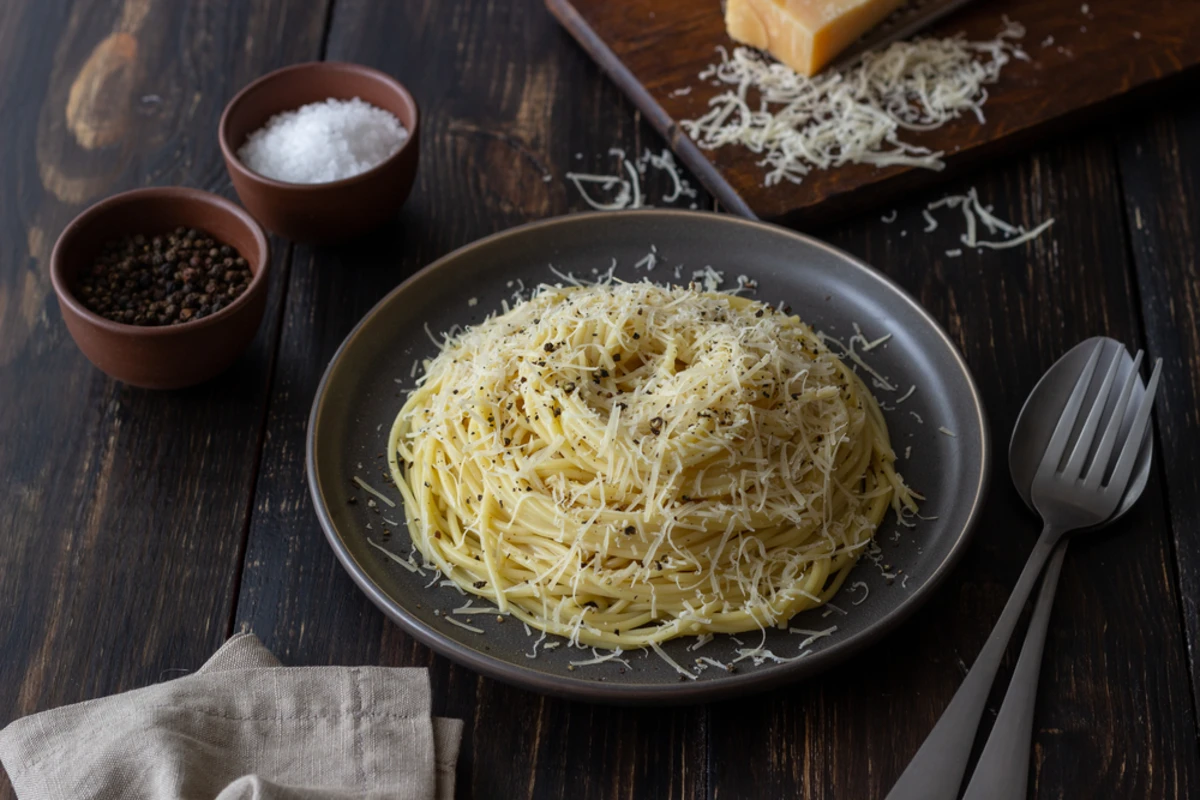
- Serve the spaghetti on individual plates, arranged in neat nests for an elegant presentation. Garnish with extra Pecorino Romano cheese and a touch of freshly ground black pepper.
Nutrition Facts (per serving):
- Calories: 420 kcal
- Protein: 15.0g
- Fat: 22.0g
- Carbohydrates: 58.0g
- Salt: 1.2g
Dietary Information: Contains gluten, Contains dairy, Nut-free
Perfect Wine Pairings
Pairing wine with cacio e pepe recipe is about countering its salty, peppery punch with acidity, subtle fruit, and minerality. The dish's richness demands refreshment—high-acid whites excel, cutting Pecorino's fat while fruit tempers spice.
1. California Chardonnay ($15-25): Seek Napa or Sonoma bottles with bright acidity and lemon-pear notes, like Sonoma-Cutrer or Rombauer. Oak is minimal to avoid clashing with pepper; citrus refreshes saltiness. Find at Total Wine or Trader Joe's—perfect everyday luxury.
2. Oregon Pinot Gris or Pinot Noir ($18-28): Oregon's crisp Pinot Gris (e.g., King Estate) mirrors Italy's Trebbiano with apple and mineral vibes, slicing through cheese. For reds, light Oregon Pinot Noir's cherry and earth balance spice without overwhelming. BevMo stocks gems; their low tannins hug pasta.
3. Italian Pecorino d'Abruzzo or Soave ($15-22): Stay true with Cerasuolo d'Abruzzo rosé—strawberry notes tame pepper, acidity zings Pecorino. Soave Classico's almond hints nod to cheese. Imports at Total Wine pair authentically with this best cacio e pepe recipe.
4. Washington State Riesling ($12-20): Off-dry styles like Chateau Ste. Michelle balance spice with peach and lime. Acidity combats salt; slight sweetness offsets pepper. Trader Joe's often has steals.
Why these? Cacio e pepe wine pairing thrives on acidity (cuts fat), medium body (matches pasta), low tannins (no bitterness with pepper). Avoid big reds or oaky whites—they muddle purity. Use Vinomat to scan your cellar for matches—input "cacio e pepe" for instant recs. At cacio e pepe price point, these wines deliver value, turning dinner into romance.
Cooking Tips & Techniques
Nailing the cacio e pepe recipe hinges on technique—it's deceptively simple but unforgiving. First, grate Pecorino finely; coarse shreds clump. Microplane ensures melt-in emulsion.
Cook pasta al dente in less water—concentrates starch for sauce. Reserve 1-2 cups water; it's your emulsifier. Toast pepper in butter off-heat to prevent burning, releasing aromas without bitterness.
Key: Low heat when adding cheese. High heat seizes Pecorino into balls. Toss pasta off-heat, adding cheese gradually with water splashes—emulsifies into silk. If sauce breaks, more water revives it.
Common pitfalls? Over-salting (Pecorino suffices), pre-ground pepper (flat flavor), or rinsing pasta (washes starch). For cacio e pepe recipe authentic like Roman pros, undercook pasta slightly—it finishes in pan ("risottare"). Tonelli or tongs for tossing; fork mangles strands.
Pro tip: Prep cheese-water slurry aside for instant creaminess. Scale for two? Halve everything. Leftovers? Reheat gently with water splash. These tweaks make our cacio e pepe recipe guide foolproof, rivaling cacio e pepe Anthony Bourdain recipe simplicity.
Serving Suggestions
Elevate your cacio e pepe recipe with thoughtful presentation. Twirl nests using tongs and fork—elegant, Instagram-ready. Dust extra pepper and Pecorino snow-like.
Accompaniments? Simple green salad with lemon vinaigrette cuts richness. Arugula with shaved fennel echoes pepper's anise. crusty sourdough for sauce sopping. For American twists, pair with grilled shrimp or roasted broccoli—keeps it light.
Set the scene: Dim lights, chilled wine, Vinomat app open for pairings. Weeknight solo? Bowl it up. Date night? Candlelit plates. It shines family-style, passed tableside. Finish with espresso and biscotti for Roman flair. This setup transforms pasta into event, wine flowing seamlessly.
Conclusion
Ready to master the cacio e pepe recipe? This authentic gem proves simplicity reigns supreme—creamy, spicy, unforgettable. With our foolproof steps and wine recs, you'll impress every time. Fire up Vinomat for personalized pairings, from Napa gems to Italian classics. Grab ingredients, pour a glass, and transport to Rome tonight. Buon appetito—what's your go-to wine match?