


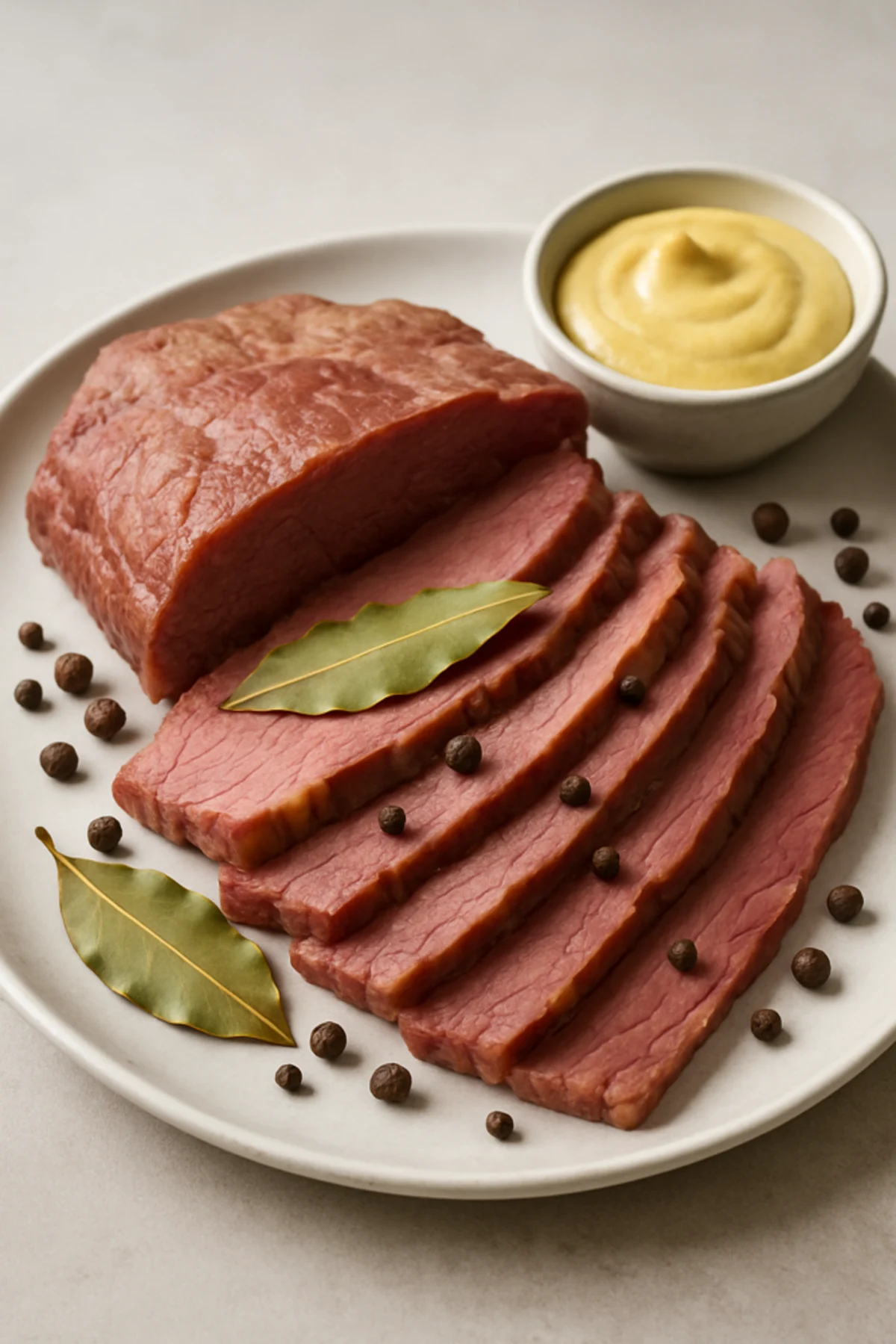
Cured Beef Brisket & Wine Pairing: An Elevated Comfort Classic
Introduction
Cured Beef Brisket is one of those dishes that quietly steals the show. It’s humble in appearance—tender slices of beef, silky potatoes, a clear, aromatic broth—but the umami, salty, rich flavor profile makes it perfect for a cozy Sunday dinner or a small gathering with friends. Even better, this is a dream dish for anyone curious about wine pairing: the depth of the beef, the gentle spice from bay leaves and allspice, and the hit of mustard and horseradish open the door to some truly exciting bottles.
In this recipe, you’ll simmer beef brisket slowly with aromatics until it’s fork-tender, then serve it with buttery mashed potatoes, freshly grated horseradish, and Dijon mustard. Along the way, you’ll also get a clear, approachable wine recommendation guide—featuring options from places you likely already shop, like Total Wine, Trader Joe’s, and BevMo—so you can easily find the perfect match for your Cured Beef Brisket without breaking the bank.
Whether you’re a seasoned home cook or just getting comfortable with braising, this step-by-step recipe will walk you through the process and show you exactly what wine goes with this classic, flavor-packed dish. Vinomat can then help you fine-tune the pairing to your personal taste.
About This Dish
Cured Beef Brisket sits at the crossroads of comfort food and old-world technique. Brisket itself comes from the lower chest of the cow, a hardworking muscle that needs time and gentle heat to become tender. In many culinary traditions, curing or brining brisket in a seasoned liquid is a way to both preserve and deeply flavor the meat before it’s slowly cooked.
This particular version leans into a clean, aromatic broth built from water, bay leaves, allspice, onion, carrot, and celery. Instead of aggressive spices or heavy sauces, the flavors are subtle and layered: savory beef, gentle sweetness from the vegetables, warm spice from allspice, and the herbal lift of bay. The result is a dish that feels elegant while still being deeply comforting and familiar.
In American kitchens, brisket shows up as barbecue, corned beef, pot roast, and more. This cured-style preparation fits right into that landscape, but with a lighter, more European-inspired touch. The broth is clear, the garnish is simple, and the accompaniments—buttery mashed potatoes, Dijon mustard, and fresh horseradish—let the brisket remain the star.
From a wine lover’s perspective, this is an ideal canvas. The umami richness of the beef calls for a wine with enough structure to stand beside it, while the salty, cured character and the mustard/horseradish accents invite wines with bright acidity and savory notes. That’s why Cured Beef Brisket has so much potential for an engaging wine pairing experience at home.
Key Ingredients & Their Role
Beef brisket
The heart of the dish is beef brisket, a cut prized for its connective tissue and deep beefy flavor. Slow cooking breaks down that connective tissue into gelatin, giving the meat a tender, almost silky texture. That concentrated umami is exactly what makes Cured Beef Brisket so satisfying—and what nudges us toward medium to full-bodied red wines with some tannin and complexity.
Bay leaves and allspice
Bay leaves add a gentle, herbal backbone—think subtle eucalyptus and tea-like notes—while whole allspice brings warm, peppery, clove-like aromas. Together, they transform plain simmering liquid into a fragrant, seasoned broth. These spices echo the baking-spice and herbal notes you often find in red wines aged in oak (like many California Cabernets) or in Old World reds from France, Italy, and Spain, making them very friendly for wine pairing.
Aromatic vegetables
Carrot, onion, and celery (the classic mirepoix) do quiet but important work. The carrot contributes gentle sweetness, onion brings savory depth, and celery adds a fresh, slightly bitter note that keeps the broth from feeling flat. This balance of sweet and savory makes the dish versatile with both New World and Old World reds. Wines with good acidity—such as Oregon Pinot Noir or a Chianti Classico—play nicely against the natural sweetness of the vegetables and the richness of the meat.
Potatoes and butter
The mashed potatoes absorb the cooking juices and provide a creamy, comforting base. Butter adds fat and richness, which softens the edges of tannins in red wine. That’s why a moderately tannic red, like a Washington State Syrah or a Spanish Rioja, can feel smoother and more approachable alongside this dish than it might on its own.
Dijon mustard and horseradish
These condiments are the secret weapons. Dijon mustard brings tang and a slight sharpness; freshly grated horseradish adds a nose-tingling heat and brightness that cuts straight through richness. They keep each bite lively and prevent the dish from feeling heavy.
In terms of wine for Cured Beef Brisket, this tang and heat pair best with wines that have:
- Enough fruit to stand up to the spice
- Good acidity to refresh the palate
- Tannins that are present but not harsh
Think California Cabernet Sauvignons in a balanced style, Oregon Pinot Noir, or a rustic yet polished French Côtes du Rhône.
All together, these ingredients create a layered, savory profile that opens the door to a lot of creative wine pairing ideas.
Recipe
| Prep Time | 150 minutes |
|---|---|
| Cook Time | 30 minutes |
| Total Time | 180 minutes |
| Servings | 4 |
| Difficulty | Moderate |
Ingredients:
- 1.2 kg Oxbringa (beef brisket)
- 2 liters Water
- 2 tbsp Salt
- 1 tbsp Sugar
- 3 Bay leaves
- 1 tsp Whole allspice
- 1 (cut into large chunks) Carrot
- 1 (peeled and halved) Yellow onion
- 1 (cut into large chunks) Celery stalk
- 2 tbsp (chopped) Parsley (fresh, for garnish)
- 800 g (peeled and quartered) Potatoes
- 50 g Butter
- 4 tsp Dijon mustard
- 2 tbsp Horseradish (freshly grated)
Instructions:
- Begin by preparing the ingredients. Cut the carrot and celery into large chunks. Peel and halve the onion. Peel and quarter the potatoes.
- Place the beef brisket in a large pot and add 2 liters of water, salt, sugar, bay leaves, and whole allspice. Bring to a boil over high heat.
- Once the water reaches a boil, reduce the heat to low and skim any foam from the surface.
- Add the carrot, onion, and celery to the pot. Cover with a lid, leaving it slightly ajar, and let the brisket simmer gently for approximately 2.5 hours or until the beef is tender.
- Approximately 30 minutes before the brisket is fully cooked, place the peeled and quartered potatoes in another pot. Cover with water and add a pinch of salt. Bring to a boil and simmer for 20-25 minutes or until the potatoes are soft.
- Once the potatoes are cooked, drain them well and mash them with butter. Season with salt to taste. Keep warm.
- When the beef brisket is tender, remove it from the pot and let it rest for 5 minutes. Strain the broth and reserve 1-2 cups if you intend to serve it as a light sauce or broth alongside the dish.
- Slice the beef brisket into thick slices and plate it elegantly with the mashed potatoes on the side. Garnish with freshly grated horseradish and chopped parsley.
- Serve the dish with Dijon mustard and the reserved broth on the side.
Nutrition Facts (per serving):
- Calories: 325 kcal
- Protein: 50.0g
- Fat: 12.0g
- Carbohydrates: 8.0g
- Salt: 3.0g
Dietary Information: Gluten-free, Dairy-free, Nut-free
Perfect Wine Pairings
Cured Beef Brisket is generous, savory, and slightly salty, which gives us several directions for smart wine pairing. The key is to match the body of the wine to the richness of the dish, and balance the salt and umami with acidity and tannins.
Here’s what to look for in a wine for Cured Beef Brisket:
- Body: Medium to full-bodied reds work best.
- Acidity: Moderate to high acidity to cut through the richness and complement mustard and horseradish.
- Tannins: Fine, ripe tannins to stand up to the beef without feeling harsh.
- Flavor profile: Dark fruit, savory herbs, gentle spice, and, if you like, a touch of oak.
You can find all of the styles below easily in the $15–$30 range at retailers like Total Wine, Trader Joe’s, BevMo, or your local wine shop.
1. California Cabernet Sauvignon (Napa or Sonoma)
For a classic, crowd-pleasing wine recommendation, look to a California Cabernet Sauvignon. The brisket’s beefy, umami core loves Cab’s dark fruit (blackcurrant, blackberry) and its firm but polished tannins. Oak aging often adds notes of vanilla, cedar, and baking spice that mirror the allspice and bay in the broth.
- Choose a moderate, food-friendly style rather than an ultra-rich, high-alcohol bottle.
- Look for labels from Sonoma County or more entry-level Napa Valley producers around $20–$30 at Total Wine or BevMo.
2. Oregon Pinot Noir
If you prefer something more delicate, Oregon Pinot Noir from the Willamette Valley is a beautiful perfect match. Pinot’s bright acidity and red-fruited profile (cherry, cranberry, raspberry) cut through the richness of the brisket and mashed potatoes while its earthy tones echo the vegetables and herbs.
- Look for a bottle in the $18–$28 range.
- Trader Joe’s often carries budget-friendly Oregon Pinots, while Total Wine and BevMo have broader selections of small producers.
3. Washington State Syrah or Red Blend
Washington State is a sweet spot for value in full-flavored reds. A Syrah or a Cabernet-Syrah blend from regions like Columbia Valley offers dark fruit, smoky notes, and a savory, peppery edge that pairs wonderfully with the cured, slightly salty character of the brisket.
- Medium-plus body, ripe tannins, and a hint of spice make this a great Saturday-night choice.
- Expect to spend $15–$25 at Total Wine or BevMo for excellent quality.
4. Old World Options: Bordeaux, Chianti Classico, Rioja
If you lean toward European wines, a few classic imports are outstanding with Cured Beef Brisket:
- Left Bank Bordeaux (France): Cabernet/Merlot blends bring structure, cassis, and earthy notes that complement the beef and allspice.
- Chianti Classico (Italy): Sangiovese’s high acidity, red cherry fruit, and herbal character handle the salty broth and mustard beautifully.
- Rioja Crianza or Reserva (Spain): Tempranillo with soft tannins and flavors of red and dark fruit, leather, and spice is a natural with cured meats.
Many of these styles appear in curated Old World sections at Trader Joe’s and BevMo, often in the $12–$25 range, making them approachable options for exploring what wine goes with Cured Beef Brisket beyond California.
Use Vinomat to log what you’re cooking and instantly get tailored wine pairing suggestions in these categories, adjusted to your budget and local availability.
Cooking Tips & Techniques
- Simmer, don’t boil: After the initial boil, keep the brisket at a gentle simmer. A rolling boil can toughen the meat and make the broth cloudy. Slow, steady heat is key to tenderness.
- Skim the foam: In the first 10–15 minutes, skim off any foam that rises to the surface. This keeps your broth clear and clean-tasting.
- Don’t rush the timing: The recipe suggests about 2.5 hours, but brisket can vary. You’re looking for meat that yields easily to a fork. If it’s still firm, give it more time.
- Cut against the grain: Once rested, slice the brisket across the grain into thick slices. This shortens the muscle fibers and makes each bite more tender.
- Season potatoes at the end: Boil the potatoes in salted water, then mash with butter and adjust the seasoning right before serving. This keeps the flavor bright and prevents overwhelming saltiness when combined with the cured beef.
- Use the broth wisely: Strain and reserve that beautiful, aromatic broth. You can serve it as a light sauce in small bowls or spoon a little over the meat and potatoes to keep everything moist.
- Balance richness with condiments: Don’t skip the horseradish and Dijon mustard. They provide the acid and heat that keep the dish lifted—especially important when you’re enjoying it with a rich red wine.
With these techniques in mind, you’ll not only nail the texture and flavor of the brisket, but also set the stage for a seamless wine pairing experience.
Serving Suggestions
Cured Beef Brisket is all about simple, thoughtful presentation. After slicing the rested brisket, fan the pieces slightly on a warm plate so you can see the texture of the meat. Add a generous scoop of creamy mashed potatoes alongside, then spoon a bit of the hot, strained broth around the meat to create a glossy, inviting look.
Top the brisket with a shower of freshly grated horseradish and chopped parsley for color and aroma. Serve Dijon mustard in a small ramekin on the side so guests can adjust the punch to their liking. A small cup or pitcher of extra broth is a nice touch, letting everyone add as much or as little as they like.
For the table, consider simple sides that won’t compete with the beef or the wine: lightly sautéed green beans, roasted root vegetables, or a crisp green salad with a lemony vinaigrette all work beautifully and keep the meal in balance.
Set out your chosen wine for Cured Beef Brisket—maybe a California Cabernet and an Oregon Pinot Noir—and encourage guests to taste both with the dish. It turns dinner into a relaxed, at-home tasting, and with Vinomat you can log which wine pairing each person prefers for future reference.
Conclusion
Cured Beef Brisket is proof that comfort food and thoughtful wine pairing can absolutely share the same table. With just a few pantry staples—brisket, bay leaves, allspice, vegetables—and some unhurried cooking time, you’ll create a dish that feels both homey and special, especially when matched with the right bottle.
Use this recipe as your base, then explore different reds from California, Oregon, Washington, and classic European regions to find your own perfect match. Vinomat can help you discover new bottles, compare options from places like Total Wine, Trader Joe’s, and BevMo, and track exactly which wine for Cured Beef Brisket you love most.
Pour a glass, slice into that tender brisket, and enjoy how the flavors of food and wine elevate each other—one satisfying bite and sip at a time.