


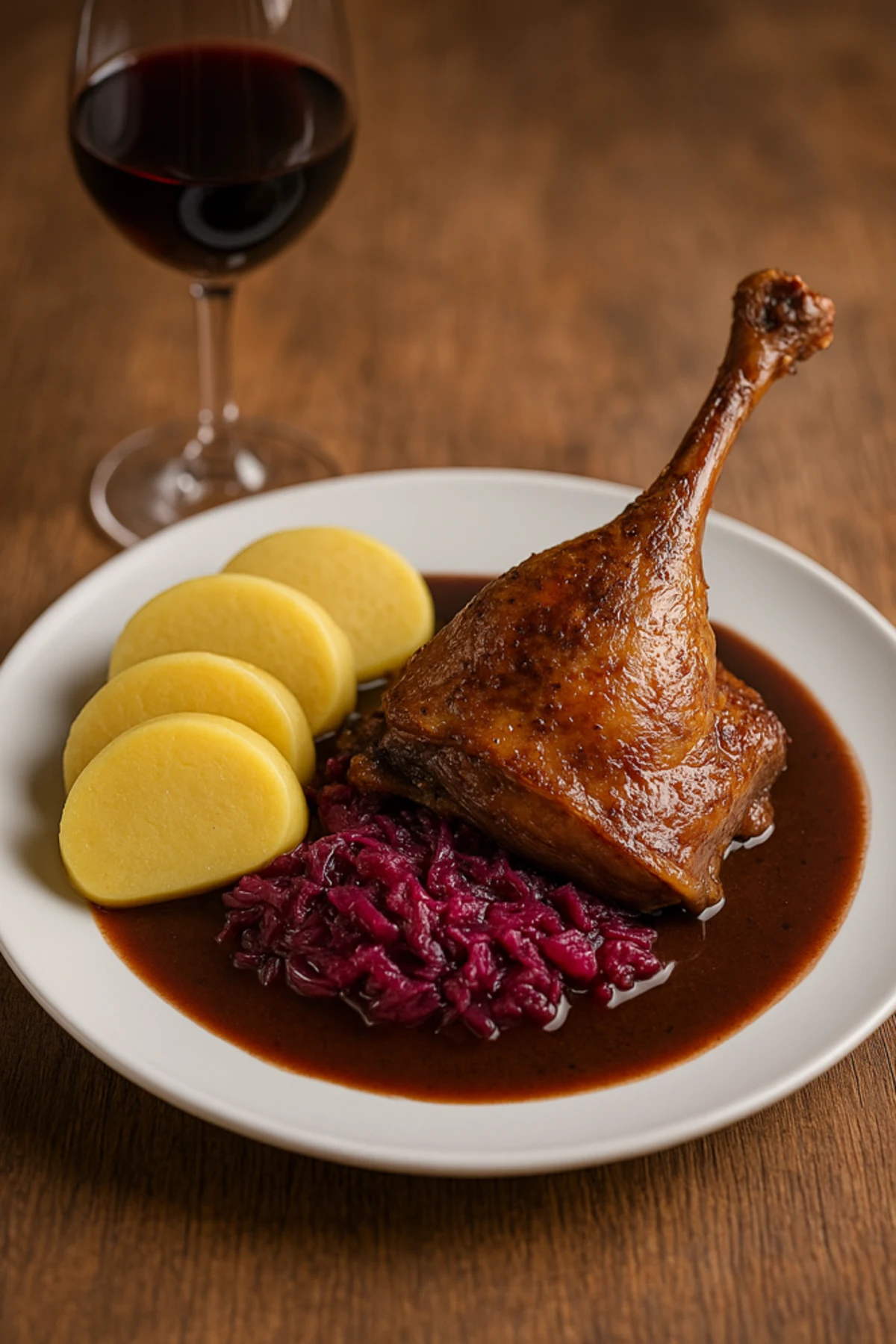
Duck Legs in Red Wine with Red Cabbage & Potato Dumplings
Duck Legs in Red Wine with Red Cabbage and Potato Dumplings
If you’re looking for a cozy, restaurant-quality dinner that also happens to be a dream for wine lovers, this duck legs in red wine with red cabbage and potato dumplings should be at the top of your list. Tender duck legs slowly cooked in a red wine sauce, sweet-and-sour braised red cabbage, and fluffy potato dumplings come together in a plate that feels like fall in a bowl and pairs beautifully with a great bottle of red.
This is the kind of duck leg recipe that makes a special occasion at home feel effortless: most of the work happens in the oven, and the flavors are bold, comforting, and incredibly wine-friendly. Whether you shop at Total Wine, BevMo, Trader Joe’s, or your favorite local wine shop, this dish is an ideal canvas to explore red wine pairing—and Vinomat can help you dial in the perfect bottle.
About This Dish
Duck with red cabbage and dumplings is a classic combination across Central Europe, particularly in Germany, Austria, and the Czech Republic, where roast duck legs often show up on Sunday tables and holiday menus. The trio of roast duck legs, red cabbage, and potato dumplings hits that magical sweet spot of rich, tangy, and hearty all at once.
Here, we lean into that tradition but give it a red wine–focused twist. Instead of a whole bird, we focus on duck legs—they’re forgiving, full of flavor, and perfect for slow braising in wine. Red wine forms the backbone of a glossy sauce that clings to the meat and ties the entire plate together.
The red cabbage brings a gentle sweet-and-sour profile, often built with apple, a touch of sugar, vinegar, and sometimes red wine. That balance is key: the brightness cuts through the richness of the duck fat, while the natural sweetness echoes the fruit in your wine. Potato dumplings, common in many Central European duck leg recipes, are pillowy and neutral, soaking up juices and gravy without competing with the flavors of the duck leg or the wine.
On an American table, this dish feels both familiar and new. It’s comfort food like pot roast or short ribs, but with the elegance of duck and a built-in wine pairing story. It’s ideal when you want to impress—date night, small holiday gatherings, or anytime you want a duck legs recipe that earns its spot in your rotation.
Key Ingredients & Their Role
Duck legs
Bone-in, skin-on duck legs are the star. The dark meat stands up to slow cooking without drying out, and the skin renders fat that flavors both the sauce and the side dishes. Compared with duck breast, duck leg is more forgiving and better suited to braising in red wine. The deep, savory flavor is a natural match for medium to full-bodied reds.
For this duck leg recipe, browning the legs first does three important things:
- Renders flavorful fat you can use later.
- Builds a fond (those brown bits) that becomes the base of your red wine sauce.
- Helps create a crisp skin that stays appealing even after braising.
Red wine
Red wine does double duty: it’s both cooking liquid and flavor driver. As the duck legs braise, the wine reduces and mingles with stock, vegetables, and aromatics into a sauce that’s concentrated and silky.
For cooking, choose a dry red you’d enjoy drinking—a medium-bodied Cabernet Sauvignon, Merlot, or a robust Pinot Noir is perfect in the $12–$18 range from California, Oregon, or Washington. The wine’s acidity helps cut through the richness of the duck leg, while its fruit and spice echo the sweet cabbage and caramelized notes in the dish.
Red cabbage
Red cabbage is the bright, tangy counterpoint. Slowly cooked with onion, apple, a touch of sugar, vinegar, and sometimes a splash of wine, it develops a beautiful sweet-sour profile. The natural sweetness softens the duck’s intensity, while the acidity keeps every bite lively.
From a wine perspective, this sweet-and-sour element is crucial. Wines with good acidity and juicy fruit—think Pinot Noir or Grenache—play especially well with red cabbage, mirroring its brightness and fruit notes.
Potato dumplings
Potato dumplings are your sauce soakers. They’re soft but structured, with a subtle potato flavor and satisfying chew. Because they’re relatively mild, they won’t clash with the duck or the wine, but they absorb juices from the duck leg and the red wine sauce, stretching the flavors further.
If you’re new to dumplings, think of them as a cross between gnocchi and a soft dinner roll. They’re simpler than they look and a great base for future duck leg recipes.
Aromatics and seasoning
- Onion, garlic, and carrot deepen the savory base.
- Fresh thyme, bay leaves, and black pepper add herbal and earthy notes that mirror classic red wine aromas.
- A touch of sugar and vinegar in the cabbage creates that signature sweet-sour balance.
Together, these ingredients make this duck legs recipe not just delicious but incredibly wine-friendly.
Recipe: Duck Leg in Red Wine with Red Cabbage and Potato Dumplings
At a Glance
- Servings: 4
- Prep time: 40 minutes
- Cook time: 2 to 2 ½ hours
- Total time: About 3 hours
- Difficulty: Intermediate (great weekend cooking project)
Ingredients
For the red wine duck legs
- 4 bone-in, skin-on duck legs (about 8–10 oz each)
- 1 ½ tsp kosher salt, plus more to taste
- ½ tsp freshly ground black pepper
- 1 tbsp vegetable oil (only if needed; you may not need it once the duck renders)
- 1 medium yellow onion, chopped
- 2 medium carrots, chopped
- 2 celery stalks, chopped
- 3 cloves garlic, sliced
- 2 tbsp tomato paste
- 2 cups dry red wine
- 1 ½ cups low-sodium chicken or duck stock
- 2 bay leaves
- 4 sprigs fresh thyme (or 1 tsp dried)
- 1 tsp sugar (optional, to balance the sauce)
For the sweet-and-sour red cabbage
- 2 tbsp duck fat (reserved from browning the duck) or butter
- 1 small red onion, thinly sliced
- 1 small head red cabbage, cored and thinly shredded
- 1 medium apple, peeled and grated or finely chopped
- 2 tbsp sugar (or to taste)
- 3 tbsp red wine vinegar
- ½ cup dry red wine (optional but recommended)
- ½ cup water or stock, plus more as needed
- ½ tsp kosher salt, plus more to taste
- ½ tsp ground cumin or caraway seeds (optional but classic)
For the potato dumplings
- 2 lb starchy potatoes (like Russet), scrubbed
- 2 cups semolina flour (about 10 oz) or all-purpose flour, plus extra for dusting
- 2 tbsp neutral oil or melted butter
- 1 ½ tsp kosher salt
Optional garnishes
- Chopped fresh parsley or chives
- Extra thyme leaves
Step-by-Step Instructions
1. Brown the duck legs
- Pat the duck legs very dry with paper towels. Season all over with salt and pepper.
- Place a large, heavy Dutch oven over medium heat. Lay the duck legs in the pot, skin side down. (If your pot is small, work in batches.)
- Cook 8–10 minutes, until a deep golden-brown crust forms and a good amount of fat renders. Flip and brown the other side for 3–4 minutes.
- Transfer duck legs to a plate. Pour off and reserve most of the duck fat, leaving about 1–2 tablespoons in the pot.
2. Build the red wine braise
- In the same pot over medium heat, add onion, carrot, and celery. Cook 6–8 minutes, scraping up browned bits, until softened and lightly browned.
- Stir in garlic and cook 1 minute until fragrant.
- Add tomato paste and cook 2 minutes, stirring, until it darkens slightly and coats the vegetables.
- Pour in the red wine, scraping the bottom to release all the flavorful browned bits. Simmer 3–5 minutes to reduce slightly.
- Add stock, bay leaves, and thyme. Return the duck legs to the pot, skin side up. The liquid should come about halfway up the meat; add a bit more stock or water if needed.
- Bring to a gentle simmer. Cover with a lid and transfer to a 325°F oven.
- Braise for 1 ½ to 2 hours, or until the duck legs are very tender and nearly falling off the bone.
3. Make the red cabbage
You can start the cabbage while the duck braises.
- In a large sauté pan or pot, heat 2 tbsp duck fat over medium heat.
- Add the red onion and cook 4–5 minutes until soft.
- Add shredded red cabbage and apple. Toss to coat in the fat and cook 3–4 minutes until the cabbage begins to wilt.
- Sprinkle in sugar and stir.
- Add red wine vinegar, red wine (if using), and water or stock. Season with salt and cumin or caraway if using.
- Bring to a simmer, then reduce heat to low, cover, and cook 30–40 minutes, stirring occasionally, until the cabbage is tender but still has a bit of bite.
- Taste and adjust seasoning with more salt, sugar, or vinegar to balance sweet and sour. Keep warm over very low heat or rewarm before serving.
4. Prepare the potato dumplings
- Place whole potatoes (skins on) in a large pot of cold salted water. Bring to a boil and cook 35–45 minutes, until very tender.
- Drain and let cool just enough to handle. Peel the potatoes while still warm.
- Pass the potatoes through a ricer or grate on the large holes of a box grater into a large bowl.
- Add semolina flour, oil or melted butter, and salt. Gently mix with your hands or a wooden spoon until a soft dough forms. It should hold together without being sticky; add a bit more flour if needed.
- Divide the dough into 2 logs about 2 inches in diameter.
- Bring a large pot of salted water to a gentle simmer (not a rolling boil).
- Carefully lower the dumpling logs into the water. Simmer 20 minutes, turning once or twice.
- Lift out with a slotted spoon and let cool slightly. Slice into dumplings about ¾–1 inch thick.
- Optional but recommended: pan-sear the sliced dumplings in a bit of duck fat or butter over medium heat until lightly golden on both sides for extra flavor and texture.
5. Finish the sauce
- When the duck legs are tender, carefully transfer them to a warm plate and tent loosely with foil.
- Strain the braising liquid through a fine-mesh sieve into a saucepan, pressing on the solids to extract all the flavor. Discard solids.
- Simmer the liquid over medium heat 10–15 minutes, until slightly thickened and glossy. If it tastes too sharp, add 1 tsp sugar to round it out; if it’s too rich, splash in a little water or stock.
- Taste and adjust salt and pepper.
6. Serve
- Spoon a generous bed of red cabbage onto each warm plate.
- Add a few potato dumplings to the side.
- Nestle a duck leg on top or alongside the cabbage.
- Spoon the red wine sauce generously over the duck leg and dumplings.
- Garnish with fresh herbs if you like, and serve immediately.
Nutrition & Dietary Notes (Approximate per serving)
- Calories: 850–950
- Protein: 40–45 g
- Fat: 45–55 g (duck is naturally rich; much of this is monounsaturated)
- Carbohydrates: 60–70 g
- Dietary considerations:
- Contains gluten (dumplings); can be adapted with gluten-free flour blends.
- Not dairy-free if using butter; easily adapted with oil.
- Naturally nut-free.
(Values will vary based on exact ingredients and portion sizes.)
Perfect Wine Pairings for Duck Legs in Red Wine
Because the sauce is built on red wine and the duck legs are rich and savory, this dish begs for a medium to full-bodied red with good acidity and moderate tannins. You want enough structure to handle the duck fat, but not so much tannin that it clashes with the sweet-and-sour red cabbage.
Here are some excellent styles (and regions) to look for at Total Wine, Trader Joe’s, BevMo, or your local shop in the $15–$30 range.
1. Pinot Noir (Oregon, California, Burgundy)
Pinot Noir is one of the best all-around wine pairings for duck leg in red wine:
- Body: Light to medium, so it won’t overwhelm the dish.
- Acidity: Fresh, which cuts through duck fat and refreshes your palate.
- Flavor profile: Red cherry, raspberry, cranberry, often with earthy or mushroom notes.
An Oregon Pinot Noir (Willamette Valley) is an especially great match—bright fruit, savory undercurrent, and enough structure to stand up to the sauce. Look for bottles around $20–$28 at Total Wine or BevMo. A French Bourgogne Rouge or a Sonoma Coast Pinot will also be right at home.
2. Merlot or Right-Bank Bordeaux blends
Merlot loves duck legs:
- Body: Medium to full, plush and round.
- Tannins: Softer, which helps with the cabbage’s slight sweetness.
- Flavor profile: Plum, black cherry, cocoa, and gentle spice.
A Washington State Merlot or a California Merlot from Paso Robles or Sonoma in the $15–$25 range is an easy, crowd-pleasing choice. For an Old World twist, try a Right-Bank Bordeaux (Merlot-heavy) from Saint-Émilion or a similar appellation.
3. Grenache / GSM blends (Southern Rhône, California)
Grenache-based wines and GSM blends (Grenache–Syrah–Mourvèdre) are fantastic with roast duck legs recipes and braised versions like this:
- Body: Medium to full, with a juicy, generous feel.
- Acidity: Moderate, enough to handle richness.
- Flavor profile: Ripe red berries, baking spice, sometimes a hint of garrigue (herbs).
Look for Côtes du Rhône or Côtes du Rhône Villages in the $12–$20 range, or California GSM blends from Paso Robles at around $18–$28. These wines echo the sweetness in the cabbage and complement the savory richness of the duck leg.
4. Tempranillo (Rioja)
A medium-bodied Rioja Reserva or Crianza is another stellar option:
- Body: Medium, balanced.
- Tannins: Fine-grained, especially in traditionally aged styles.
- Flavor profile: Red cherry, dried herbs, subtle vanilla or coconut from oak.
The gentle earthiness, spice, and red fruit are a beautiful match, especially if your red cabbage leans slightly sweet. You can find excellent Riojas in the $15–$25 range at almost any large retailer.
How to Choose a Bottle at the Store
When you’re standing in the aisle at Trader Joe’s, Total Wine, or BevMo and wondering what wine goes with duck legs in red wine, keep these pointers in mind:
- Aim for medium to full body with lively acidity.
- Choose moderate tannins (avoid big, heavily extracted young Cabernets if your cabbage is quite sweet).
- Look for red fruit–driven wines (Pinot, Grenache, Merlot) over ultra-jammy or super-oaky bottles.
If you’re unsure, open Vinomat, plug in “duck leg in red wine with red cabbage and dumplings,” and let the app recommend wine styles and specific grapes that fit what’s on the shelf near you.
Cooking Tips & Techniques
- Dry the duck legs thoroughly. Moisture is the enemy of browning. Pat them very dry before seasoning so you get that deeply caramelized skin.
- Render the fat slowly. Start the duck legs in a cool or warm pan and bring the heat up to medium. This gives the fat time to render without burning the skin.
- Don’t rush the braise. Toughness means it needs more time. The collagen in the duck leg turns silky only after a good 1 ½–2 hours of gentle cooking.
- Balance the cabbage. Taste at the end. If it’s too sharp, add a pinch of sugar; if it’s too sweet, splash in more vinegar. The goal is a bright, sweet-sour note that makes rich duck feel lighter.
- Simmer dumplings gently. Boiling water can break them apart. Keep it at a gentle simmer.
- Pan-sear dumplings. A quick sear in duck fat or butter adds crisp edges and nutty flavor—this small step elevates the dish from rustic to restaurant-level.
- Skim excess fat from the sauce. Duck is rich; skimming the sauce and slightly reducing it keeps the flavors focused, not heavy.
- Make ahead friendly. You can braise the duck legs and cook the cabbage a day ahead. Chill, then gently reheat and finish the sauce before serving. Dumplings can also be boiled in advance and seared to reheat.
Serving Suggestions
Presenting this duck legs recipe is half the fun. Here’s how to plate it like a pro:
- Use warm, wide dinner plates or shallow bowls.
- Start with a generous mound of red cabbage slightly off-center.
- Arrange 3–4 dumpling slices along one side, overlapping slightly.
- Place a duck leg partially on the cabbage, bone pointing outward for a dramatic look.
- Spoon red wine sauce over the duck leg and around the plate, letting some sauce pool under the dumplings.
- Finish with a sprinkle of chopped parsley or chives and a small thyme sprig.
For the table:
- Serve with extra red wine sauce in a small pitcher so guests can add more.
- Offer crusty bread if you like—nobody will complain about extra sauce.
- Set out your chosen wine pairing slightly cool (around 58–62°F for most reds) so the fruit and freshness really pop.
This dish is rich but balanced; you don’t need many extra sides. A simple green salad with a light vinaigrette or some roasted root vegetables is plenty.
Conclusion
Duck legs in red wine with red cabbage and potato dumplings is one of those dishes that turns a regular evening into a small celebration. Once you’ve made it once, you’ll see how approachable duck legs can be—and how perfectly they lend themselves to exploring new wines.
Next time you’re planning a cozy dinner, grab a few duck legs, a good bottle of red, and let Vinomat guide you to the perfect wine pairing based on what’s available near you. This duck legs recipe is more than just a meal; it’s an invitation to slow down, pour something delicious, and enjoy the way great food and wine make each other shine.