


Duck Rice Recipe & Wine Pairing: A Comfort Classic Elevated
Duck Rice & Wine Pairing: A Cozy Classic for Serious Flavor Lovers
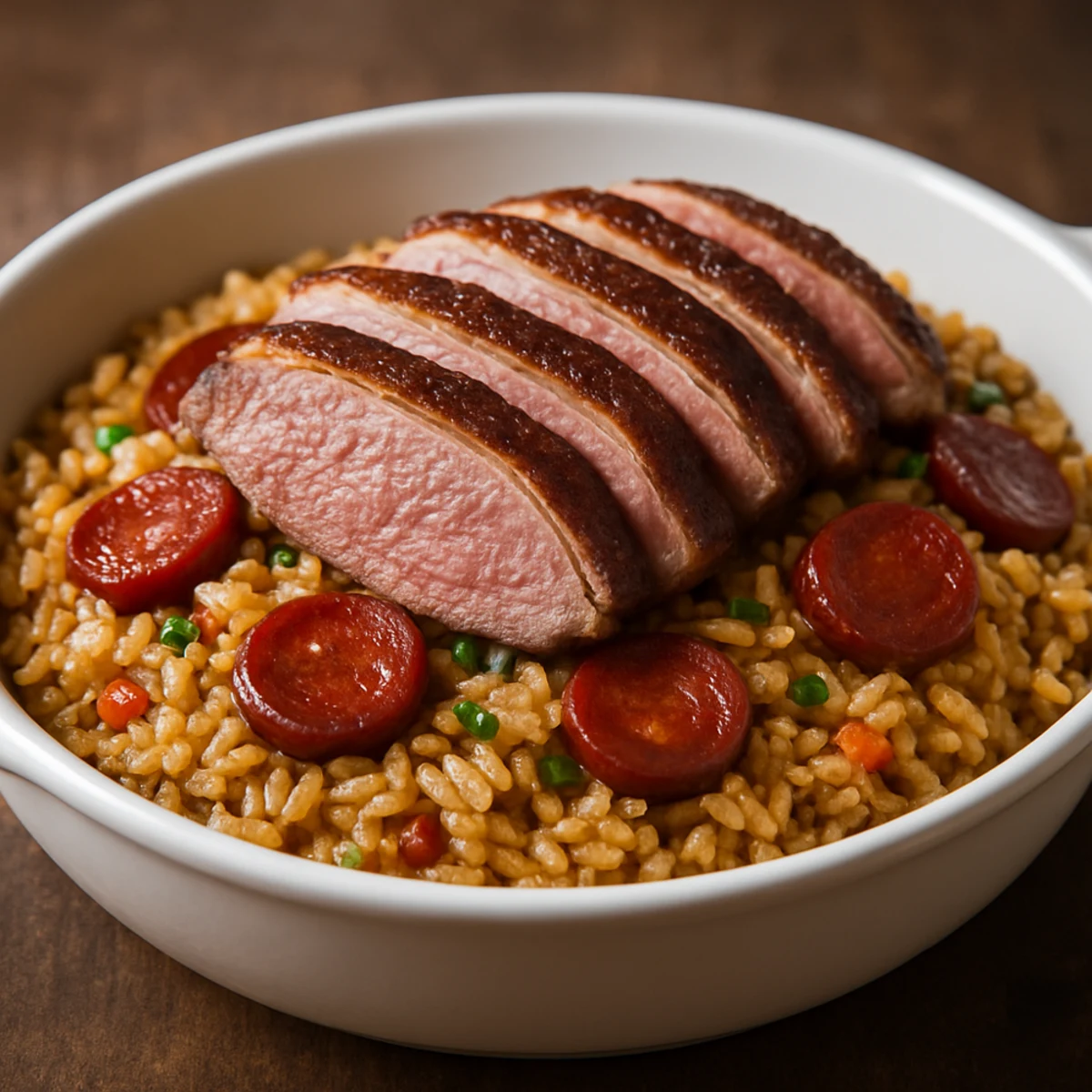
If you love slow-cooked comfort food and a good glass of wine, this Duck Rice recipe is your next dinner project. Imagine tender shredded duck, chorizo, and creamy Carolino rice baked until the top turns just a little crisp and golden. It’s salty, deeply umami, and incredibly satisfying—the kind of dish that makes your kitchen smell like a restaurant you never want to leave.
This is also a dream recipe for wine pairing. Between the rich duck, smoky chorizo, and starchy rice, Duck Rice has all the elements that make red and fuller-bodied white wines shine. Whether you’re pulling a bottle from Trader Joe’s, browsing Total Wine, or grabbing something special from a local shop, you’ll find plenty of options that are a perfect match for this dish.
In this post, you’ll get a fully detailed Duck Rice recipe, practical cooking tips, and clear, no-jargon guidance on choosing the best wine for Duck Rice—with price points and styles tailored to what’s widely available in the United States. And if you ever want to explore beyond these suggestions, apps like Vinomat make it easy to discover new pairings based on what you already love.
About This Dish
Duck Rice, or arroz de pato in its Portuguese roots, is a rustic, family-style dish that feels right at home on an American table. Traditionally, the duck is gently simmered until tender, the cooking liquid is used to flavor the rice, and everything is finished in the oven so the top layer gets just a hint of crunch. It’s comfort food, but with a seriously gourmet vibe.
In Portugal, this dish often shows up at Sunday lunches, festive gatherings, and long, lingering meals where wine is a given, not an afterthought. The combination of duck, Carolino rice, and chorizo gives it a layered flavor profile: salty, savory, lightly smoky, and rich without being heavy. That balance makes it especially fun for wine lovers—there are multiple directions you can go, from earthy reds to generous, food-friendly whites.
For U.S. home cooks, Duck Rice offers something a little different from the usual roast chicken or beef stew. It’s familiar in format—braise, shred, bake—but the flavor profile is more complex, thanks to the duck fat and spices in the chorizo. Because you use the duck broth to cook the rice, every grain carries flavor.
This is also a great “bridge” dish for anyone curious about wine and food pairing. The flavors are bold but not overwhelming, and the textures are comforting. You don’t need a rare or expensive bottle to make it work; a well-chosen $15–$30 wine from California, Oregon, Washington, or Europe can make this meal feel restaurant-level.
Key Ingredients & Their Role
Duck
The star of the dish is whole duck, slowly simmered until tender. Duck brings:
- Richness and depth: Duck meat has more fat and flavor than chicken, giving the rice a luxurious, savory base.
- Umami: As the duck simmers, its juices and collagen infuse the broth, which then soaks into every grain of rice.
From a wine pairing perspective, duck’s richness calls for wines with enough structure and acidity to cut through the fat, but not so bold that they overpower the meat. This is why medium-bodied reds (think Pinot Noir or a Rioja Crianza) are such a natural fit.
Carolino Rice (or Risotto Rice)
Arroz Carolino is a Portuguese medium-grain rice similar in behavior to risotto rice. If you can’t find it, arborio or carnaroli make good substitutes. This rice:
- Absorbs a lot of liquid, soaking up the duck broth and white wine.
- Turns creamy and tender while still holding its shape, almost like a hybrid between risotto and baked rice.
Because the rice carries so much flavor, you get a unified, savory bite every time. For wine, that means you want a bottle with good flavor intensity—something that won’t taste flat next to all that savory richness.
Chorizo
Thinly sliced chorizo adds:
- Saltiness
- Smoky, spicy notes (depending on your brand)
- Extra fat that coats the rice
This is where wine choice gets really interesting. The paprika and spice in the chorizo play beautifully with wines that have a bit of earthiness, spice, or oak influence. Spanish reds (like Tempranillo) are a natural match, but many California and Washington blends work as well.
Aromatics, Wine, and Stock
Onions, garlic, bay leaves, and dry white wine build the backbone of the dish. The white wine you cook with doesn’t need to be fancy, but it should be something you’d be happy to drink—a dry, crisp style like a simple Portuguese branco, Sauvignon Blanc, or unoaked Chardonnay.
The duck stock (or chicken stock) intensifies flavor and helps the rice stay moist in the oven. Since the dish leans salty and umami, wines with fresh acidity and savory notes tend to be the perfect match, keeping everything in balance.
Recipe
Prep Time | 90 minutes Cook Time | 30 minutes Total Time | 120 minutes Servings | 4 Difficulty | Moderate
Ingredients:
- 1 Duck (whole, around 4 lb)
- 2 cups Arroz Carolino (or risotto rice)
- 1, about 7 oz Chorizo (thinly sliced)
- 2 medium Onions (finely chopped)
- 3 Garlic cloves (minced)
- 2 Chicken stock cubes (or 4 cups chicken stock)
- 1 cup White wine (dry)
- 2 Bay leaves
- 4 tbsp Olive oil (extra virgin)
- 2 tbsp Butter (unsalted)
- to taste Salt
- to taste Black pepper (freshly ground)
Instructions:
- Prepare the mise-en-place: Finely chop the onions, mince the garlic, and thinly slice the chorizo.
- In a large pot, place the whole duck and cover it with water. Add 1 of the chopped onions, 1 of the bay leaves, and a pinch of salt. Simmer gently for approximately 1 hour until the duck is tender. Skim off any excess fat during cooking.
- Once cooked, remove the duck from the pot. Reserve the cooking liquid (about 4 cups) to use as stock later. Allow the duck to cool slightly, then shred the meat into bite-sized pieces, discarding the skin and bones.
- In a large heavy-bottomed pan, heat 2 tbsp olive oil and 1 tbsp butter over medium heat. Add the remaining finely chopped onion and minced garlic. Sauté until softened and translucent, about 5 minutes.
- Add the sliced chorizo to the pan and cook for 2–3 minutes, allowing its flavors to release. Add the bay leaf and stir.
- Stir in the Arroz Carolino and toast for 2 minutes to coat the grains in the fat.
- Pour in the white wine and let it simmer until mostly absorbed. Gradually add the reserved duck stock (or chicken stock), 1 cup at a time, stirring regularly and letting the liquid absorb before adding more. Cook the rice for about 15–18 minutes, until al dente.
- Fold the shredded duck meat into the rice mixture and season with salt and freshly ground black pepper to taste.
- Preheat the oven to 375°F (190°C). Grease a medium-sized ovenproof dish with 1 tbsp olive oil.
- Transfer the rice and duck mixture to the greased dish. Top with the remaining chorizo slices and drizzle with 1 tbsp olive oil. Bake in the middle rack of the oven for 20–25 minutes, or until the top is slightly crisp and golden.
- Remove from the oven and let it rest for 5 minutes. Serve hot, optionally garnished with fresh parsley.
Nutrition Facts (per serving):
- Calories: 620 kcal
- Protein: 45.0g
- Fat: 35.0g
- Carbohydrates: 60.0g
- Salt: 2.5g
Dietary Information:
Contains gluten, Dairy-free, Nut-free
Perfect Wine Pairings
Duck Rice is incredibly forgiving when it comes to wine, but some styles are true standouts. When you’re choosing wine for Duck Rice, think about three key things:
- Body: Medium to medium-full, to stand up to the richness of duck and chorizo.
- Acidity: Enough to cut through fat and refresh your palate.
- Tannins: Moderate—too much tannin can clash with the salty, umami profile.
Here are some reliable styles and where to find them in the U.S. for around $15–$30.
1. Pinot Noir (California & Oregon)
A Pinot Noir with bright red fruit, gentle tannins, and earthy notes is one of the best all-around pairings for Duck Rice. Look for:
- Flavor profile: Cherry, raspberry, subtle spice, a touch of earth.
- Regions: Sonoma Coast, Russian River Valley, Santa Barbara County, and especially Oregon’s Willamette Valley.
These wines have just enough freshness to balance the fat, while their delicate structure keeps the duck and chorizo front and center. You’ll find solid options at Total Wine, BevMo, and many grocery stores; Trader Joe’s often carries good-value Oregon Pinot in the $15–$20 range.
2. Tempranillo / Rioja (Spain)
Spanish Rioja Crianza or Reserva is almost tailor-made for this dish, especially with the chorizo.
- Flavor profile: Red and dark fruits, dried herbs, vanilla or spice from oak, a savory, earthy edge.
- Why it works: Tempranillo’s natural acidity and gentle tannins handle the duck, while its spicy, savory notes echo the chorizo.
Look for bottles labeled Crianza or Reserva from Rioja in the $15–$25 range at Total Wine or your local wine shop. If you enjoy a subtle smoky note, this is a great choice.
3. GSM Blends (Grenache, Syrah, Mourvèdre)
Red blends based on Grenache, Syrah, and Mourvèdre—from California’s Central Coast or from France’s Rhône Valley—are another excellent option.
- Flavor profile: Dark berries, plum, pepper, herbs, sometimes a hint of bacon or smoke.
- Body & tannin: Medium to full-bodied with rounded tannins, which pair beautifully with the richness of duck.
These blends complement both the meatiness of the duck and the smoky spice of chorizo. Look for Côtes du Rhône or California GSM blends in the $15–$30 range at BevMo or larger supermarkets.
4. Rich Whites (White Rhône, Chardonnay, or Portuguese Whites)
If you prefer white wine, go for a fuller-bodied, dry white with good acidity and texture.
- Options: White Côtes du Rhône (often blends of Marsanne, Roussanne, Grenache Blanc), lightly oaked Chardonnay from Sonoma or Washington, or Portuguese whites (like Encruzado or blends from Dão and Alentejo).
- Why they work: These wines have enough weight and mouthfeel to stand up to duck and chorizo, while their acidity keeps each bite feeling fresh.
You can find excellent value whites at Trader Joe’s and Total Wine, often under $20. If in doubt, ask for a white with medium to full body, good acidity, and minimal heavy oak.
Whenever you’re in the mood to explore beyond these options, Vinomat is a great tool: plug in “Duck Rice” or similar dishes and you’ll get personalized wine recommendations that match your taste and budget.
Cooking Tips & Techniques
- Don’t rush the duck: A gentle simmer for about an hour is key. If you boil it hard, the meat can tighten and dry out instead of becoming tender and shreddable.
- Skim the fat, but save the flavor: Skim excess fat from the broth as the duck cooks so the final dish isn’t greasy. You still get all the flavor in the liquid, which is what you want for the rice.
- Toast the rice: When you add the Carolino (or risotto) rice to the pan, take those 2 minutes to toast it in the duck fat, olive oil, butter, and chorizo drippings. This step deepens the flavor and helps the grains stay distinct.
- Season at the end: Chorizo and stock are both salty, so hold back on extra salt until the duck and rice are combined. Taste, then adjust with salt and black pepper.
- Aim for al dente before baking: The rice should be just shy of fully cooked when it goes into the oven. It will finish in the bake and absorb a bit more moisture.
- Let it rest: Those 5 minutes out of the oven matter. The rice settles, excess steam escapes, and the flavors meld.
If you’re planning a special dinner with an important wine pairing, make the dish once ahead of time on a relaxed night. You’ll learn how your oven behaves and exactly how you like the texture, so on the big night it’s all smooth sailing.
Serving Suggestions
Serve Duck Rice straight from the oven in the same baking dish—it’s rustic, generous, and incredibly inviting. The golden top studded with chorizo slices makes its own statement, so you don’t need much more than a sprinkle of fresh chopped parsley.
For sides, think bright and simple to balance the rich, salty, umami flavors:
- A crisp green salad with a lemony vinaigrette
- Roasted or sautéed green beans, asparagus, or broccolini
- Lightly dressed arugula with shaved Parmesan
Set your table with sturdy, generously sized wine glasses so both red and white wines can show their aromas. If you’re serving more than one wine for Duck Rice—for example, an Oregon Pinot Noir and a Spanish Rioja—pour small tastes side by side and let guests decide their own perfect match.
This is an ideal dish for a small dinner party of four: one pan in the oven, minimal last-minute work, and a chance to really enjoy the wine conversation at the table. Keep a notebook or open Vinomat to track what you poured and what everyone loved; it’s an easy way to build your personal pairing playbook.
Conclusion
Duck Rice is one of those recipes that rewards just a bit of extra effort with big, restaurant-level payoff. You get tender duck, richly flavored rice, and smoky chorizo in every bite—comforting enough for a cozy night in, impressive enough for guests.
Paired with the right bottle, this dish really shines. Whether you reach for a silky Pinot Noir, a savory Rioja, or a textured white, you’ll experience firsthand how thoughtful wine pairing can transform a meal. Use this guide as your starting point, then explore further with tools like Vinomat to discover new wine recommendations and find your own signature pairing for Duck Rice.