


Far Breton with Prunes & the Perfect Wine Pairing Guide
Far Breton with Prunes: A Cozy French Classic with a Wine Pairing Twist
If you love simple, rustic desserts that taste like they took all day but secretly didn’t, Far Breton with Prunes belongs in your kitchen. This traditional French custard cake from Brittany is all about silky texture, caramelized edges, and pockets of soft, boozy prunes. It’s unfussy, deeply comforting, and surprisingly sophisticated—especially when you add a thoughtful wine pairing.
In France, Far Breton is a family dessert, the kind of thing you bake on a Sunday and nibble all week. In the U.S., it’s still a bit of a hidden gem, which makes it perfect if you like serving something guests haven’t seen on every Instagram feed. Pair it with the right glass of wine, and this humble custard transforms into a memorable, restaurant-worthy finale.
Whether you shop at Total Wine, Trader Joe’s, BevMo, or your local wine shop, this guide will help you bake a flawless Far Breton with Prunes and choose a wine for Far Breton with Prunes that feels like a perfect match for the sweet, fruity flavors.
About This Dish
Far Breton (pronounced "far breh-TAWN") comes from Brittany, a rugged coastal region in northwest France known for salted butter, buckwheat galettes, and seafaring history. It likely began as a very simple baked pudding made from flour, eggs, and milk—basic pantry staples that traveled well on long voyages. Over time, dried prunes and a splash of rum or brandy were added, turning it into the cozy, fruit-studded dessert we know today.
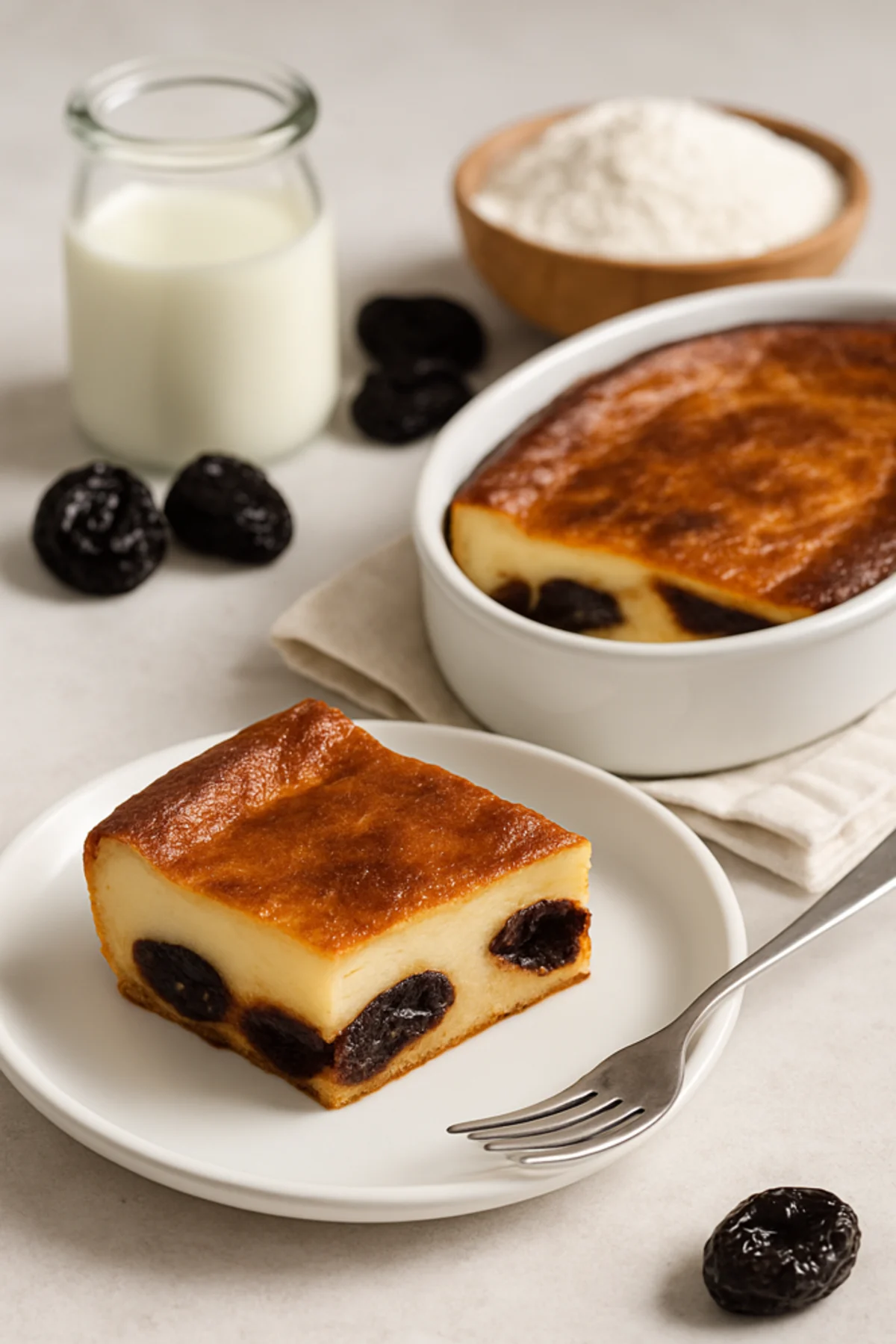
Texturally, Far Breton lands somewhere between a thick flan and a clafoutis. The top and edges puff and turn golden, forming a lightly chewy, caramelized crust. Inside, the custard stays tender and just set. Bites with prune are sweet, jammy, and slightly boozy if you’ve soaked the fruit in rum, brandy, or black tea.
What makes Far Breton so special is its humble ingredient list paired with surprisingly complex flavor. Flour, milk, eggs, and sugar create a gently sweet, custardy base that lets the prunes shine. The prunes provide richness, natural fruit sweetness, and a hint of tartness. Vanilla and optional rum or brandy add aromatic depth.
From a wine lover’s perspective, Far Breton is a dream: the dessert isn’t overly sugary, the fruit character is clear, and there’s enough fat and richness from the custard to stand up to a range of dessert wines and lighter reds. That balance of sweet and fruity is exactly what makes the wine pairing potential so exciting.
Key Ingredients & Their Role
Far Breton with Prunes relies on a few core ingredients; each one matters for both flavor and texture—and even for choosing the right wine recommendation.
Prunes (Dried Plums)
Prunes are the star here. They bring:
- Deep, jammy fruit flavor with notes of plum, fig, and a little caramel
- Natural sweetness that’s more mellow than fresh fruit
- A soft, luscious texture after soaking in rum, brandy, tea, or water
Because prunes are rich and dark-fruited, they point you toward wines with plum, fig, and dried fruit notes—think certain Ports, Banyuls, or a fruit-forward California Zinfandel when you want a bolder pairing.
Flour
All-purpose flour gives the custard its body, making it thicker than a flan but softer than cake. It:
- Helps the custard hold its shape once baked
- Creates a slightly chewy edge as it browns
That structure means you can pair this dessert with wines that have a little weight—medium-bodied dessert wines or light reds—without the wine overwhelming a too-delicate dessert.
Milk
Whole milk is classic and strongly recommended.
- It adds creaminess and richness to the custard
- The fat softens sweetness, so the dessert reads as gently sweet, not cloying
Because the sweetness level is moderate, you’re not locked into only very sweet wines. Lightly sweet wines, some off-dry styles, and even a soft, low-tannin red can all be good options.
Eggs
Eggs provide:
- Structure, helping the custard set
- A silky, custardy texture when baked properly
The egg-rich base loves wines with good acidity, which cut through richness and keep each bite feeling fresh rather than heavy.
Sugar
Granulated sugar sweetens the custard but is usually used in modest quantities. That’s important for wine pairing because:
- Desserts that aren’t ultra-sweet give you more flexibility
- You can reach for wines in the off-dry to sweet range and not worry as much about the wine tasting sour by comparison
Vanilla & Rum/Brandy (Optional but Recommended)
Vanilla adds warm aroma and rounds out the custard. Rum, Cognac, Armagnac, or brandy (or even black tea) to soak the prunes adds:
- Complexity (spice, caramel, toasted notes)
- A more grown-up flavor profile that pairs beautifully with fortified wines and oak-aged wines
Those warm, toasty flavors echo the barrel notes in many dessert wines and some New World reds, making the perfect match easier to find.
Recipe: Traditional Far Breton with Prunes
Below is an approachable, U.S.-kitchen–friendly Far Breton recipe inspired by traditional Breton versions and modern pastry references.
At a Glance
- Servings: 8–10
- Prep Time: 20 minutes (plus soaking time)
- Soak/Rest Time: 30–120 minutes
- Bake Time: 45–55 minutes
- Total Time: About 1 hour 30 minutes–2 hours
- Difficulty: Easy–Intermediate (very forgiving)
Ingredients
- 25 pitted prunes (about 6–7 oz), preferably soft
- 1/3 cup brandy or dark rum (or strong black tea, for non-alcoholic)
- 2 cups whole milk
- 3 large eggs
- 3/4 cup granulated sugar
- 3/4 cup all-purpose flour
- 5 tablespoons unsalted butter, melted, plus 2 tablespoons for the pan
- 1/2 teaspoon vanilla extract
- 1/8 teaspoon kosher salt
> Tip: If you prefer a slightly lighter custard, you can use 2 eggs + 2 yolks instead of 3 whole eggs, following some classic French versions.
Equipment
- 10–12 inch oven-safe skillet or 9x13 inch baking dish
- Medium saucepan
- Mixing bowl and whisk or blender/food processor
Step-by-Step Instructions
1. Soak the prunes
- Combine the prunes, brandy (or rum), and black tea or water in a small saucepan.
- Bring just to a simmer over medium heat and cook for 3–4 minutes, stirring once or twice, until the prunes plump and most of the liquid is absorbed.
- Remove from heat, cover, and let cool completely. You can do this up to a day ahead and refrigerate.
2. Make the custard batter
You can whisk by hand or use a blender/food processor.
- Preheat your oven to 400°F.
- In a large bowl (or blender), combine milk, eggs, sugar, 5 tablespoons melted butter, vanilla, salt, and flour.
- Whisk or blend until completely smooth—no lumps of flour should remain.
- Let the batter rest at least 30 minutes and up to 2 hours in the fridge. This hydrates the flour and improves the texture.
3. Prepare the pan
- Place your cast iron skillet or baking dish over medium heat.
- Add the remaining 2 tablespoons butter, letting it melt and just begin to brown for extra flavor.
- Swirl the butter to coat the bottom and sides thoroughly.
4. Assemble the Far Breton
- Give the batter a quick stir.
- Pour the batter into the hot, buttered skillet or dish.
- Gently scatter the cooled prunes evenly over the surface; they will sink slightly as it bakes.
5. Bake
- Transfer to the center rack of your preheated oven.
- Bake for 45–50 minutes, until:
- The top is puffed and deep golden brown
- The center is just set and barely wobbles when you jiggle the pan
- If the top is browning too fast, tent loosely with foil for the last 10 minutes.
6. Cool and serve
- Remove from the oven and cool at least 20–30 minutes.
- Serve warm or at room temperature, cut into squares or wedges.
Nutrition & Dietary Notes (Approximate per serving, 1/10 of pan)
- Calories: ~260–290
- Carbohydrates: ~33 g
- Protein: ~6–7 g
- Fat: ~11–13 g
- Vegetarian: Yes
- Nut-Free: Yes (check labels on prunes/spirits)
- Alcohol: Some alcohol from the soaking liquid may remain after baking; use tea or water if avoiding.
This dessert keeps well in the fridge for 2–3 days. The texture will firm up; you can rewarm slices gently in a low oven.
Perfect Wine Pairings for Far Breton with Prunes
Because this dessert is sweet but not syrupy, with a clear fruity, custardy profile, you have several excellent wine pairing paths. Here’s how to think about choosing a wine for Far Breton with Prunes and some specific styles to look for at Total Wine, Trader Joe’s, BevMo, or your local shop.
What to Look For in a Wine
Focus on wines with:
- Fruit-forward flavors (plum, fig, baked apple, dried fruits)
- Medium to high acidity, to cut through the custard’s richness
- Low to moderate tannins if red, so they don’t clash with the dessert’s sweetness
- Off-dry to sweet sugar levels; the wine should be at least as sweet as the dessert to avoid tasting sour by comparison
1. Late Harvest or Off-Dry Riesling (Washington, Oregon, or German)
A late harvest Riesling is one of the most reliable, crowd-pleasing options.
- Why it works: Bright acidity lifts the custard, while notes of stone fruit, citrus, and sometimes honey echo the prunes without competing.
- Where to buy: Look for Washington or Oregon producers at Total Wine or BevMo in the $15–$25 range, or a German Spätlese/Auslese at local shops.
- Style tip: Aim for medium-sweet, not syrupy—label terms like late harvest, Spätlese, or Auslese are good markers.
2. Banyuls or Ruby Port (France, Portugal)
If you want a dark, rich, and indulgent pairing, a fortified wine is a perfect match.
- Banyuls (France): A Grenache-based sweet red from Roussillon, famous with chocolate but fantastic with prune desserts.
- Flavors: Dried cherry, fig, cocoa, warm spice
- Pairs beautifully with the rum/brandy-soaked prunes and caramelized edges.
- Ruby Port (Portugal): More widely available in U.S. shops.
- Flavors: Juicy plum, dark berries, sweet spice
- A friendly, accessible choice that many guests already recognize.
- Where to buy: Both are commonly found at Total Wine and many local wine stores in the $18–$30 range.
3. Late Harvest Zinfandel or Sweet Red Blend (California)
For a New World twist, try a late harvest Zinfandel or a sweet red blend from California.
- Why it works: Zin often shows blackberry, plum, and baking spices, which harmonize with prunes and vanilla.
- Body: Medium to full, with enough richness to stand up to the custard.
- Where to buy: Look for California producers in Napa, Sonoma, or Lodi at BevMo or Total Wine; some Trader Joe’s locations also carry sweeter red blends around $10–$18.
4. Lightly Sweet Sparkling Wine (Moscato d’Asti or Demi-Sec Sparkling)
If you like bubbles with dessert, a lightly sweet sparkling wine is a fun, refreshing choice.
- Moscato d’Asti (Italy): Low alcohol, gently sparkling, with peach, apricot, and floral notes.
- Demi-sec sparkling (U.S. or French): A slightly sweet sparkling with more body.
- Why it works: The bubbles clean the palate, and the fruit-driven sweetness complements the custard without overwhelming it.
- Where to buy: Widely available at Trader Joe’s, Total Wine, and BevMo, often between $10–$20.
Bonus: For Red-Wine-Only Drinkers
If your guests insist on still red wine, choose a very soft, fruity red and serve it slightly chilled:
- Options: Oregon Pinot Noir, Beaujolais-Villages, or a lighter California Pinot.
- Look for descriptors like “juicy,” “low tannin,” “soft”, and avoid heavily oaked or high-tannin styles.
This is less classic than a dessert wine pairing, but with Far Breton’s moderate sweetness, it can still be a pleasant combination.
When in doubt or if you want to explore beyond these options, you can use Vinomat to plug in Far Breton with Prunes and instantly see tailored wine recommendations that fit your local store’s selection and price range.
Cooking Tips & Techniques
Far Breton is very forgiving, but a few professional-style tricks will give you restaurant-quality results every time.
Hydrate the Prunes Well
- Soak the prunes long enough that they’re plump and tender, whether in rum, brandy, tea, or water.
- If they’re still tough when cool, add a splash more liquid and gently rewarm.
Rest the Batter
- Allowing the batter to rest 30–120 minutes lets the flour fully hydrate, leading to a smoother, more custardy texture.
- A rested batter also bakes more evenly and is less likely to feel grainy.
Use Whole Milk and Real Butter
- Whole milk gives the best mouthfeel; lower-fat milk can lead to a thinner, less luxurious custard.
- Browning the butter slightly before adding it to the pan builds nutty, toasty flavors that echo well with oak-aged wines and darker dessert wines.
Avoid Overbaking
- You want the center just set, not dry.
- The Far will continue to cook slightly after leaving the oven.
- If a knife or skewer comes out mostly clean and the top is golden and puffed, you’re there.
Cool Before Cutting
- Let it cool at least 20–30 minutes so the custard can firm up.
- Cutting too early can result in messy slices and a weepy texture.
Make Ahead
- You can bake Far Breton earlier in the day and serve at room temperature.
- Leftovers reheat gently in a 275°F oven for about 10–15 minutes.
Serving Suggestions
Far Breton with Prunes is versatile enough for a casual Sunday brunch or a refined dinner party dessert.
- Temperature: Serve slightly warm or at room temperature. Too hot and the custard will taste eggy; too cold and it can feel firm and muted.
- Portioning: Cut into squares or slim rectangles for a rustic look, or into neat wedges if baked in a round dish.
- Garnishes:
- A light dusting of powdered sugar
- A spoonful of lightly whipped cream or crème fraîche
- A few extra prunes or slices of fresh plum on the side
For a full experience, pair it with one of the suggested wines:
- A small pour of late harvest Riesling for something bright and elegant
- A ruby Port or Banyuls for a rich, fireside feel
- Moscato d’Asti if you want a gentle, bubbly finish to the meal
Set the table with warm tones—linen napkins, candlelight, maybe a wood board for serving the pan straight from the oven—and you’ve created a relaxed, French-inspired bistro vibe at home.
If you’re hosting a tasting night, you can even pour two different wines side by side (say, a late harvest Riesling and a ruby Port) and let guests decide their own perfect match.
Conclusion: Bake Once, Pair Many Ways
Far Breton with Prunes is one of those recipes that punches far above its weight: simple ingredients, minimal effort, and a deeply satisfying result. Its gently sweet, fruity profile makes it an ideal canvas for exploring wine pairing, from late harvest whites to fortified reds.
Next time you’re at Total Wine, Trader Joe’s, BevMo, or your favorite neighborhood shop, pick up the ingredients for this recipe and a bottle or two to test your own wine for Far Breton with Prunes. And if you’re not sure where to start, open Vinomat and let it suggest a tailored wine recommendation that fits your budget and taste.
Bake the Far, pour the wine, and discover how this rustic Breton classic becomes a perfect match for your wine-loving table.