


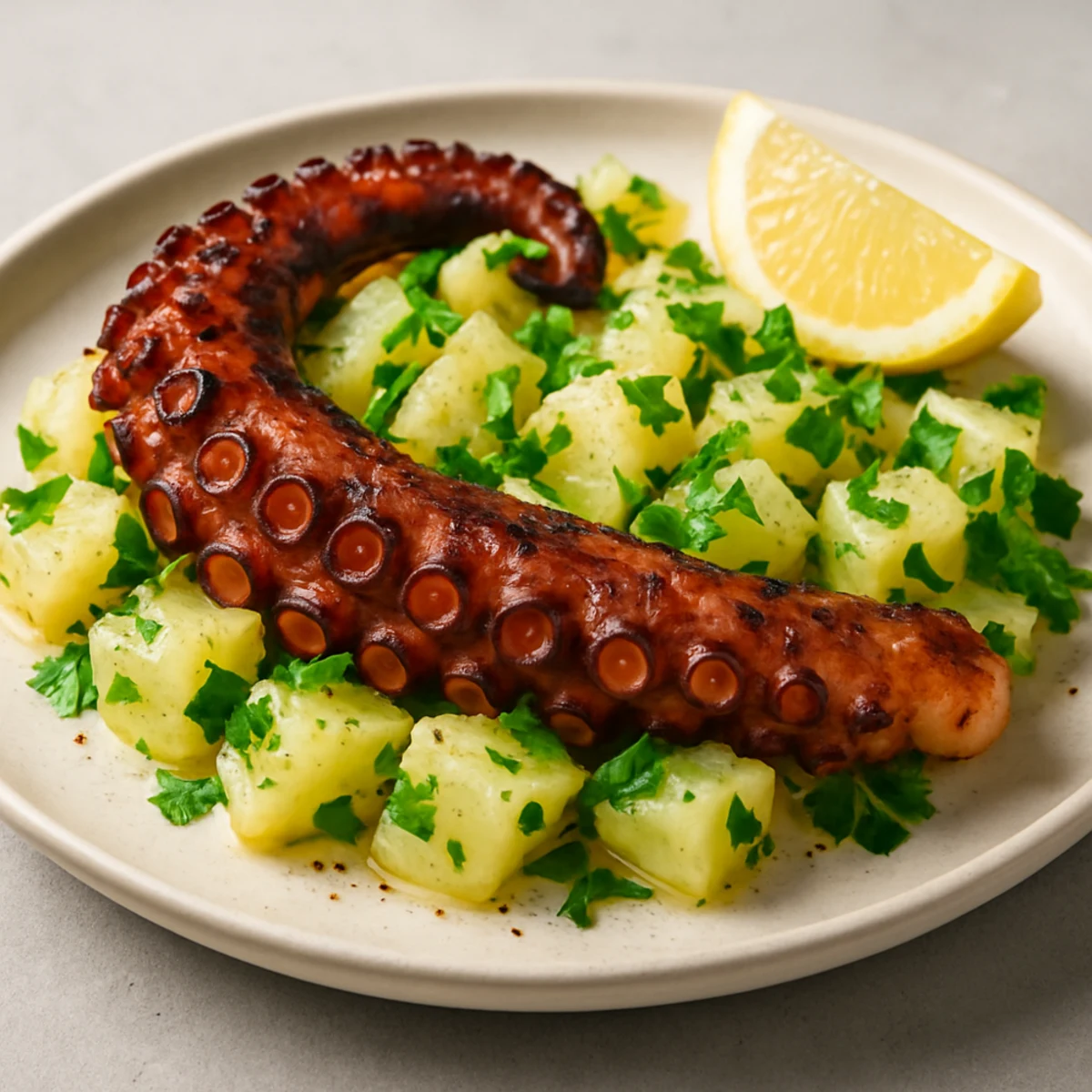
Grilled Octopus with Potato & Parsley Salad + Wine Pairing
Grilled Octopus with Potato and Parsley Salad (with Wine Pairing)
If you love seafood and great wine, grilled octopus might be the restaurant dish you secretly wish you could pull off at home. The good news: you absolutely can. This Grilled Octopus with Potato and Parsley Salad is a simple, Mediterranean-inspired octopus recipe that balances salty, smoky, and fresh flavors—and it’s surprisingly weeknight‑friendly once you know a few tricks.
Paired with the right wine, this grilled octopus recipe goes from “interesting” to unforgettable. Think bright, citrusy whites, mineral‑driven rosés, or silky Pinot Noir you can grab at places like Total Wine, Trader Joe’s, BevMo, or your local shop. And if you want to explore even deeper pairing options, the Vinomat app can help you dial in a perfect match based on the exact bottle you have on hand.
About This Dish
Grilled octopus has deep roots around the Mediterranean—especially in Greece, Spain, and along the Italian coast. In seaside tavernas, you’ll often see octopus grilled over open flames, then served simply with lemon, olive oil, potatoes, and plenty of herbs. It’s rustic food with a refined flavor profile.
Our Grilled Octopus with Potato and Parsley Salad takes that tradition and makes it accessible for the American home cook. You’ll gently simmer the octopus until tender, give it a quick char on the grill for smoky edges, then toss it with warm potatoes, bright parsley, and a lemon‑forward dressing. The result is a dish that feels like it came off a Greek island waterfront menu, but cooks easily on a backyard grill or grill pan.
What makes this dish special is its contrast of textures and temperatures:
- Tender, slightly bouncy octopus with crisp, charred edges
- Soft, creamy potatoes that soak up the dressing
- Fresh parsley and lemon that keep every bite bright and lifted
Flavor‑wise, you get savory, oceanic salinity from the octopus, rounded by the mild sweetness of potatoes and the grassy pepperiness of extra‑virgin olive oil. That combination is a dream for wine pairing: there’s enough richness to stand up to fuller whites or even light reds, but plenty of acidity and freshness to keep everything in balance.
Whether you’re exploring more Mediterranean octopus recipes, planning a date night at home, or hosting wine‑loving friends, this is a dish that feels both adventurous and comforting—exactly the kind of recipe that turns a simple evening into an experience.
Key Ingredients & Their Role
Octopus
Octopus can look intimidating, but it’s essentially a blank canvas for flavor. Properly cooked, it should be tender with a gentle chew, not rubbery. The key is low and slow simmering first, then a quick hit of high heat on the grill.
- Flavor: Mild, slightly sweet, with clean ocean notes.
- Role in the dish: Provides protein and a smoky, savory backbone once grilled.
- Wine impact: Because octopus is delicate but slightly sweet, it pairs beautifully with wines that have good acidity and subtle fruit, like Albariño, Spanish Verdejo, or coastal Chardonnay.
Potatoes
Potatoes make this grilled octopus feel hearty enough to be a main course while remaining light and fresh.
- Flavor: Mild, earthy, and slightly sweet when boiled.
- Role in the dish: They absorb the lemony dressing and octopus juices, creating a flavorful base for the salad.
- Wine impact: The starch and gentle sweetness of potatoes welcome wines with a bit more body, like a richer white or a light red (Pinot Noir, Gamay).
Parsley
Parsley is much more than garnish here—it’s a core flavor.
- Flavor: Bright, grassy, slightly peppery.
- Role in the dish: Cuts through the richness of olive oil and the starch of potatoes, giving the salad a fresh, green lift.
- Wine impact: Herbaceous notes in the dish echo similar tones in wines like Sauvignon Blanc or Italian Vermentino.
Lemon & Olive Oil
A good lemon‑olive oil dressing ties the salad together.
- Lemon juice: Provides acidity that keeps the dish from feeling heavy and helps the wine’s acidity shine.
- Extra‑virgin olive oil: Adds richness, mouthfeel, and a peppery finish.
For wine pairing, this acidity is your friend. It allows you to choose wines with higher natural acidity (think many European whites and West Coast coastal styles) without anything tasting sharp or out of balance.
Together, the octopus, potatoes, and parsley create a salty‑fresh profile that is tailor‑made for wine. It’s one of those grilled octopus recipes where food and wine really elevate each other.
Recipe: Grilled Octopus with Potato and Parsley Salad
Overview
- Servings: 4 as a main course (6 as an appetizer)
- Prep time: 20 minutes (plus optional chilling time)
- Cook time: 60–75 minutes
- Total time: 1 hour 20 minutes to 1 hour 35 minutes
- Difficulty: Moderate (mostly hands‑off; technique is simple once you know the steps)
Ingredients
For the octopus
- 2 lb whole octopus, cleaned (fresh or thawed frozen)
- 1 cup dry white wine
- 2 bay leaves
- 5–6 whole black peppercorns
- 3–4 parsley stems (optional, for aromatics)
- 1/2 lemon, peel only (wide strips, no white pith if possible)
- 2 cloves garlic, lightly crushed
- 2 tbsp extra‑virgin olive oil (for grilling)
- Kosher salt and freshly ground black pepper, to taste
For the potato and parsley salad
- 1 1/2 lb small Yukon Gold or red potatoes, scrubbed
- 1/4 cup extra‑virgin olive oil
- 3 tbsp fresh lemon juice (about 1 large lemon), plus extra to finish
- 1 small shallot, finely minced (or 2 green onions, thinly sliced)
- 1 small garlic clove, very finely minced or grated (optional)
- 1/2 tsp kosher salt, plus more to taste
- 1/4 tsp freshly ground black pepper
- 1/2 tsp sweet paprika (optional, for a smoky note)
- 1/4–1/2 tsp crushed red pepper flakes (optional, for heat)
- 1/2 cup fresh flat‑leaf parsley, finely chopped
To finish
- Extra chopped parsley
- Extra‑virgin olive oil, for drizzling
- Lemon wedges, for serving
Step‑by‑Step Instructions
1. Simmer the octopus
- Place the cleaned octopus in a large pot. Add the white wine, bay leaves, peppercorns, parsley stems, lemon peel, and garlic.
- Add enough water to just cover the octopus.
- Bring to a gentle boil over medium‑high heat, then immediately lower to a very gentle simmer.
- Cover and cook for 45–60 minutes, or until the thickest part of a tentacle can be easily pierced with a knife. Start checking around 40–45 minutes—cooking time can vary depending on octopus size.
- Once tender, turn off the heat and let the octopus cool in its cooking liquid for at least 10–15 minutes. This helps it stay juicy.
2. Prepare the potatoes
- While the octopus simmers, place the scrubbed potatoes in a separate pot and cover with cold, salted water by about 1 inch.
- Bring to a simmer over medium heat and cook until just fork‑tender, about 15–20 minutes, depending on size.
- Drain and let cool just until you can handle them comfortably. While still warm, cut into bite‑size pieces (halves or quarters, depending on size).
3. Make the lemon‑parsley dressing
- In a large mixing bowl (big enough to hold the salad), whisk together:
- 1/4 cup olive oil
- 3 tbsp lemon juice
- Minced shallot
- Garlic (if using)
- 1/2 tsp kosher salt
- 1/4 tsp black pepper
- Paprika and red pepper flakes, if using
- Taste and adjust seasoning—remember, the potatoes will mellow it out, so you want the dressing slightly punchy.
4. Toss the warm potatoes
- While still slightly warm, add the cut potatoes to the bowl with the dressing.
- Gently toss to coat. Warm potatoes absorb flavor better, so don’t wait until they’re cold.
- Set aside at room temperature while you finish the octopus.
5. Grill the octopus
- Remove the octopus from its cooking liquid and pat dry with paper towels.
- If the head is attached, you can cut it off and slice it or reserve for another use.
- Cut the individual tentacles away from the central body.
- Preheat a grill or grill pan to medium‑high heat. Lightly oil the grates (or brush the pan) to prevent sticking.
- Toss the tentacles with 2 tbsp olive oil and a light sprinkle of salt and pepper.
- Grill the octopus 3–4 minutes per side, until nicely charred in spots and lightly crisp on the edges.
- Transfer to a cutting board and let rest for a couple of minutes, then slice into 1/2‑inch rounds or leave the smaller pieces whole for a more rustic look.
6. Assemble the salad
- Add the chopped parsley to the bowl with the potatoes and toss gently.
- Add the sliced grilled octopus and fold everything together carefully so the potatoes don’t break up.
- Taste and adjust with more lemon juice, salt, or pepper as needed.
- Transfer to a serving platter or shallow bowl.
- Finish with a drizzle of good olive oil, extra parsley, and a final squeeze of lemon.
Nutrition & Dietary Notes (per serving, 1/4 of recipe; estimates)
- Calories: ~430–480
- Protein: ~30–35 g
- Fat: ~18–24 g (mostly from olive oil)
- Carbohydrates: ~35–40 g
- Fiber: ~3–4 g
- Gluten‑free: Yes
- Dairy‑free: Yes
- Pescatarian: Yes
This grilled octopus recipe is naturally gluten‑free and dairy‑free, making it a great option for mixed‑diet dinner parties.
Perfect Wine Pairings for Grilled Octopus with Potato and Parsley Salad
Grilled octopus is one of those dishes that really rewards thoughtful wine pairing. You have:
- Salty, ocean‑bright flavors from the octopus
- Creamy starch from the potatoes
- High‑acid lemon dressing
- Fresh green notes from parsley
Together, they call for wines that are fresh, aromatic, and medium‑bodied, with enough acidity to match the lemon and enough texture to handle the potatoes.
What to Look For in a Wine
- Body: Light to medium body; too heavy and the wine will overpower the octopus.
- Acidity: Medium‑high acidity to match the citrusy dressing.
- Tannins: Low tannins (if choosing red) so the wine doesn’t clash with the ocean flavors.
- Flavor profile: Citrus, green apple, stone fruit, minerality, and subtle herbs all play nicely here.
Recommended Wine Styles
- Coastal Chardonnay (California, Sonoma Coast or Santa Barbara)
Look for unoaked or lightly oaked styles labeled with terms like “stainless steel” or “minimal oak.” These wines bring citrus, green apple, and a touch of roundness that love both the octopus and potatoes.
- Why it works: The wine’s texture mirrors the creaminess of the potatoes, while the acidity brightens the lemon and parsley.
- Where to buy: Widely available at Total Wine, BevMo, and many grocery stores in the $15–$25 range.
- Albariño (Rías Baixas, Spain)
If you like a more classic Mediterranean feel, Albariño is a top choice for any octopus grilled over high heat.
- Why it works: High acidity, citrus, and saline mineral notes echo the ocean character of the octopus and the brightness of the dressing.
- Availability: Often found at Total Wine and local wine shops around $15–$22.
- Oregon Pinot Noir (Willamette Valley)
Yes, you can do red wine with grilled octopus—especially in a salad with potatoes. Choose a lighter‑bodied, high‑acid red.
- Why it works: Silky tannins and red fruit complement the char from the grill without overwhelming the seafood. Chill it slightly (about 15–20 minutes in the fridge) for extra freshness.
- Availability: Look for entry‑level bottlings from reputable Oregon producers, usually $20–$30 at BevMo, Total Wine, and good local shops.
- Dry Rosé (Provence or Spanish Rosado)
A dry rosé is a flexible, crowd‑pleasing option that feels tailor‑made for this dish.
- Why it works: Bright acidity and red berry flavors bridge the gap between seafood and potatoes, while the savory herbal notes play nicely with parsley.
- Availability: Trader Joe’s and grocery stores usually carry solid Provence‑style rosés in the $10–$18 range.
Bonus: Greek‑Inspired Pairing
Since this dish leans toward a Greek grilled octopus recipe profile, you can also seek out Greek whites like Assyrtiko if your local shop stocks them. Assyrtiko’s intense acidity and minerality are phenomenal with lemony seafood dishes.
Not sure which bottle to grab? Open Vinomat, plug in “grilled octopus with potato and parsley salad,” and let the app suggest specific producers and vintages based on what’s in stock near you.
Cooking Tips & Techniques
- Don’t fear frozen octopus
Frozen octopus is often more tender because the freezing process helps break down some of the muscle fibers. It’s also easier to find in many U.S. markets.
- Gentle simmer, never a hard boil
Boiling octopus aggressively can make it tough. Keep the liquid at a lazy simmer—just a few bubbles breaking the surface.
- Test for doneness early
Start checking after about 40–45 minutes. When a small knife slides easily into the thickest part of a tentacle, it’s ready.
- Dry thoroughly before grilling
Moisture is the enemy of good grill marks. Pat the octopus very dry and lightly oil it before it hits the grill.
- High heat for quick char
The goal of grilling here is flavor and texture, not cooking the octopus through—it’s already tender from simmering. Use high heat and short time for charred edges and smoky flavor.
- Dress the potatoes while warm
Warm potatoes absorb the lemon‑olive oil dressing better, so they’ll be more flavorful.
- Season at the end
Octopus and potatoes can both soak up salt, so do a final taste and seasoning adjustment just before serving.
With these tips, even a first‑time cook can turn out a restaurant‑quality grilled octopus salad at home.
Serving Suggestions
Serve your Grilled Octopus with Potato and Parsley Salad slightly warm or at cool room temperature. This makes it a flexible dish for everything from a casual backyard dinner to a more elegant wine‑focused evening.
- Plating: Spread the potato salad on a large platter, then arrange the sliced grilled octopus over the top so the charred edges are visible. Finish with extra parsley and a generous drizzle of olive oil.
- Garnishes: Lemon wedges, flaky sea salt, and a light sprinkle of smoked paprika or Aleppo pepper add color and flavor.
- Accompaniments:
- A simple green salad with a light vinaigrette
- Grilled vegetables (zucchini, peppers, or asparagus)
- Crusty bread or a baguette for soaking up the dressing and juices
For a Mediterranean wine night, pour your chosen bottle—perhaps an Albariño or Oregon Pinot Noir—and set everything out family‑style. This is the kind of grilled octopus recipe that invites people to linger at the table, tasting, sipping, and comparing which wine they like best with each bite.
Conclusion
Grilled Octopus with Potato and Parsley Salad brings the flavors of a seaside taverna straight to your grill, with a salty‑fresh profile that’s made for great wine. Once you’ve tried this grilled octopus at home, you’ll see how simple it really is—and how much a thoughtful pairing can elevate the entire experience.
Next time you’re at Total Wine, Trader Joe’s, BevMo, or your local shop, grab a bottle of coastal Chardonnay, Albariño, dry rosé, or Oregon Pinot Noir. Then open Vinomat to fine‑tune the pairing to your exact bottle and vintage. With this dish and the right wine in your glass, you’re not just cooking dinner—you’re creating a restaurant‑worthy moment at home.