


Octopus Salad Recipe & Wine Pairing Guide for Home Cooks
Octopus Salad Recipe & Wine Pairing Guide for Home Cooks
There's something undeniably magical about a perfectly prepared octopus salad. The tender, delicate tentacles mingling with creamy potatoes, bright lemon, and herbaceous parsley create a dish that transports you straight to a sun-drenched Mediterranean coastline. But here's what really elevates this classic preparation: the right wine for octopus salad. Whether you're hosting a dinner party or enjoying a quiet weeknight meal, understanding how to pair wine with this elegant seafood dish transforms it from good to absolutely unforgettable.
Octopus salad has gained remarkable popularity in American home cooking over the past decade. What once seemed intimidating—cooking with octopus—is now accessible and exciting for adventurous home cooks. The beauty of this dish lies in its simplicity and versatility. It's equally at home as an elegant appetizer at a dinner party or as a light, satisfying main course on a warm summer evening. And when you understand the fundamentals of wine pairing, you'll discover that this humble seafood salad becomes the perfect canvas for exploring wines you might not have considered before.
In this comprehensive guide, we'll walk you through everything you need to know about creating an authentic octopus salad in your own kitchen, from selecting the right octopus to mastering the cooking technique. More importantly, we'll explore the art of wine pairing with octopus salad, helping you discover combinations that will impress your guests and deepen your appreciation for both food and wine.
About This Dish
Octopus salad, or "insalata di polpo" as it's known in Italy, represents the soul of Mediterranean coastal cuisine. This dish has deep roots in the culinary traditions of Southern Europe, particularly in Italy, Spain, and Greece, where octopus has been a dietary staple for centuries. The preparation is straightforward yet requires an understanding of technique—the octopus must be cooked until perfectly tender, never rubbery or tough.
What makes octopus salad so special is its balance of contrasts. You get umami richness from the octopus itself, earthiness from the potatoes, brightness from fresh lemon and parsley, and a luxurious mouthfeel from quality olive oil. It's a dish that celebrates ingredient quality and respects traditional preparation methods while remaining completely approachable for modern home cooks.
The cultural significance of this dish cannot be overstated. In Mediterranean countries, octopus salad appears on tables during celebrations, family gatherings, and casual weeknight dinners alike. It's the kind of food that brings people together. The dish also carries nutritional benefits—octopus is an excellent source of lean protein, rich in minerals like selenium and copper, and contains beneficial omega-3 fatty acids.
What's particularly appealing to American food enthusiasts is how octopus salad fits perfectly into contemporary eating trends. It's naturally gluten-free, dairy-free, and aligns beautifully with Mediterranean diet principles. The recipe encourages the use of high-quality extra virgin olive oil and fresh ingredients, making it both a delicious and health-conscious choice. Understanding the wine pairing possibilities for this dish opens up an entire world of culinary exploration.
Key Ingredients & Their Role
Every component of octopus salad serves a specific purpose, and understanding these roles helps you appreciate why this simple combination works so beautifully—and how it influences wine pairing decisions.
The Octopus is undoubtedly the star. When properly cooked, octopus develops a tender, slightly chewy texture with a delicate, briny flavor. The meat is lean and packed with umami compounds that make it incredibly satisfying. This umami quality is crucial when considering wine pairing for octopus salad. You'll want wines with enough body and complexity to stand up to these savory characteristics without overwhelming the dish's delicate flavors.
Potatoes add substance and earthiness to the salad. They absorb the dressing beautifully, creating pockets of flavor throughout the dish. The starch in potatoes also provides a subtle sweetness that balances the brininess of the octopus. When selecting potatoes, waxy varieties work best as they hold their shape during cooking and don't become mealy.
Fresh Parsley brings herbaceous brightness and a clean finish. It's not merely a garnish—the parsley actively cuts through the richness of the olive oil and the density of the octopus and potatoes. This herbal component is important for wine pairing, as it suggests wines with good acidity and fresh, grassy notes.
Extra Virgin Olive Oil is the binding agent that brings everything together. High-quality olive oil adds fruity, peppery, or buttery notes depending on its origin and harvest time. This ingredient significantly influences how you approach wine pairing with octopus salad. The oil's characteristics should complement your wine choice.
Lemon provides essential acidity that brightens the entire dish. The zest adds aromatic complexity, while the juice adds tang that prevents the salad from feeling heavy. This acidity is a critical consideration when selecting wine for octopus salad—you want wines that echo this freshness rather than clash with it.
Garlic and Bay Leaves add depth during cooking and in the final dressing. These aromatics contribute subtle complexity that invites wines with good aromatic profiles. The bay leaves infuse the cooking liquid with a gentle herbal note that carries through to the finished dish.
Together, these ingredients create a dish with pronounced umami, bright acidity, herbaceous notes, and subtle richness. This flavor profile opens up exciting wine pairing possibilities that we'll explore in detail.
Recipe
Octopus Salad with Potatoes & Fresh Parsley
Prep Time: 45 minutes Cook Time: 15 minutes Total Time: 60 minutes Servings: 4 Difficulty: Moderate
Ingredients
- 1.5 kg Octopus (whole, cleaned)
- 500 g Potatoes (waxy variety, peeled and cubed)
- 2 tbsp Fresh parsley (chopped)
- 4 tbsp Olive oil (extra virgin)
- 1 Lemon (zested and juiced)
- 2 cloves Garlic (finely chopped)
- 2 Bay leaves
- To taste Salt
- To taste Black pepper (freshly ground)
Instructions
- Clean the octopus thoroughly if not already pre-cleaned. Rinse under cold water and set aside.
- In a large pot, bring water to a boil with 1 tbsp of salt, bay leaves, and the juice of half a lemon.
- Immerse the octopus in boiling water for 2-3 seconds, repeat this step three times to help tenderize it.
- Submerge the octopus completely and lower the heat to a gentle simmer. Cook for 40-50 minutes until the octopus is tender but not overcooked.
- While the octopus cooks, place the cubed potatoes in a separate pot. Cover with cold water, season with 1 tsp of salt, and bring to a boil. Simmer for 15-20 minutes until fork-tender. Drain and let cool slightly.
- Once the octopus is cooked, remove it from the pot and let it cool slightly. Slice the tentacles into bite-sized pieces.
- In a large bowl, combine the cooked potatoes, chopped parsley, and octopus slices.
- In a small bowl, whisk together the olive oil, lemon juice, lemon zest, garlic, salt, and pepper to create a dressing.
- Pour the dressing over the octopus and potato mixture. Toss gently to combine, ensuring the ingredients are evenly coated.
- Taste and adjust seasoning with additional salt and pepper if needed.
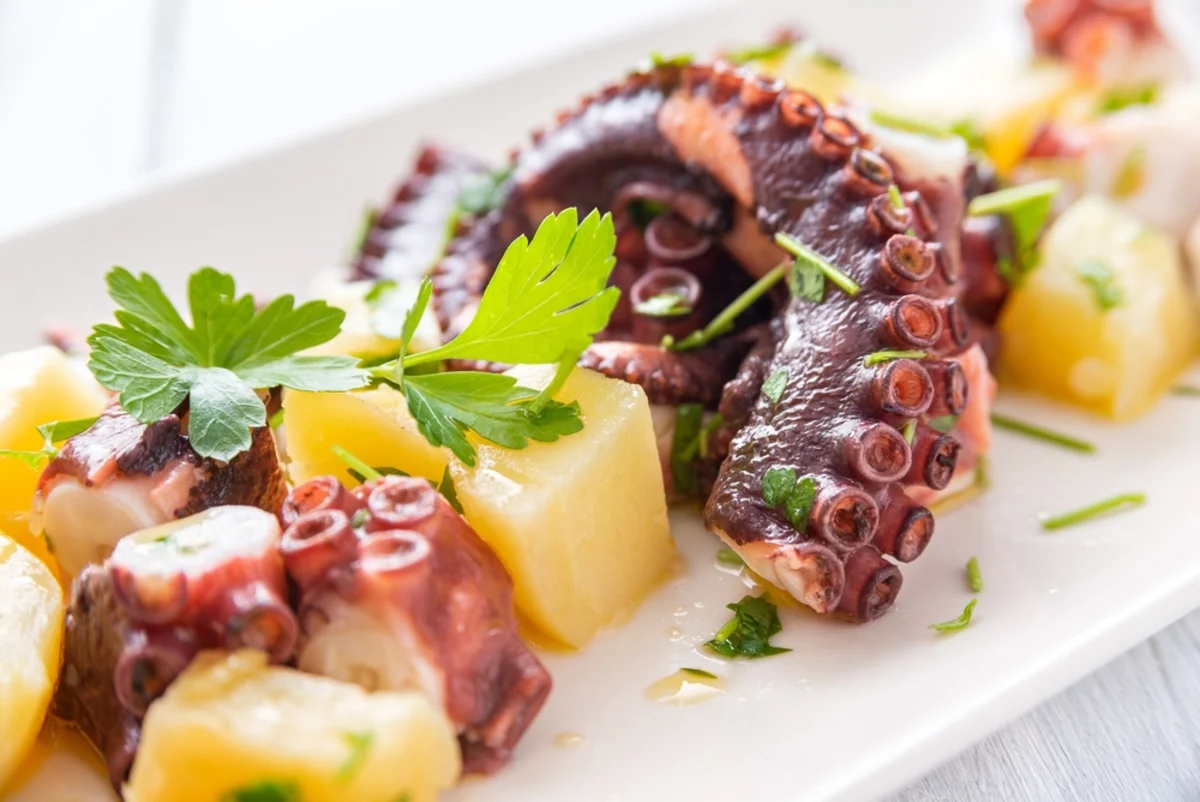
- Transfer the salad onto a large serving platter. Garnish with additional parsley leaves and a light drizzle of olive oil for an elegant presentation. Serve warm or at room temperature.
Nutrition Facts (per serving)
- Calories: 320 kcal
- Protein: 25.0g
- Fat: 15.0g
- Carbohydrates: 30.0g
- Salt: 1.5g
Dietary Information
Gluten-free, Dairy-free, Nut-free
Perfect Wine Pairings
Selecting the right wine pairing for octopus salad requires understanding how the dish's flavors interact with wine characteristics. The umami richness of the octopus, the herbaceous notes of parsley, and the bright acidity of lemon all influence which wines will shine alongside this Mediterranean classic.
Crisp White Wines with Minerality are perhaps the most intuitive choice for wine pairing with octopus salad. Look for wines with pronounced acidity and mineral characteristics that echo the salad's fresh, briny qualities. Sauvignon Blancs from California's Napa Valley or Sonoma County offer excellent value in the $15-25 range. These wines typically display grassy, herbaceous notes that complement the parsley beautifully. The acidity cuts through the olive oil without overwhelming the delicate octopus. You'll find excellent options at Total Wine or Trader Joe's.
Albariño and Other Spanish Whites are absolutely magnificent with octopus salad, which makes sense given that both originate from Mediterranean coastal regions. These wines offer salinity, citrus notes, and moderate body that feels purpose-built for seafood preparations. Spanish Albariño typically ranges from $12-20 and provides exceptional value. The wine's natural minerality and slight phenolic grip create a harmonious pairing that elevates both the wine and the dish.
Italian Vermentino or Pinot Grigio from regions like Sicily or the Veneto offer another excellent wine recommendation for octopus salad. These wines are crisp and clean with enough body to stand up to the potatoes without feeling thin. Look for versions that emphasize citrus and stone fruit rather than butter or oak. Many quality examples are available at BevMo or local wine shops for $14-22.
Dry Rosé from Provence or California presents an underrated but spectacular option for wine pairing with octopus salad. Rosés offer the acidity of white wines with slightly more body and complexity. The wine's subtle fruit flavors and herbal undertones complement both the octopus and the fresh herbs. California Rosés from producers in Sonoma or Napa deliver excellent quality at $16-28. This choice works particularly well if you're serving the salad as part of a larger meal with varied dishes.
The key to successful wine pairing with octopus salad is prioritizing acidity and freshness over heavy oak or butter. Avoid heavily oaked Chardonnays or rich, buttery whites—these will clash with the salad's bright, clean profile. Similarly, skip full-bodied reds; the tannins and weight will overwhelm the delicate seafood.
When exploring wine pairings, consider using tools like Vinomat, which helps you discover wines that match specific dishes and your taste preferences. This kind of guidance removes the guesswork from wine selection and helps you build confidence in your pairing choices.
Cooking Tips & Techniques
Mastering octopus salad requires understanding a few key techniques that separate good results from exceptional ones.
The Dunk and Lift Technique is crucial for tenderizing octopus. When you immerse the octopus in boiling water for just a few seconds and then lift it out, you're causing the muscle fibers to contract slightly. Repeating this three times before the final submerge helps break down the connective tissue and ensures even, tender cooking. This technique makes a noticeable difference in texture.
Cooking Time Matters Enormously. Undercooked octopus is rubbery and unpleasant; overcooked octopus becomes mushy. The sweet spot is 40-50 minutes of gentle simmering. You'll know it's done when a fork easily pierces the thickest part of the tentacle. Start checking around the 40-minute mark. If you're using baby octopus, reduce the cooking time to 20-30 minutes.
Don't Skip the Cooling Step. Allowing the octopus to cool slightly before cutting makes handling easier and prevents the flesh from tearing. However, you want the octopus still warm enough to absorb the dressing flavors effectively. Room temperature or slightly warm is ideal.
Dressing Timing is Strategic. Pour the dressing over the warm octopus and potatoes—warm ingredients absorb flavors more effectively than cold ones. Let the salad rest for at least 30 minutes before serving. This resting period allows the flavors to meld and intensify.
Quality Olive Oil Makes a Real Difference. Since olive oil is such a prominent flavor component, invest in good extra virgin olive oil. The difference between supermarket and quality oil is noticeable. Look for bottles that indicate harvest date or "early harvest" for fresher, more vibrant flavors.
Common Mistakes to Avoid: Many home cooks overcook octopus, resulting in that rubbery texture that gives the ingredient a bad reputation. Others undersalt the cooking water, resulting in bland octopus. Use adequate salt—the water should taste like seawater. Finally, don't be timid with the lemon juice and garlic; these ingredients should be clearly present, not subtle.
Serving Suggestions
Octopus salad's versatility means it works beautifully in multiple contexts, each requiring slightly different presentation approaches.
As an Elegant Appetizer: Serve the salad on individual small plates or in shallow bowls, garnished with a whole parsley leaf and a light drizzle of excellent olive oil. A wedge of lemon on the side allows guests to adjust acidity to their preference. This presentation works beautifully when paired with a crisp wine pairing like Sauvignon Blanc or Albariño.
As a Main Course: Increase the portion size and consider serving the salad on a bed of fresh arugula or tender lettuce leaves. Add some crusty bread on the side for soaking up the delicious dressing. This heartier presentation pairs wonderfully with a slightly fuller wine like Vermentino or dry Rosé.
For Casual Entertaining: Present the octopus salad family-style on a large platter, allowing guests to serve themselves. This approach feels warm and inviting, perfect for summer gatherings. The salad can be served at room temperature, making it ideal for outdoor entertaining.
Temperature Considerations: While traditionally served warm or at room temperature, octopus salad also works well chilled, particularly on hot days. If serving chilled, add the dressing just before serving to prevent the salad from becoming soggy.
Accompaniments: Crusty bread is essential for soaking up the flavorful dressing. Consider adding a simple green salad with the same lemon-olive oil dressing for variety. Marinated vegetables like roasted peppers or grilled zucchini complement the dish beautifully.
Wine Service: Chill your selected wine to 45-50°F for white wines or 55-60°F for Rosé. Open the bottle 15 minutes before serving to allow it to breathe slightly. The combination of chilled wine and the bright, fresh flavors of octopus salad creates a genuinely memorable dining experience.
Conclusion
Octopus salad represents everything wonderful about Mediterranean cooking: simplicity, quality ingredients, and bold flavors that somehow work in perfect harmony. By mastering this recipe and understanding the fundamentals of wine pairing with octopus salad, you're not just learning to cook a single dish—you're developing skills and confidence that will enhance your entire culinary repertoire.
The beauty of this dish lies in its flexibility. Whether you're seeking an impressive dinner party centerpiece or a satisfying weeknight meal, octopus salad delivers. And when you approach it with intention regarding wine pairing, you elevate the experience into something truly special. Start with one of the wine recommendations we've discussed—perhaps a crisp Sauvignon Blanc or Spanish Albariño—and notice how the wine and food dance together on your palate.
Don't be intimidated by cooking octopus. Follow the techniques outlined here, respect the ingredient, and you'll create something that tastes like you've spent years perfecting your craft. As you continue exploring the intersection of food and wine, tools like Vinomat can help you discover new pairings and build your wine knowledge. The world of wine pairing is vast and exciting—octopus salad is simply the beginning of your journey. Cook with confidence, pair thoughtfully, and savor every moment.