


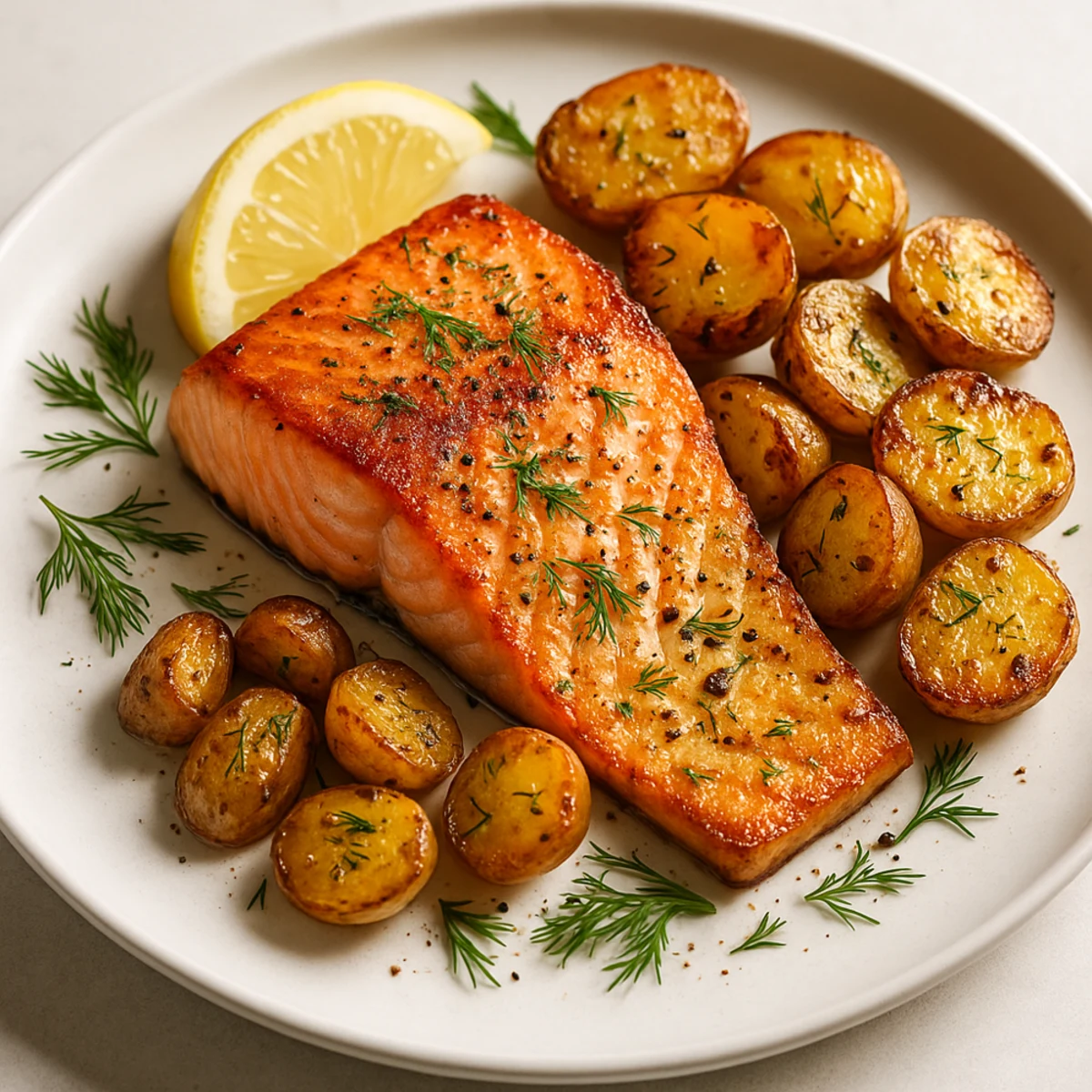
Pan-Seared Salmon with Garlic Potatoes and Dill (With Wine Pairing)
Pan-Seared Salmon with Garlic Potatoes and Dill (With Wine Pairing)
Seared salmon is one of those restaurant-style dishes that feels luxurious but is surprisingly easy to pull off at home. This pan-seared salmon with garlic potatoes and dill brings together crispy golden fish, buttery potatoes, and a bright hit of fresh herbs—perfect for a relaxed weeknight dinner or a date-night in. Even better, it’s a dream for wine pairing.
In this guide, you’ll get a foolproof pan seared salmon recipe, plus sommelier-level wine recommendations you can actually find at places like Total Wine, Trader Joe’s, BevMo, and your local shop. By the end, you’ll not only know how to pan sear salmon like a pro, but also how to pour the perfect glass to go with it.
About This Dish
This dish sits at the intersection of comfort food and fresh, modern cooking. Pan-seared salmon is a staple in American home kitchens and restaurants for good reason: it cooks quickly, develops a gorgeous crust, and stays tender and silky inside.
Here, we pair it with garlic potatoes—think of them as a cross between crispy skillet potatoes and buttery mashed potatoes. They’re pan-cooked until golden and crisp on the outside, soft in the middle, and perfumed with garlic and a little butter or olive oil. The finishing touch is fresh dill, which adds a clean, herbal brightness that cuts through the richness of the salmon and potatoes.
Flavor-wise, this plate leans into:
- Salty, savory richness from the seared salmon skin and golden potatoes
- Fresh, herbal notes from dill and lemon
- Gentle tang and brightness if you choose to add a simple yogurt or lemon drizzle
Those elements make this one of the best seared salmon recipes for wine lovers: you have fat (salmon and potatoes), salt, and herbs, all of which play beautifully with crisp whites, vibrant rosés, and even some lighter reds.
This dish isn’t tied to one specific region, but it echoes Nordic and coastal European cooking, where salmon, potatoes, and dill are classic partners. In the American kitchen, it feels right at home—familiar, unfussy, and easy to dress up with a good bottle of wine and a candlelit table.
Key Ingredients & Their Role
Understanding what each ingredient brings to the table will help you cook—and pair wine—more confidently.
Salmon
- What it does: Salmon is a rich, oily fish with a buttery texture and satisfying flavor. Pan-searing concentrates its natural sweetness and creates a crisp, salty crust while keeping the center tender.
- Best choices: Look for Atlantic salmon, coho, or sockeye. If you prefer a more intense flavor and deeper color, pan seared sockeye salmon recipes are a great option; sockeye is leaner but very flavorful.
- Wine pairing impact: The fat in salmon softens acidity and tannins in wine, so the dish can handle more structure than a delicate white fish. This opens the door to fuller-bodied whites and even light reds.
Potatoes
- What they do: Potatoes are your comfort anchor here. Skillet-cooked with garlic, they turn crisp at the edges and fluffy inside.
- Best types: Yukon Gold or other yellow potatoes are ideal for their creamy texture and buttery flavor, but russets or red potatoes also work.
- Wine pairing impact: Potatoes add body and starch, which call for wines with enough acidity to keep the dish from feeling heavy. They also mellow out any sharper edges in the wine.
Garlic
- What it does: Garlic infuses the potatoes with deep savory flavor and a gentle pungency. Lightly sizzling the garlic in fat softens its sharpness and adds a toasty aroma.
- Wine pairing impact: Intense raw garlic can clash with wine, but cooked garlic like this tends to play well with both whites and light reds. It leans you toward wines with good fruit and not-too-aggressive oak.
Dill
- What it does: Dill is the bright green thread running through the dish. Its grassy, almost citrusy character lifts the richness of the salmon and potatoes.
- Wine pairing impact: Herbs like dill are best friends with wines that show herbal, citrus, and mineral notes—think Sauvignon Blanc, Albariño, or dry Riesling. Dill also works beautifully with many Old World whites.
Lemon (optional but recommended)
- What it does: A squeeze of lemon over the seared salmon right before serving adds brightness and a pop of acidity.
- Wine pairing impact: Lemon and wine acidity mirror each other. If you like to finish your seared salmon with lemon, choose a wine with medium to high acidity so nothing tastes flat.
Butter & Olive Oil
- What they do: Neutral to fruity oils (like olive oil) and a bit of butter help you achieve that gorgeous golden sear on both the salmon and the potatoes. Butter adds nutty richness.
- Wine pairing impact: More richness in the pan calls for more freshness in the glass. Reach for wines with good acidity and not-too-heavy oak.
With all these elements together, you’ve got a dish that’s rich but not heavy, bright but not sharp—exactly what you want for an easy pan seared salmon recipe that works any night of the week.
Recipe: Pan-Seared Salmon with Garlic Potatoes and Dill
At a Glance
- Servings: 4
- Prep Time: 15 minutes
- Cook Time: 25 minutes
- Total Time: 40 minutes
- Difficulty: Easy–Moderate (a great seared salmon recipe for home cooks)
Ingredients
For the Garlic Potatoes
- 1 ½ pounds Yukon Gold potatoes, scrubbed and cut into 1-inch cubes
- 2 tablespoons olive oil
- 2 tablespoons unsalted butter
- 3 cloves garlic, minced
- ½ teaspoon kosher salt, plus more to taste
- ¼ teaspoon freshly ground black pepper
- 2 tablespoons fresh dill, chopped (plus more for garnish)
For the Pan-Seared Salmon
- 4 salmon fillets (5–6 ounces each), skin-on if possible
- 1 tablespoon olive oil
- 1 tablespoon unsalted butter
- ¾ teaspoon kosher salt
- ½ teaspoon freshly ground black pepper
- 1 lemon, cut into wedges, plus 1–2 teaspoons zest (optional)
Optional Simple Dill Yogurt Drizzle
- ½ cup plain Greek yogurt (2% or whole)
- 1 tablespoon lemon juice
- 1 tablespoon fresh dill, finely chopped
- Pinch of salt and pepper
Step-by-Step Instructions
1. Prep the Ingredients
- Pat the salmon fillets dry with paper towels. This is key for a good sear.
- Season both sides of the salmon with salt and pepper. Set aside at room temperature while you start the potatoes (about 10–15 minutes).
- Cut the potatoes into even 1-inch cubes so they cook at the same rate.
2. Cook the Garlic Potatoes
- Heat a large heavy skillet (cast iron or stainless steel) over medium heat.
- Add the olive oil and butter. When the butter is melted and foamy, add the potatoes in a single layer.
- Sprinkle with salt and pepper. Let them cook undisturbed for 4–5 minutes to develop color on the first side.
- Stir and flip the potatoes, then continue cooking, stirring every few minutes, for another 10–12 minutes, until they’re mostly tender and golden brown.
- Push the potatoes to one side of the pan. Add the minced garlic to an exposed spot in the pan with a tiny extra drizzle of oil if the pan looks dry. Cook the garlic for 30–60 seconds, just until fragrant.
- Toss the garlic through the potatoes. Taste and adjust seasoning with more salt and pepper as needed.
- Sprinkle in the chopped dill and toss again. Transfer the potatoes to a warm plate and tent loosely with foil.
(If you prefer to use one pan for everything, wipe the skillet lightly with a paper towel to remove any burnt bits before searing the salmon.)
3. Pan Sear the Salmon
- Wipe out the skillet if needed and return it to medium-high heat.
- Add the olive oil and butter. When the butter is melted and just starting to brown slightly, you’re ready to cook.
- Place the salmon fillets in the pan skin-side down (if using skin-on), laying them away from you to avoid splatter.
- Cook without moving them for 4–5 minutes, until the skin is crisp and the fish is opaque about ⅔ of the way up the sides.
- Carefully flip the salmon with a thin spatula. Cook another 2–4 minutes, depending on thickness, until it’s just cooked through but still moist in the center.
- For medium, you’re aiming for an internal temperature of about 125–130°F in the thickest part.
- Remove the pan from the heat. Squeeze a little lemon juice over the fillets, and optionally sprinkle with lemon zest and a touch more chopped dill.
4. Optional Dill Yogurt Drizzle
- In a small bowl, whisk together the Greek yogurt, lemon juice, dill, salt, and pepper.
- Taste and adjust seasoning. Thin with a teaspoon of water if you prefer a looser consistency.
5. Plate and Serve
- Spoon a generous portion of garlic potatoes onto each plate.
- Top with a piece of seared salmon.
- Drizzle with the dill yogurt sauce, if using, or simply add a wedge of lemon on the side.
- Garnish with extra dill and freshly cracked black pepper.
Nutrition & Dietary Notes (Approximate, per serving)
- Calories: ~550–650 (depending on salmon fat content and sauce use)
- Protein: ~35–40 g
- Carbohydrates: ~30–35 g
- Fat: ~30–35 g
- Dietary info:
- Gluten-free (confirm your yogurt and seasonings are GF if needed)
- Nut-free
- Can be made dairy-free by using only olive oil and omitting butter and yogurt drizzle
Perfect Wine Pairings for Pan-Seared Salmon with Garlic Potatoes and Dill
This dish is incredibly wine-friendly. The richness of the seared salmon and potatoes invites wines with good acidity and texture, while the dill and lemon call for freshness and lift.
Here’s how to think about pairing wine with this pan seared salmon recipe, plus specific styles you can easily find around the U.S.
What to Look For in a Wine
- Body: Medium to medium-plus body. You want enough weight to stand up to the salmon and potatoes, but not something heavy or overly tannic.
- Acidity: Medium to high acidity to cut through the richness and refresh your palate.
- Tannins: Low to very moderate. Big, grippy reds can clash with fish oils and garlic.
- Flavors: Citrus, green apple, stone fruit, soft herbs, and subtle oak work beautifully here.
1. California & Oregon Chardonnay (Unoaked or Lightly Oaked)
A cooler-climate Chardonnay from Sonoma Coast, Santa Barbara County, or Oregon is a classic match.
- Why it works: The wine’s creamy texture mirrors the salmon’s richness, while citrus and apple notes echo the lemon and dill. Light oak brings a subtle toastiness that matches the sear on the fish and the golden potatoes.
- What to look for: “Unoaked” or “lightly oaked,” ABV around 12.5–13.5%, mentions of citrus, apple, or mineral on the label.
- Where to buy / price: Readily available around $15–$25 at Total Wine, BevMo, Trader Joe’s (look for coastal California or Willamette Valley bottlings), and local shops.
2. Oregon Pinot Noir (or Other Light, Silky Pinot)
If you love red wine, salmon is one of the best fish to pair with it—especially with a good pan sear.
- Why it works: Oregon Pinot Noir has bright red fruit, earthy undertones, and gentle tannins. The acidity cuts through the salmon’s fat, while red berry notes add a beautiful contrast to the savory garlic potatoes.
- What to look for: Descriptors like “elegant,” “silky,” “red cherry,” “raspberry,” and “mushroom” or “forest floor.” Avoid big, high-alcohol, heavily extracted styles.
- Where to buy / price: You’ll find many options between $18–$30 at Total Wine, BevMo, Costco, and independent wine stores.
3. Sauvignon Blanc (California, Washington, or Loire Valley, France)
For maximum freshness, a Sauvignon Blanc is tough to beat.
- Why it works: High acidity and zesty citrus notes highlight the dill and lemon in the dish. Herbal, grassy tones in Sauvignon Blanc mirror the fresh herbs and keep the pairing bright and lifted.
- What to look for: From Sonoma, Napa, Washington State, or the Loire Valley (Sancerre, Pouilly-Fumé). Look for notes of lime, grapefruit, green apple, and herbs.
- Where to buy / price: Commonly $12–$25 at Trader Joe’s, Total Wine, and almost any grocery store with a wine aisle.
4. Dry Rosé or Spanish Albariño
If you want something super versatile and food-friendly, go pink—or Iberian.
- Dry Rosé:
- Why it works: Offers red berry fruit with crisp acidity, bridging the gap between white and red. Great if your seared salmon has a good crust and you like a bit of char.
- Look for rosés from Provence (France), Spain (Navarra), or California in the $12–$20 range.
- Albariño (Spain):
- Why it works: Citrus, stone fruit, and salty mineral notes love seafood, especially oily fish like salmon.
- Widely available at Total Wine and many local shops for $15–$25.
Using Vinomat for Tailored Pairings
If you’re not sure which bottle to grab, open Vinomat and plug in “pan-seared salmon with garlic potatoes and dill.” The app will suggest specific bottles near you—whether you’re shopping at Total Wine, Trader Joe’s, BevMo, or a neighborhood wine store—and fine-tune recommendations based on your taste and budget.
Cooking Tips & Techniques for Perfect Seared Salmon
Mastering seared salmon is mostly about heat control, timing, and handling the fish gently.
Tips for the Salmon
- Dry the fish well: Moisture is the enemy of a good sear. Always pat salmon dry with paper towels before seasoning.
- Preheat the pan properly: The pan should be hot enough that the butter foams and the oil shimmers, but not smoking aggressively. Medium-high heat is usually ideal.
- Use enough fat: A mix of oil and butter gives both smoke point (from the oil) and flavor (from the butter). Don’t skimp—this is how you get that gorgeous, restaurant-style crust.
- Cook skin-side down first: This lets the skin crisp and helps the fish cook gently from the bottom up. Most of the cooking happens on the first side.
- Don’t move the fish too early: Let it sear undisturbed. If the salmon sticks, it’s probably not ready to flip yet; once a crust forms, it will release more easily.
- Avoid overcooking: Aim for medium to medium-rare in the center for most pan seared salmon recipes, unless you strongly prefer it well-done. The fish will continue to cook slightly after you remove it from the pan.
Tips for the Garlic Potatoes
- Cut evenly: Similar-sized potato cubes cook at the same rate, so you get tender centers without burnt edges.
- Give them space: Overcrowding the pan can cause steaming instead of browning. Use a large skillet, and if needed, cook in two batches.
- Add garlic late: Garlic burns faster than potatoes. Always sauté it toward the end, then toss it through.
- Season in layers: Salt early and adjust near the end. Potatoes can handle more seasoning than you might think.
These techniques apply to many easy pan seared salmon recipes, so once you master this one, you’ll be able to riff on other seared salmon ideas with confidence.
Serving Suggestions
To turn this pan-seared salmon with garlic potatoes and dill into a full, restaurant-quality meal at home, think about color, texture, and the overall experience.
On the Plate
- Base of potatoes: Start with a warm mound of garlicky potatoes slightly off-center on each plate.
- Seared salmon on top: Nestle a fillet against the potatoes, skin-side up if you want to show off that crisp texture.
- Fresh garnish: Add a sprinkle of fresh dill and a twist of cracked black pepper over everything.
- Citrus pop: Serve with lemon wedges, or add a thin slice of lemon right on top of the fish.
- Optional sauce streak: If you’ve made the dill yogurt drizzle, spoon a small pool or streak on the plate and place the salmon partly over it for a restaurant-style look.
Simple Sides That Work
- Lightly dressed green salad (arugula, mixed greens, or butter lettuce with a lemon vinaigrette)
- Steamed or roasted asparagus, green beans, or broccolini
- A side of sautéed spinach or kale with garlic
Keep sides simple and bright; you already have richness from the salmon and potatoes.
The Wine & Atmosphere
- Chill whites and rosés to about 45–50°F, and serve Pinot Noir lightly cool (around 55–60°F).
- Use proper wine glasses if you have them, but don’t stress—this is about enjoyment, not formality.
- Dim the lights a bit, put on a favorite playlist, and treat this seared salmon dinner like a mini bistro night at home.
Conclusion
This pan-seared salmon with garlic potatoes and dill is the kind of meal that proves you don’t need a reservation—or a culinary degree—to eat beautifully at home. With a few simple techniques, you can achieve restaurant-quality seared salmon, golden potatoes, and fresh herbal brightness in under an hour.
To make the most of it, pour a thoughtful glass: a crisp Sauvignon Blanc, a coastal Chardonnay, or an elegant Oregon Pinot Noir will all elevate the flavors on the plate. If you’d like help picking the perfect bottle for your version of this seared salmon dish, open Vinomat, explore customized wine pairing suggestions, and turn a simple dinner into a memorable food-and-wine experience every time.