


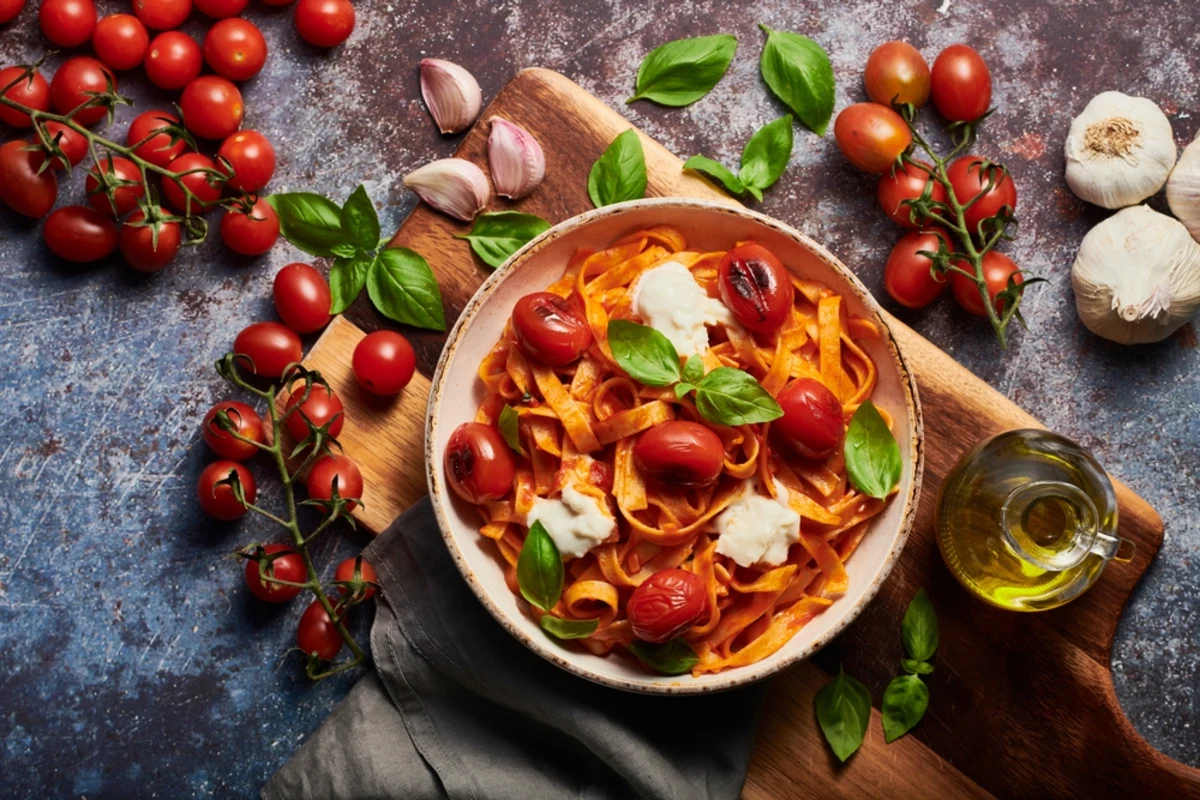
Pasta with Tomato and Burrata & the Perfect Wine Pairing
Pasta with Tomato and Burrata: An Easy Recipe with the Perfect Wine Pairing
There are nights when you want something fast, comforting, and a little bit luxurious—without feeling like you’ve spent hours in the kitchen. Pasta with Tomato and Burrata is exactly that kind of dish. Silky tagliatelle, a bright tomato sauce, and cool, creamy burrata come together in under 40 minutes, but the flavors feel restaurant-worthy.
This is also a dream dish for anyone curious about wine pairing. The fresh tomato, basil, and rich cheese create a flavor profile that works beautifully with a range of bottles you can grab at Total Wine, Trader Joe’s, BevMo, or your local wine shop. Whether you’re opening a weeknight-friendly $18 Italian red or a crisp Oregon white, there’s a perfect match waiting.
In this post, you’ll get a clear, step-by-step recipe plus approachable guidance on choosing the right wine for Pasta with Tomato and Burrata—no sommelier certification required. And if you want to go even deeper, the Vinomat app can suggest tailored pairings based on what you already love to drink.
About This Dish
At its heart, Pasta with Tomato and Burrata is a modern riff on classic Italian comfort food. Think of it as an elegant cousin of spaghetti al pomodoro, with an extra layer of indulgence from burrata—the ultra-creamy cheese made from mozzarella and stracciatella.
Tomato-and-basil pasta has roots across Italy, especially in regions where sun-ripened tomatoes and fresh herbs are part of everyday cooking. Burrata itself originates from Puglia in southern Italy, where cheesemakers created it as a way to use leftover mozzarella curds. Today, it’s a beloved staple in American restaurants and grocery stores, often served with tomatoes, olive oil, and crusty bread.
Bringing these elements together over tagliatelle—a long, flat ribbon pasta—gives you a dish that’s:
- Fresh from the bright acidity of tomatoes and the fragrance of basil
- Umami-rich thanks to slow-simmered tomato sauce and optional Parmesan
- Creamy from the burrata that gently melts into the warm pasta
For wine lovers, that balance of freshness and richness is gold. The tomato sauce calls for wines with good acidity, while the burrata invites something with enough body and texture to stand up to its creaminess. The result is a plate of pasta that feels both cozy and special—perfect for date night, a dinner with friends, or a solo evening in with a great glass of wine.
Key Ingredients & Their Role
Let’s break down why the main ingredients in this recipe work so well together—and how they influence your wine pairing choices.
Tagliatelle
Tagliatelle is a long, ribbon-shaped pasta that clings beautifully to tomato sauce. Its surface area helps catch every bit of the garlicky tomato base and the melted burrata. The texture is substantial enough to handle richer cheeses without feeling heavy.
From a wine perspective, that slightly richer mouthfeel means you can pour wines with medium body—think Chianti, Barbera, or an Oregon Pinot Noir—without overwhelming the dish.
Tomato Sauce & Cherry Tomatoes
You’re using two tomato elements here:
- Cherry tomatoes bring sweetness, juiciness, and a bit of pop when you bite into them.
- Tomato sauce (passata) adds body and deep umami, with a clean, concentrated tomato flavor.
Tomatoes are naturally high in acidity, which is a key factor in choosing the right wine for Pasta with Tomato and Burrata. Wines with good acidity tend to be the best wine pairing here, because they mirror the brightness in the sauce and keep each bite feeling lively instead of flat. Think Italian reds like Sangiovese or Barbera, or crisp whites like Vermentino and Sauvignon Blanc.
Burrata
Burrata is the star that turns simple tomato pasta into something dinner-party-worthy. Once you tear it over the hot tagliatelle, the outer shell of mozzarella softens and the creamy interior slowly seeps into the sauce.
That creaminess:
- Softens the tomato’s sharp edges
- Adds a silky, almost buttery texture
- Calls for wines with either a hint of creaminess (like a lightly oaked Chardonnay) or juicy red fruit to cut through the richness
Garlic & Extra Virgin Olive Oil
Garlic and good olive oil form the flavor backbone of the sauce. The garlic is sautéed just until fragrant—not browned—to avoid bitterness, while the olive oil carries those aromas through every bite.
These elements are gentle enough that they won’t clash with most wines, but they do particularly well with herbaceous reds and whites—think a Tuscan red with notes of dried herbs, or a Sauvignon Blanc with hints of green herbs and citrus.
Basil & Optional Parmesan
Fresh basil adds a cooling, aromatic note that lifts the whole dish, while finely grated Parmesan (if you choose to use it) deepens the savory, umami character.
Basil’s herbal quality plays nicely with wines that show hints of dried herbs, tomato leaf, or earthiness. Parmesan adds salt and umami, nudging you toward wines with structure and complexity rather than something overly simple or sweet.
All together, these ingredients create a flavor profile that’s bright, creamy, and layered—ideal for exploring different wine pairing options and finding your own perfect match.
Recipe
| Prep Time | 25 minutes |
|---|---|
| Cook Time | 10 minutes |
| Total Time | 35 minutes |
| Servings | 4 |
| Difficulty | Easy |
Ingredients:
- 350 g Tagliatelle
- 250 g Cherry tomatoes
- 400 ml Tomato sauce (preferably passata)
- 2 medium balls Burrata
- 3 Garlic cloves (finely chopped)
- 20 g Fresh basil leaves
- 3 tbsp Extra virgin olive oil
- To taste Salt
- To taste Black pepper (freshly ground)
- 30 g Parmesan (optional, finely grated)
Instructions:
- Prepare all ingredients: Finely chop the garlic cloves, halve the cherry tomatoes, and separate a few basil leaves for garnishing later.
- Bring a large pot of salted water to a boil for the tagliatelle.
- In a large skillet over medium heat, warm 2 tbsp of olive oil. Add the chopped garlic and sauté for 1–2 minutes until fragrant but not browned.
- Stir in the halved cherry tomatoes and cook for 3–4 minutes, allowing them to soften slightly. Season lightly with salt and black pepper.
- Pour in the tomato sauce (passata), stir well, and let it simmer for 8–10 minutes, stirring occasionally.
- Cook the tagliatelle in the boiling water according to the package instructions (about 8–10 minutes or until al dente). Reserve 1/4 cup of pasta water before draining.
- Once the sauce is ready, adjust the seasoning with additional salt and black pepper if necessary. Stir in a few basil leaves for added flavor.
- Toss the cooked and drained tagliatelle into the skillet with the tomato sauce, adding a splash of reserved pasta water if needed to loosen the sauce.
- Transfer the tagliatelle to serving plates or a large serving bowl. Top with small pieces of burrata, allowing it to melt slightly from the heat of the pasta.
- Garnish with fresh basil leaves, drizzle with the remaining 1 tbsp of olive oil, and optionally sprinkle with finely grated Parmesan.
- Serve immediately for the best texture and flavor.
Nutrition Facts (per serving):
- Calories: 430 kcal
- Protein: 15.0g
- Fat: 18.0g
- Carbohydrates: 54.0g
- Salt: 1.2g
Dietary Information: Contains gluten, Contains dairy, Nut-free
Perfect Wine Pairings
Now for the fun part: choosing the best wine for Pasta with Tomato and Burrata. Because this dish combines bright tomato acidity, creamy cheese, and savory depth, it’s flexible and forgiving—great news if you’re still building your wine confidence.
Here are key things to look for when choosing a wine pairing:
- Good acidity to match the tomatoes
- Medium body so the wine doesn’t feel thin next to the burrata
- Soft to moderate tannins (nothing too harsh or drying)
- Red or white can both work, depending on your mood
1. Italian Red: Chianti or Sangiovese
A classic wine recommendation is a medium-bodied Chianti (made from Sangiovese) from Tuscany.
- Flavor profile: red cherry, plum, dried herbs, a hint of tomato leaf
- Why it works: The acidity mirrors the tomato sauce, while the gentle tannins and savory notes complement Parmesan and basil.
- Where to buy (U.S.): Widely available around $15–$25 at Total Wine, BevMo, and many grocery stores. Trader Joe’s often has very good-value Chianti in this range.
If you prefer something slightly softer, look for a Sangiovese blend from Italy’s central regions, which often brings a touch of roundness and ripe fruit.
2. Northern Italian Red: Barbera d’Asti or Barbera d’Alba
Barbera is another standout wine for Pasta with Tomato and Burrata.
- Flavor profile: juicy red and black cherry, bright acidity, low tannins
- Why it works: The high acidity is a natural partner for tomato-based dishes, and the low tannin structure is gentle on the creamy burrata.
- Where to buy: Check the Italian section at Total Wine or your local wine shop; expect pricing in the $16–$28 range.
3. New World Pinot Noir (Oregon or California)
If you love New World wines, Pinot Noir—especially from Oregon or cooler parts of California—can be a beautiful, food-friendly match.
- Flavor profile: red cherry, raspberry, subtle earth and spice
- Why it works: Medium body and bright acidity complement both the tomato and the burrata without overpowering the dish.
- Where to buy: Look for Oregon Pinot Noir from the Willamette Valley at BevMo or Total Wine around $20–$30. Trader Joe’s often carries value California Pinot that works nicely for weeknight dinners.
4. Crisp, Aromatic White: Vermentino or Sauvignon Blanc
Prefer white wine? You’re still in excellent pairing territory.
- Vermentino (Italy or even some California producers)
- Flavor profile: citrus, green apple, a touch of salinity and herbs
- Why it works: Its zesty acidity and subtle herbal notes dance beautifully with basil and tomato.
- Sauvignon Blanc (California or French)
- Flavor profile: lime, gooseberry, fresh herbs, sometimes a hint of passionfruit
- Why it works: The bright, green-herb character pairs well with basil, and the vibrant acidity cuts through the burrata’s richness.
Both of these whites are easy to find at grocery stores, Trader Joe’s, Total Wine, and BevMo, typically in the $12–$22 range.
5. Bonus Option: Light, Dry Rosé
For a versatile, all-season wine pairing, consider a dry rosé from Provence, California, or Spain.
- Flavor profile: strawberry, watermelon, citrus, sometimes a hint of savory herb
- Why it works: Rosé bridges the gap between red and white, offering freshness for the tomatoes and enough flavor intensity for the burrata.
When in doubt or looking to explore beyond these core styles, open the Vinomat app, plug in Pasta with Tomato and Burrata, and let it suggest a tailored perfect match based on what’s available near you.
Cooking Tips & Techniques
This dish is simple, but a few small details will help you nail it every time.
Get the Pasta Texture Right
- Salt your pasta water generously—it should taste pleasantly salty, like the sea.
- Cook the tagliatelle al dente. Slight firmness gives a better bite and stands up to the creamy sauce.
- Always reserve some pasta water. The starch in it helps you adjust the sauce consistency without diluting flavor.
Treat Garlic Gently
Garlic should be fragrant, not browned. If it turns dark, it will taste bitter and can clash with the wine. Keep the heat at medium and stir often; if it starts to color quickly, lower the heat.
Balance the Tomato Sauce
- Taste as the sauce simmers and adjust salt and pepper gradually.
- If your tomatoes are off-season and a bit sharp, a tiny pinch of sugar can help round the acidity.
- Let the sauce simmer long enough (about 8–10 minutes) to meld flavors, but don’t cook it to the point where it tastes flat.
Handle Burrata with Care
- Keep burrata chilled until the rest of the dish is nearly ready, then let it sit at room temperature for 5–10 minutes. This helps it melt more gracefully onto the hot pasta.
- Tear it gently over the plated pasta rather than stirring it aggressively into the pan. You want soft pockets of creamy cheese, not an overly homogeneous sauce.
Finish Like a Pro
- Always taste just before serving and add a final pinch of salt if needed.
- A drizzle of high-quality extra virgin olive oil at the end adds aroma and sheen.
- If using Parmesan, grate it very finely so it melts quickly and evenly.
Serving Suggestions
Pasta with Tomato and Burrata is one of those dishes that feels special without needing much fuss. A few simple touches will make it dinner-party ready.
- Plating: Serve the tagliatelle in warm, shallow bowls so the sauce and burrata stay silky. Twirl a portion of pasta into the center of the bowl, then nestle torn burrata on top and finish with basil leaves.
- Garnish: Use small, tender basil leaves for a fresh, fragrant look. A light sprinkle of freshly ground black pepper adds visual contrast and a gentle kick.
- Sides: Keep sides minimal and light so the pasta and wine remain the star. A simple green salad with a lemony vinaigrette and a small basket of crusty bread are perfect.
- Wine service:
- Serve red wines slightly cool—about 60–65°F—so the fruit and acidity shine.
- Serve whites and rosés chilled but not icy cold—about 45–50°F—to let the aromatics open up.
- Setting the mood: Dimmed lights, a playlist you love, and a bottle of wine on the table turn this easy recipe into a relaxed, restaurant-style experience at home.
For a fun twist, pour two different wines—a red (like Chianti or Oregon Pinot Noir) and a white (like Vermentino or Sauvignon Blanc)—and taste how each one changes the way you experience the dish. It’s an easy way to learn what your personal perfect match feels like.
Conclusion
Pasta with Tomato and Burrata proves that you don’t need complicated techniques or hard-to-find ingredients to create a meal that feels truly special. With a short ingredient list and a 35-minute cook time, it’s the kind of recipe you can keep in regular rotation—and still be excited to serve to guests.
By paying a little attention to wine pairing, you turn this simple pasta into a full, restaurant-worthy experience. Whether you reach for Chianti, Barbera, Oregon Pinot Noir, or a crisp Vermentino, you’ll discover how the right glass can be the perfect match for every bite.
If you’re curious to explore even more options, open Vinomat, plug in Pasta with Tomato and Burrata, and let the app suggest a personalized wine recommendation based on your taste and what’s available at nearby shops. Then, pour a glass, twirl some tagliatelle, and enjoy how beautifully food and wine can come together at your own table.