


Ploughman’s Lunch: The Ultimate British Grazing Board & Wine Pairing Guide
Introduction
If you love cheese boards and charcuterie, a ploughman’s lunch might become your new favorite no-cook meal. This classic British pub plate—loaded with sharp cheddar, pickled onions, crusty bread, and tangy chutney—is everything you want in a relaxed, rustic spread. It’s salty, crunchy, creamy, and bright, and it just happens to be an incredible canvas for wine pairing.
In this guide, you’ll learn what a ploughman’s lunch is, how to build an authentic version at home, and how to match it with easy-to-find wines from Total Wine, Trader Joe’s, BevMo, or your local shop. Think of it as a cross between a British pub platter and a modern grazing board—with a wine lover’s twist. Use Vinomat along the way to dial in your perfect pairing for the exact cheeses and pickles you put on your plate.
About This Dish
So, what is a ploughman’s lunch?
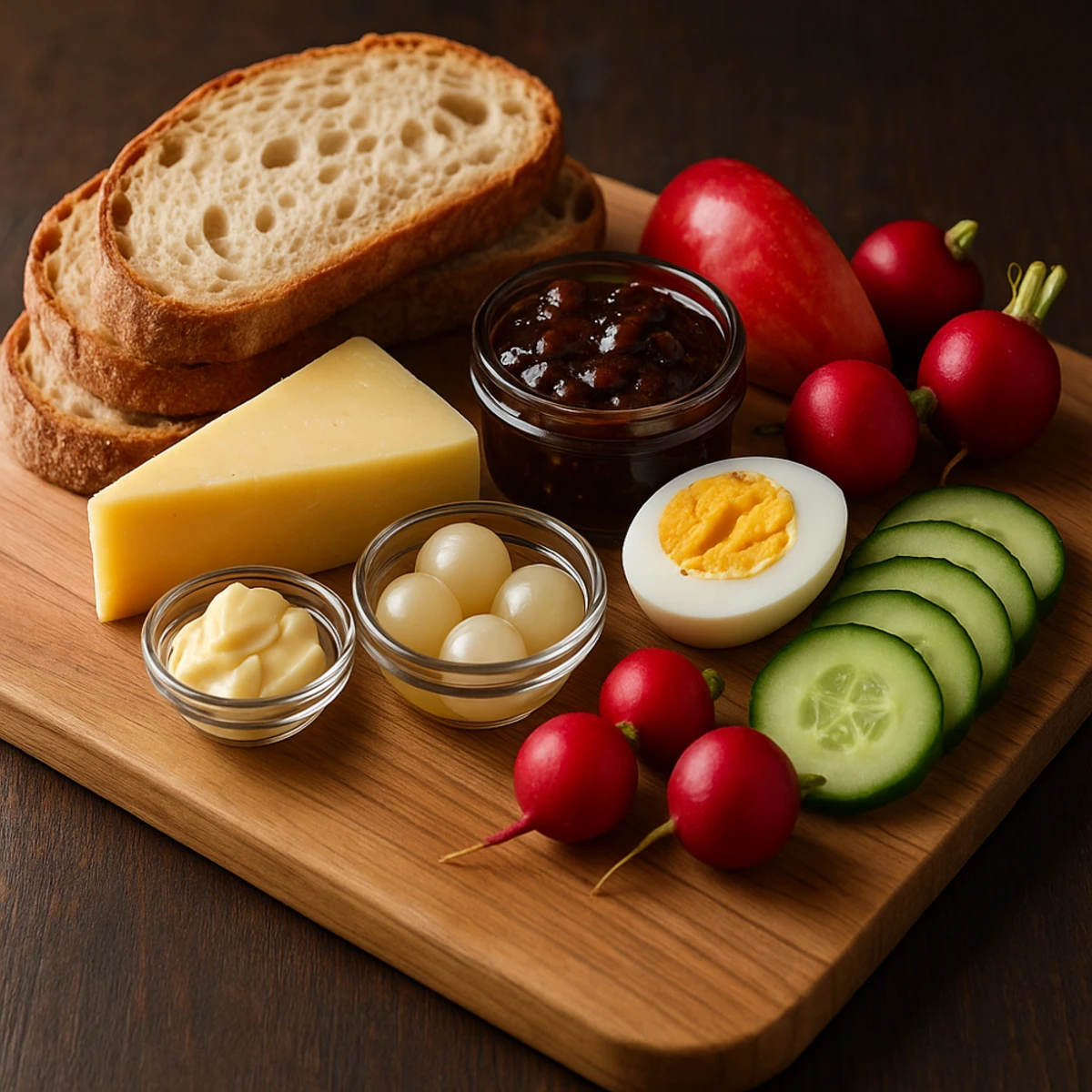
A ploughman’s lunch is a cold British pub meal traditionally built around three simple things: bread, cheese, and onions. These are joined by butter and a sweet pickle or chutney, often Branston pickle, plus extras like ham, hard-boiled eggs, apple, and a crisp salad. Imagine the kind of hearty, unfussy food that could be packed up and taken into a field—hence the name “ploughman.”
Although it looks timeless, the modern ploughman’s lunch as a pub menu staple really took off in the mid-20th century when British pubs and cheese producers promoted it as a rustic, traditional lunch. Today, it’s considered a quintessential pub classic: you’ll see it on blackboards all over the UK, often served with a pint of beer or a mug of cider.
For American home cooks, this dish is essentially a British answer to a cheese and charcuterie board. You get the same mix of textures and flavors, but with a specifically English soul: mature cheddar, sharp pickled onions, malty brown bread, and that unmistakable sweet-sour chutney. It’s an ideal casual lunch or light dinner, perfect for picnics, game day spreads, or an easy entertaining option when you don’t want to cook.
Because it’s built from components, a ploughman lunch is endlessly flexible. You can keep it traditional, riff on celebrity chef ideas like a ploughman’s lunch with beer soaked bread Gordon Ramsay recipe vibe, or take inspiration from a classic ploughman’s lunch recipe BBC style board—then bring it into your own kitchen with American ingredients and your favorite wines.
Key Ingredients & Their Role
A great ploughman’s lunch is all about simple ingredients that play off one another. Here’s what you need and why it works—especially when wine is in the picture.
Cheddar Cheese (and Friends)
The heart of the plate is a good, sharp Cheddar—ideally an English-style mature cheddar with a crumbly texture and nutty tang. This cheese brings:
- Salt and umami: Intensifies both beer and wine; needs enough acidity in the glass to stay refreshing.
- Rich, creamy fat: Softens tannins in red wine and balances the bite of pickles and mustard.
Traditional versions often include at least two to three cheeses—a hard cheddar, maybe a Red Leicester or Double Gloucester, sometimes a blue cheese or a soft cheese like Brie or Camembert. For wine, this variety is a gift: you can pour one bottle and experience how it changes with each cheese.
Pickled Onions & Chutney
Pickled onions are iconic here: crisp, sharp, and vinegary, they cut through the richness of the cheese and ham. Chutney or pickle (like Branston) adds sweet-sour depth, with notes of molasses, cooked fruit, and warm spices.
For wine pairing, these two components are crucial:
- Acidity and sweetness in the pickle/chutney favor high-acid whites and juicy, low-tannin reds.
- The vinegar punch of pickled onions can make big, oaky, or very tannic wines taste harsh.
Crusty Bread & Butter
You’ll want rustic, crusty bread—think sourdough, country loaf, or hearty wholemeal bread. Skip soft sandwich bread; you need chew and structure to stand up to the toppings.
Salted butter adds richness and a silky texture that works like a bridge between the salty cheese and the tangy condiments.
From a wine perspective, bread and butter are the neutral canvas that lets the wine’s character shine between bites. They also help soften intense flavors from onion, mustard, or blue cheese.
Cold Meats & Extras
Many modern ploughmans lunch recipe variations include:
- Ham or gammon slices
- Pork pie or Scotch eggs
- Hard-boiled or deviled eggs
These bring savoriness and more umami, inviting light to medium-bodied reds or richer whites.
Fresh elements balance the plate:
- Apple (often tart, like Granny Smith) for crisp sweetness
- Celery, tomatoes, lettuce, radishes, grapes, cucumber for crunch and freshness
These brighten each bite and make the meal feel lighter—even when you’re happily working through a generous wedge of cheddar.
Ploughman’s Lunch Recipe
Below is a classic, pub-style ploughman’s lunch recipe scaled for four people. You can halve it for two or scale up for a party platter.
At a Glance
- Servings: 4 as a light meal or hearty snack board
- Prep Time: 20 minutes
- Cook Time: 10 minutes (for eggs only)
- Total Time: 30 minutes
- Difficulty: Very easy (assembly style)
Ingredients
Cheese & Protein
- 8 oz sharp Cheddar cheese, cut into chunky wedges
- 4 oz another semi-hard cheese (Red Leicester, Double Gloucester, or similar)
- 4 oz soft cheese (Brie or Camembert)
- 6–8 slices good-quality ham (about 8 oz total)
- 4 hard-boiled eggs, peeled and halved
Bread & Butter
- 1 large rustic sourdough or country loaf, cut into thick slices
or 4 crusty rolls
- 4–6 Tbsp salted butter, softened
Pickles & Condiments
- 8–10 small pickled onions
- 8–10 cornichons or small dill pickles
- 1/2 cup chunky chutney or Branston-style pickle
- 2 Tbsp English mustard or sharp Dijon (optional but classic)
Fruit & Vegetables
- 2 small crisp apples (like Granny Smith), cored and sliced
- Juice of 1/2 lemon (to toss with apple slices)
- 1 cup cherry or grape tomatoes, halved
- 2–3 celery stalks, cut into sticks
- 1 small head of lettuce (like Little Gem, romaine, or butter lettuce), leaves separated
Seasoning
- Flaky sea salt and freshly ground black pepper, to taste
Step-by-Step Instructions
- Cook the Eggs (if needed)
- Place eggs in a small pot, cover with cold water, and bring to a gentle boil.
- Once boiling, cook 8–9 minutes for firm yolks. Transfer to an ice bath, cool, peel, and cut in half.
- Season cut sides lightly with salt and pepper.
- Prep the Fresh Produce
- Core and slice the apples, then toss with lemon juice to prevent browning.
- Rinse and dry lettuce leaves.
- Halve cherry or grape tomatoes.
- Cut celery into sticks.
- Slice the Bread & Cheese
- Slice the bread into thick, rustic slices or split and cut the rolls.
- Cut the cheeses into generous wedges or blocks so they feel hearty and rustic rather than delicate.
- Arrange the Platter
- On a large board or platter, start with the cheeses in 2–3 clusters.
- Add folded slices of ham near the cheese.
- Tuck in the hard-boiled eggs.
- Add Pickles & Condiments
- Place pickled onions and cornichons in small piles or small bowls.
- Spoon chutney/pickle into a ramekin.
- Add mustard to another small dish, if using.
- Finish with Fruit, Veg, and Bread
- Arrange apple slices, tomatoes, celery, and lettuce around the board, filling any gaps.
- Add slices or chunks of crusty bread around the edges or in a separate basket.
- Serve softened butter in a small dish with a butter knife.
- Season & Serve
- Sprinkle a little flaky sea salt and black pepper over the eggs and tomatoes.
- Bring the platter to the table with small plates and knives for spreading.
- Add your chosen wine (or beer/cider) and enjoy your ploughman’s lunch together.
Nutrition & Dietary Notes (Approximate, per serving)
- Calories: ~650–750
- Protein: 30–35 g
- Carbohydrates: 50–60 g
- Fat: 35–45 g
- Vegetarian: Can be made vegetarian by omitting ham and eggs and adding extra cheese or plant-based options.
- Gluten-Free: Use gluten-free crusty bread.
- Nut-Free: Naturally nut-free unless you choose to add nuts.
(Values will vary based on specific products and portion sizes.)
Perfect Wine Pairings for Ploughman’s Lunch
The traditional drink with a ploughman’s lunch is beer or cider, but this salty, umami-rich, tangy spread is fantastic with wine. Because you’re pairing multiple components at once—cheddar, pickles, ham, mustard, apples—it helps to think in terms of wine style and structure rather than one specific bottle.
What to Look For
Aim for wines that are:
- Medium-bodied: Enough weight to match cheddar and ham without overwhelming the plate.
- High in acidity: To cut through the cheese and butter and stand up to pickled onions and chutney.
- Moderate in tannin and oak: Too much tannin + vinegar = harsh; too much oak + pickles = bitterness.
1. Zesty Whites (Fantastic with Pickles & Chutney)
Best styles: Sauvignon Blanc, dry Riesling, Albariño, Picpoul de Pinet.
- A California or New Zealand-style Sauvignon Blanc (widely available at Total Wine and Trader Joe’s in the $12–$20 range) is a top pick. Its citrus, green apple, and herbal notes love cheddar, apple slices, and celery, and the bright acidity refreshes your palate after each bite of pickled onion.
- A dry Riesling from Washington State or Germany (often $15–$25 at BevMo or local shops) also works beautifully. Its high acidity and stone fruit character make chutney and Branston-style pickles taste more complex and rounded, not sharp.
2. Crisp, Unoaked or Lightly Oaked Chardonnay
If you’re a Chardonnay fan, choose unoaked or lightly oaked bottles from Sonoma, Mendocino, Oregon, or Burgundy.
- Look for labels describing citrus, apple, and mineral notes rather than vanilla and toast.
- These wines have enough body for the cheese and ham but stay bright enough for the pickles and mustard.
- Expect to find excellent options around $15–$25 at Total Wine and many grocery stores.
3. Juicy, Low-Tannin Reds (Pinot Noir, Gamay)
If you prefer red, reach for Pinot Noir or Gamay (Beaujolais-style).
- Oregon Pinot Noir is stellar with a ploughman’s lunch. Its red fruit, subtle earthiness, and gentle tannins stand up to cheddar and ham without clashing with chutney. You’ll find solid bottles between $18–$30 at BevMo, Total Wine, and good local shops.
- Beaujolais-Villages or other Gamay-based wines from France are another great pick. Bright cherry fruit and low tannins make them very forgiving with pickles, mustard, and eggs.
If you enjoy California Pinot Noir, look for cooler-climate regions (Sonoma Coast, Santa Barbara) and wines described as “bright” or “elegant” rather than “rich” or “jammy.”
4. Sparkling Wine (The Ultimate Crowd-Pleaser)
Sparkling wine might be the single most flexible wine pairing for a ploughman’s lunch.
- A Brut Cava from Spain, Crémant from France, or a good value California sparkling wine in the $15–$25 range will handle cheddar, ham, eggs, and pickled onions with ease.
- The bubbles cut through fat, the acidity tames salt and vinegar, and the subtle yeastiness echoes the bread.
If you like a slightly softer style, a Brut Rosé sparkling adds red fruit notes that flatter both ham and cheddar.
Using Vinomat for Precision Pairing
Because every ploughmans lunch recipe is a bit different—maybe you add blue cheese, maybe you swap ham for smoked turkey—use Vinomat to fine-tune. Plug in your main components (sharp cheddar, pickled onions, chutney, ham, apple), and Vinomat can suggest a tailored wine recommendation from styles you’ll easily find at Trader Joe’s, BevMo, or your neighborhood bottle shop.
Cooking Tips & Techniques
Even though a ploughman’s lunch is largely an assembly dish, a few smart techniques make it feel restaurant-worthy.
- Invest in the Cheese
With such a simple spread, cheese quality matters. Choose a mature cheddar with good character—look for descriptions like “sharp,” “aged,” or “farmhouse.” If you can find an English-style cheddar at a specialty shop or Whole Foods, even better.
- Serve Cheese at Room Temperature
Chill it for storage, but remove from the fridge 30–45 minutes before serving. This lets the flavors bloom and gives a creamier texture, which is especially important with cheddar and soft cheeses.
- Balance the Plate
Aim for salty + tangy + fresh + rich on every board:
- Salty: cheese, ham
- Tangy: pickled onions, chutney, mustard
- Fresh: apples, tomatoes, lettuce, celery
- Rich: butter, eggs
- Use Good Bread—and Don’t Over-Slice
Go for a crusty sourdough, country loaf, or seeded bread. Cut thick slices or big chunks so it feels rustic, not dainty. If the bread isn’t same-day fresh, lightly toast it.
- Don’t Overdo the Vinegar
Pickles are essential, but too many super-acidic items can clash with certain wines. If you’re planning a wine-focused ploughman’s lunch with beer soaked bread Gordon Ramsay recipe–style twist, keep at least half the board more neutral: cheeses, eggs, ham, apples, and bread.
- Prep Ahead for Entertaining
You can cook the eggs, slice the cheeses, and wash the produce several hours ahead. Store in the fridge, then assemble the platter 20–30 minutes before guests arrive so everything can lose its chill.
Serving Suggestions
Think of your ploughman’s lunch as a relaxed, British-inspired grazing board. Presentation doesn’t need to be fussy, but a little intention goes a long way.
- Use a Big Board or Platter: A wooden board, slate, or large ceramic platter highlights the rustic feel. If you don’t have one large piece, use two medium boards.
- Cluster, Don’t Scatter: Group cheeses together, put pickles in little piles, and fan out apple slices or bread. This makes it easier for guests to build balanced bites.
- Offer Small Plates and Knives: Provide cheese knives, butter knives, and small plates so people can assemble their own mini ploughman’s.
- Add a Pub-Style Touch: If you like, include a small bowl of potato chips (crisps) or a side salad with simple vinaigrette to echo the British pub experience.
- Temperature Matters: Serve the platter slightly cool but not cold, with the wine at its best temperature (crisp whites chilled, reds lightly cool rather than warm).
For a cozy evening in, pair your ploughman lunch with a movie, a playlist of British bands, and a bottle of Oregon Pinot or California sparkling. For a summer picnic, pre-pack components in containers, bring a blanket, and pour chilled Sauvignon Blanc from a screw-cap bottle—no corkscrew drama required.
Conclusion
A ploughman’s lunch is proof that simple ingredients—cheddar, pickled onions, crusty bread, and a few thoughtful extras—can turn into a memorable meal, especially when the right wine is in your glass. Now that you know what a ploughman’s lunch is, how to build it, and how to pair it with accessible bottles from Total Wine, Trader Joe’s, BevMo, or your local shop, you’re ready to bring this British pub classic into your own kitchen.
Use this guide as your starting point, then open Vinomat to explore tailored wine pairing ideas for whichever cheeses, pickles, and meats you choose. Whether you model your board on a classic ploughman’s lunch recipe BBC–style platter or create your own signature version, you’ll have an effortless, crowd-pleasing spread that feels both rustic and refined—perfect for any day you want big flavor with minimal cooking.