


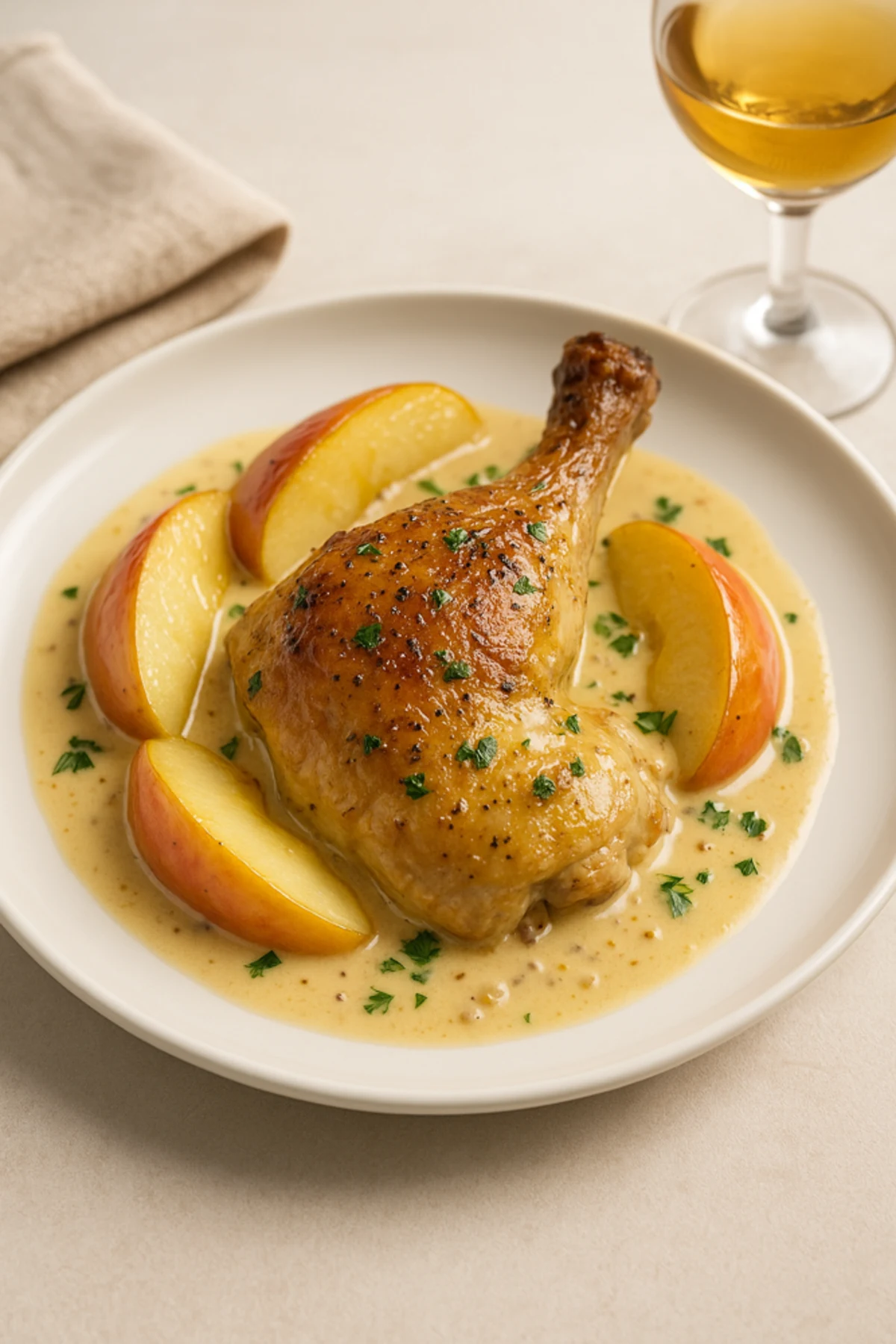
Poulet Vallée d'Auge: A French Classic with Perfect Wine Pairing
Poulet Vallée d'Auge: A French Classic with Perfect Wine Pairing
There's something magical about French cuisine that transforms simple ingredients into something extraordinary. Poulet Vallée d'Auge is a perfect example—a dish that feels fancy enough for your most important dinner party, yet approachable enough for a weeknight when you want to impress. This creamy chicken with apples and Calvados represents the heart of Normandy's culinary tradition, and once you master it, you'll understand why it's remained a beloved classic for generations.
What makes this dish truly special isn't just the recipe itself, but the experience it creates. The aroma alone—butter, apples, and that distinctive apple brandy—fills your kitchen with warmth and sophistication. And when you pair it with the right wine, you're not just eating dinner; you're creating a moment worth savoring. Whether you're cooking for guests or treating yourself to something special, this guide will walk you through everything you need to know about making Poulet Vallée d'Auge and selecting the perfect wine pairing to complement your meal.
About This Dish
Poulet Vallée d'Auge hails from the Normandy region of northern France, specifically from the Vallée d'Auge (Auge Valley), a picturesque area known for its orchards, dairy farms, and culinary heritage. This dish embodies everything that makes Norman cuisine distinctive: it relies on the region's most famous products—apples, butter, cream, and Calvados, the renowned apple brandy.
The beauty of Poulet Vallée d'Auge lies in its simplicity and elegance. Unlike some French dishes that require exotic ingredients or complicated techniques, this one celebrates what's local and seasonal. Free-range chicken, fresh apples, and quality dairy products are the stars here, with Calvados adding a subtle fruity warmth that ties everything together.
Historically, this dish emerged from Norman peasant cooking, where resourceful cooks made the most of what their land provided. Over time, it evolved into the refined dish we know today, appearing on restaurant menus throughout France and beyond. Yet it never lost its rustic charm—there's an honesty to Poulet Vallée d'Auge that makes it feel both approachable and special.
The dish represents more than just a recipe; it's a window into a region's identity and values. When you cook it, you're participating in a culinary tradition that honors quality ingredients, proper technique, and the simple pleasure of good food shared with others. This is why wine pairing matters so much with this dish—you're not just choosing a beverage, you're completing a carefully orchestrated flavor experience.
Key Ingredients & Their Role
Understanding each ingredient in Poulet Vallée d'Auge helps you appreciate why they work so brilliantly together and how they influence your wine pairing choices.
Free-Range Chicken forms the foundation of this dish. Poulet Fermier (French farm chicken) has more flavor than conventional chicken because these birds have access to outdoor space and a varied diet. The meat is slightly firmer with a richer, more complex taste. If you can't find true Poulet Fermier at your local market, look for any high-quality free-range or organic chicken. The superior flavor makes a noticeable difference in the final dish.
Apples are far more than a garnish here—they're integral to the dish's character. The acidity and subtle sweetness of apples cut through the richness of the cream and butter, creating balance. Golden Delicious or Honeycrisp varieties work beautifully because they maintain their shape during cooking while offering that perfect sweet-tart profile. The apple flavor also connects beautifully with wine, particularly those with fruity notes.
Calvados, the apple brandy, adds depth and complexity that you simply can't replicate with other ingredients. It's not just about the alcohol content burning off; Calvados brings a subtle fruity warmth and sophistication to the sauce. When you flambé it, you're burning off the harsh alcohol while concentrating the apple flavors. This ingredient directly influences your wine pairing strategy—you want wines that can stand up to and complement these apple brandy notes.
Butter and Crème Fraîche create the luxurious sauce that makes this dish memorable. The butter browns the chicken and builds flavor through the Maillard reaction, while crème fraîche adds richness without being as heavy as cream. This richness is crucial when considering wine pairing—you need wines with enough acidity and body to cut through the fat while complementing the delicate flavors.
Shallots and Herbs (thyme and bay leaf) provide aromatic depth. Shallots are milder and more refined than onions, adding subtle sweetness and complexity. The herbs contribute earthy notes that ground the dish and add another layer for wine to interact with.
When you understand how these ingredients work together—the richness balanced by acidity, the fruity notes woven throughout, the delicate protein—you start to see why certain wines are natural companions to this dish.
Recipe
| Prep Time | 60 minutes |
|---|---|
| Cook Time | 15 minutes |
| Total Time | 75 minutes |
| Servings | 4 |
| Difficulty | Moderate |
Ingredients
- 4 pieces Poulet Fermier (organic free-range chicken, quartered)
- 4 tbsp Unsalted butter
- 4 Shallots, finely chopped
- 2 Apples (e.g., Golden Delicious or similar), quartered and cored
- 1/4 cup Calvados (apple brandy)
- 1 cup Chicken stock
- 2 tsp Dijon mustard
- 1/2 cup Crème fraîche
- 2 sprigs Fresh thyme
- 1 Bay leaf
- Salt to taste
- Freshly ground black pepper to taste
- 2 tbsp Fresh parsley (chopped, for garnish)
Instructions
- Prepare all ingredients: finely chop the shallots, quarter and core the apples, and chop parsley for garnish.
- Pat the chicken pieces dry and season with salt and pepper.
- In a large skillet, melt 2 tbsp of butter over medium-high heat. Brown the chicken pieces on all sides, about 8-10 minutes. Remove from the skillet and set aside.
- Reduce the heat to medium and add the remaining 2 tbsp of butter to the skillet. Add the shallots and cook until softened, about 3-4 minutes.
- Add the Calvados to the skillet and carefully ignite with a long lighter or match to flambé. Allow the alcohol to burn off completely.
- Return the chicken to the skillet. Add the chicken stock, thyme sprigs, and bay leaf. Cover and simmer on low heat for 25-30 minutes, until the chicken is cooked through.
- In a separate pan, lightly sauté the apple quarters in a small amount of butter until golden but still firm, about 5 minutes. Set aside.
- Once the chicken is cooked, remove it from the skillet and keep it warm. Stir the Dijon mustard and crème fraîche into the cooking liquid. Simmer for 5-7 minutes until the sauce has thickened slightly. Adjust seasoning with salt and pepper.
- Return the chicken and sautéed apples to the skillet to warm through for 2-3 minutes.
- Plate the dish: place one chicken piece on each plate with a few apple quarters. Spoon the sauce over the chicken and garnish with chopped parsley. Serve immediately.
Nutrition Facts (per serving)
- Calories: 520 kcal
- Protein: 32.0g
- Fat: 35.0g
- Carbohydrates: 22.0g
- Salt: 1.8g
Dietary Information
Gluten-free, Contains dairy, Nut-free
Perfect Wine Pairings
Choosing the right wine for Poulet Vallée d'Auge elevates the entire dining experience. The dish's combination of rich cream sauce, fruity apple notes, and subtle Calvados warmth requires careful consideration. You're looking for wines with enough acidity to cut through the richness, enough body to stand up to the flavors, and ideally, some fruit-forward characteristics that echo the apples and brandy.
Burgundy Pinot Noir is perhaps the most classical choice for this dish. The wine's silky tannins, bright acidity, and red fruit flavors create a harmonious balance with the chicken and cream sauce. The earthiness of Pinot Noir complements the herbs in the dish beautifully. Look for Burgundy Pinot Noirs in the $25-35 range at Total Wine or specialty wine shops. If French Burgundy feels too pricey, Oregon Pinot Noirs offer similar characteristics at more accessible price points ($15-25), and you'll find excellent options at Trader Joe's and BevMo.
California Chardonnay is another excellent option, particularly unoaked or lightly oaked styles. The wine's richness mirrors the cream sauce while its acidity provides balance. Chardonnay's subtle apple and stone fruit notes create a delicious echo with the dish's apple component. Look for Sonoma or Santa Barbara Chardonnays in the $15-25 range. These wines are readily available at most grocery stores and wine retailers.
Alsatian Riesling might surprise you, but it's a sophisticated choice that works beautifully. Dry Alsatian Rieslings have the acidity and slight minerality to cut through richness while their subtle fruit notes complement the apples and Calvados. The wine's delicate nature won't overpower the chicken. You'll find quality options at Total Wine or specialty shops for $12-20.
Chablis (unoaked Chardonnay from France's northernmost wine region) deserves consideration if you want something elegant and refined. Its crisp acidity and mineral qualities provide excellent balance for this rich dish. The wine's subtle fruit won't compete with your carefully crafted sauce. Expect to spend $15-25 for a quality bottle.
When selecting your wine pairing, consider the specific characteristics that matter most: acidity to balance richness, enough body to complement the chicken, and ideally, some fruity or floral notes that won't clash with the apples and Calvados. Avoid heavily oaked wines or those with aggressive tannins, as these can overwhelm the delicate flavors you've worked to create. The goal is harmony—your wine should feel like a natural part of the meal, not a competing element.
Cooking Tips & Techniques
Mastering Poulet Vallée d'Auge comes down to understanding a few key techniques and avoiding common pitfalls.
The Browning Step Matters: When you brown the chicken, you're not just cooking it; you're building flavor through the Maillard reaction. Make sure your skillet is hot enough that the chicken sizzles when it hits the pan, and don't move it around—let it sit undisturbed for 4-5 minutes per side to develop a proper golden crust. This step creates the foundation for your entire sauce.
The Flambé: This step intimidates many home cooks, but it's simpler than you think. Warming the Calvados before igniting it makes the process safer and more effective. Use a long lighter or long match to ignite it carefully. The flambé burns off harsh alcohol while concentrating the apple brandy's more subtle flavors. If you're uncomfortable with this step, you can simply add the Calvados without flambéing, though you'll lose some of the refined flavor complexity.
Don't Rush the Simmer: The covered simmer for 25-30 minutes is where the chicken becomes tender and absorbs all those beautiful flavors. Low, gentle heat is crucial—a rolling boil will make the chicken tough and stringy. You want that quiet, barely-bubbling simmer that cooks gently and evenly.
Sauté the Apples Separately: Cooking the apples in a separate pan prevents them from breaking down into the sauce and gives you control over their texture. You want them golden and tender but still holding their shape—they'll be the beautiful garnish that guests notice.
The Crème Fraîche Finish: Adding the crème fraîche at the end prevents it from breaking or curdling. Stir it in gently off the heat or over very low heat. The Dijon mustard adds a subtle tang that brightens the sauce and prevents it from being one-dimensional in flavor.
Seasoning: Taste and adjust seasoning just before serving. The salt from the stock concentrates as liquid reduces, so you may need less salt than you'd expect. Fresh cracked black pepper added at the end provides a subtle bite that elevates the final dish.
Serving Suggestions
How you present Poulet Vallée d'Auge matters as much as how you cook it. This is a dish meant to be savored, so take time with plating and presentation.
The Plate: Use warmed plates—this keeps your food at the perfect temperature and shows respect for the dish. Place one chicken piece slightly off-center, arrange a few apple quarters nearby, then spoon the creamy sauce artfully around and over the chicken. The golden apples should be visible, not buried under sauce.
Garnish: That handful of fresh parsley isn't just decoration—it adds a fresh, herbaceous note that brightens each bite. The green color also provides visual contrast against the cream-colored sauce and golden chicken.
Accompaniments: Poulet Vallée d'Auge pairs beautifully with simple sides that don't compete with the main dish. Creamy mashed potatoes are traditional and delicious, soaking up every drop of sauce. Buttered egg noodles work wonderfully, as do simple steamed vegetables like haricots verts (French green beans) or a crisp green salad with a light vinaigrette.
The Dining Experience: Serve this dish with your chosen wine pairing already poured. Set a relaxed pace—this isn't fast food. Light candles, dim the lights slightly, and create an atmosphere that honors both the food and the wine. Poulet Vallée d'Auge deserves to be the star of a leisurely meal where conversation flows and everyone takes time to appreciate what's on their plate.
Wine Service: Pour the wine slightly before serving the food, allowing it to breathe and reach the right temperature. Sip between bites, noticing how the wine and food interact and enhance each other. This is where your careful wine pairing choice really shines.
Conclusion
Poulet Vallée d'Auge represents everything wonderful about French home cooking: respect for quality ingredients, proper technique, and the understanding that food and wine together create something greater than either could alone. By mastering this recipe and exploring the wine pairings we've discussed, you're not just preparing a meal—you're creating an experience worth remembering.
The beauty of this dish is that it's approachable enough for a home cook to execute successfully, yet refined enough to impress even the most discerning palate. Whether you choose an Oregon Pinot Noir from your local wine shop, a California Chardonnay from Trader Joe's, or splurge on a Burgundy from Total Wine, you now understand the principles behind selecting the perfect wine for Poulet Vallée d'Auge.
As you prepare this classic French dish, remember that wine pairing isn't about following rigid rules—it's about understanding flavor harmony and creating moments of culinary joy. If you want to explore even more wine pairing possibilities or discover new recommendations based on your preferences, tools like Vinomat can help you navigate the vast world of wine and find your perfect match for any dish.
So gather your ingredients, pour yourself a glass of something special, and embark on this culinary journey. Your dinner guests—and your palate—will thank you.