


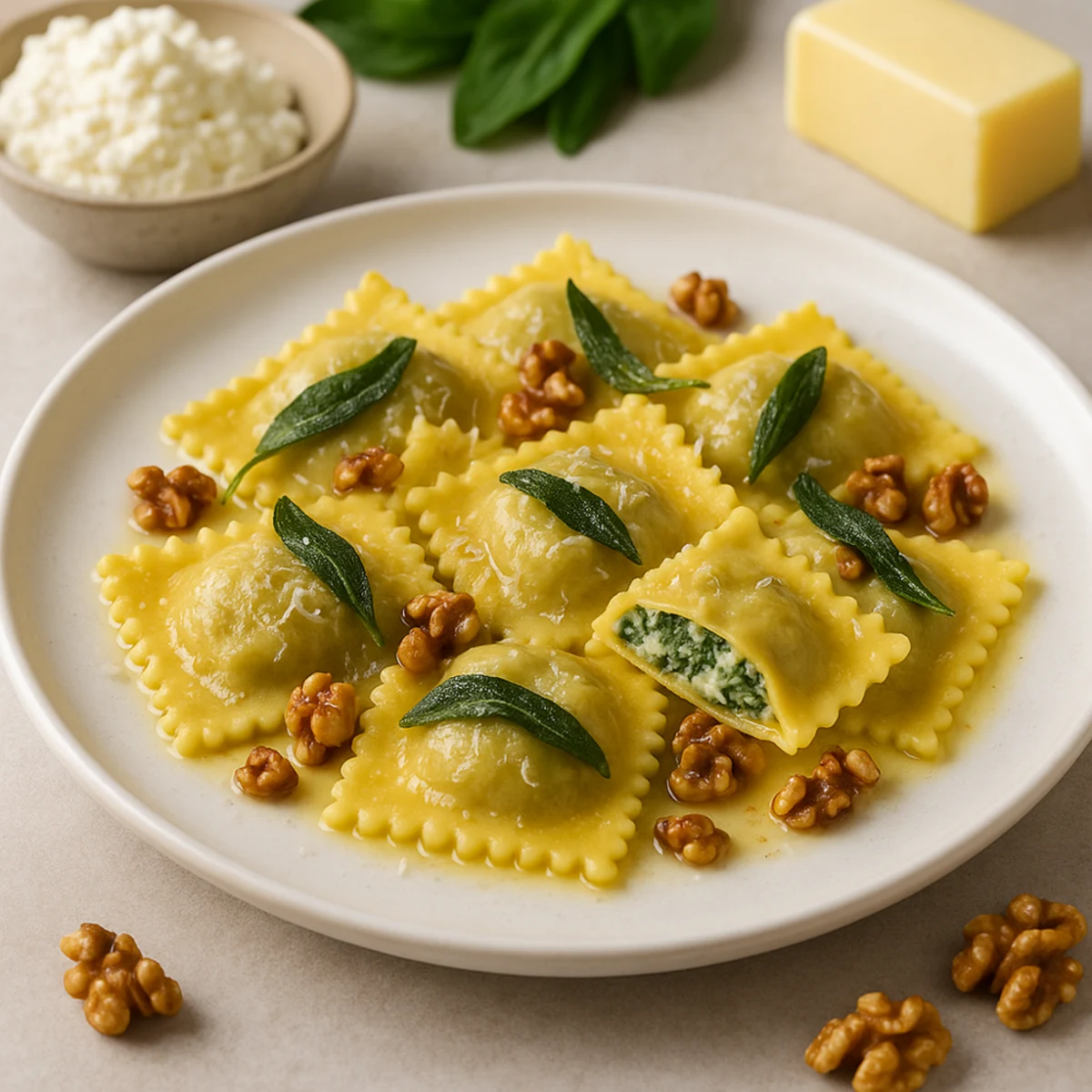
Ricotta & Spinach Ravioli with Butter, Sage and Walnuts
Ricotta and Spinach Ravioli with Butter, Sage and Walnuts
There is something quietly luxurious about a plate of handmade ricotta and spinach ravioli glossed in nutty brown butter, perfumed with sage, and topped with crunchy walnuts. It looks restaurant-level, but with a little guidance it’s absolutely doable in a home kitchen. This is the kind of dish that turns an ordinary Tuesday into a special occasion.
Even better, this recipe is a dream for wine lovers. The richness of the ricotta filling, the gentle earthiness of spinach, and the toasted walnut and butter sauce open the door to beautiful wine pairing options—from silky California Chardonnay to elegant Italian reds. With a smart wine recommendation (and a little help from Vinomat), you can serve a dinner that feels straight out of a tiny trattoria.
Below you’ll find a complete ricotta recipe for homemade ravioli, step‑by‑step instructions, practical cooking tips, and a detailed guide to the best wine pairing for this dish.
About This Dish
Ricotta and spinach ravioli are a classic of northern and central Italy, especially in regions like Emilia‑Romagna and Tuscany, where fresh egg pasta and soft cheese fillings are a way of life. The combination of ricotta and spinach is beloved because it is both comforting and refined: rich but not heavy, flavorful yet gentle enough to play well with many sauces and wines.
Traditionally, these ravioli are served simply—perhaps with melted butter and sage, a spoonful of light tomato sauce, or a sprinkle of Parmesan. Here, we lean into an especially Italian approach: a brown butter and sage sauce with toasted walnuts. Recipes that combine spinach and ricotta pasta with sage butter and nuts (often walnuts) are common across Italian cookbooks and blogs, where browning the butter with sage and nuts is a classic finishing move for filled pasta.
What makes this version special is the play of textures and aromas. The soft pillow of ricotta and spinach is wrapped in tender pasta, then coated in an aromatic butter that’s been gently browned with sage until nutty and foamy. Walnuts add an irresistible crunch and a slightly bitter, toasty note that keeps the dish from feeling flat or overly rich.
For American home cooks, this is an ideal “dinner party” recipe: impressive on the plate, yet built from familiar ingredients you can find in any U.S. grocery store. Pair it with a well‑chosen bottle from Napa, Sonoma, Oregon, Washington State, or a favorite Italian import, and you have a dish that brings together the best of Italian tradition and modern American wine culture.
Key Ingredients & Their Role
Understanding the main ingredients helps you cook—and pair wine—more confidently. Here’s how each component shapes flavor, texture, and the perfect wine match.
Ricotta
At the heart of this dish is ricotta, a fresh, mildly tangy cheese with a creamy, slightly grainy texture. It gives the filling body and richness without overwhelming the palate. In classic spinach and ricotta fillings, the cheese is gently heated with the spinach, Parmesan, and seasonings to create a cohesive mixture.
For wine pairing, the creamy fat content of ricotta calls for wines with either enough acidity to cut through the richness (think Italian whites or Oregon Pinot Noir) or enough texture and body to mirror it (like a lightly oaked California Chardonnay).
Spinach
Spinach adds color, freshness, and a gentle earthy note. In traditional recipes, excess moisture is squeezed out so the filling stays creamy rather than watery. Spinach’s subtle bitterness plays especially well with nutty brown butter and walnuts.
That slight green, earthy character points you toward wines with bright acidity and herbal notes. Italian whites like Vermentino or Pinot Grigio, and reds like Chianti Classico with a savory edge, can match the spinach beautifully.
Walnuts
Walnuts bring texture and a deep, toasty flavor. Italian‑style sauces often toast walnuts in butter until fragrant and lightly browned, then use them either in a cream sauce or in a simple butter‑nut topping. Here, the walnuts break up the softness of the ravioli with crunch and add a slightly tannic, nutty bitterness.
From a wine perspective, walnuts echo the nutty, oxidative notes in aged white wines (like some white Burgundy or mature Rioja Blanco) and pair nicely with oak‑aged New World Chardonnays that have toasted, nutty undertones.
Butter & Sage
Sage and butter are an iconic pairing for filled pastas, and many recipes call for browning the butter until foamy and nutty before adding the sage and nuts. Brown butter adds toasted, caramelized notes; sage contributes a piney, woodsy aroma that perfumes the whole dish.
Butter and sage both enhance the dish’s richness and aromatic complexity. That points you toward wines with:
- Enough acidity to balance the butter
- Aromatic complexity to stand up to sage
- Moderate tannins (or low tannin, for reds) so they don’t clash with the nuts and cheese
These building blocks make this ricotta guide particularly helpful when you’re thinking both like a cook and like a sommelier.
Recipe: Ricotta and Spinach Ravioli with Butter, Sage and Walnuts
At a Glance
- Servings: 4 (about 24–28 ravioli)
- Prep time: 45–60 minutes
- Cook time: 15 minutes
- Total time: 1–1.25 hours
- Difficulty: Intermediate (great for a weekend cooking project)
Ingredients
For the Pasta Dough
- 2 cups (240 g) all‑purpose flour, plus extra for dusting
- 2 large eggs
- 2 large egg yolks
- 1/2 teaspoon fine sea salt
- 1–2 tablespoons water, as needed
For the Ricotta & Spinach Filling
- 1 tablespoon olive oil
- 10 ounces (280 g) fresh spinach, tough stems removed (or 8 oz thawed frozen spinach, well drained)
- 1 cup (8 oz / 225 g) whole‑milk ricotta, drained if very wet
- 1/2 cup (40 g) finely grated Parmesan cheese
- 1 large egg yolk
- 1/4 teaspoon freshly grated nutmeg
- 1/2 teaspoon fine sea salt (or to taste)
- Freshly ground black pepper, to taste
Traditional fillings sauté the spinach, squeeze it dry, then mix with ricotta, Parmesan, nutmeg, and egg yolk for richness and binding.
For the Butter, Sage & Walnut Sauce
- 6 tablespoons (85 g) unsalted butter
- 1/3 cup (35 g) walnuts, roughly chopped
- 8–10 fresh sage leaves
- Salt, to taste
- Freshly ground black pepper, to taste
- Extra grated Parmesan, for serving
Step‑by‑Step Instructions
1. Make the Pasta Dough
- On a clean work surface, mound the flour and make a well in the center. Add the eggs, egg yolks, and salt to the well.
- Beat the eggs with a fork, then gradually draw in flour from the sides until a shaggy dough forms.
- Knead by hand for 8–10 minutes, until the dough is smooth and elastic. If it feels dry or crumbly, add water 1 teaspoon at a time.
- Wrap tightly in plastic wrap and let rest at room temperature for at least 30 minutes. This rest relaxes the gluten and makes the dough easier to roll.
(Shortcut: You can also pulse the ingredients in a food processor just until the dough comes together, then knead briefly by hand.)
2. Prepare the Filling
- Heat the olive oil in a large skillet over medium heat. Add the spinach and cook, stirring often, until wilted and any liquid has evaporated.
- Transfer to a colander or sieve and let cool slightly. Squeeze out as much moisture as possible; this keeps the ricotta filling creamy, not watery.
- Finely chop the spinach and place in a bowl. Add the ricotta, Parmesan, egg yolk, nutmeg, salt, and pepper. Mix until smooth and well combined.
- Taste and adjust seasoning. The filling should be pleasantly salty and flavorful.
- For easier shaping, transfer the filling to a piping bag or a zip‑top bag and chill while you roll the dough.
3. Roll the Dough
- Divide the rested dough into 2–4 pieces. Work with one piece at a time; keep the others wrapped.
- Using a pasta machine or rolling pin, roll the dough into thin sheets (about 1/16 inch or setting 6–7 on most machines). You should be able to see your hand faintly through the sheet.
- Lightly dust the sheets with flour and keep covered with a clean kitchen towel so they don’t dry out.
4. Shape the Ravioli
- Lay one sheet of pasta on a lightly floured surface.
- Pipe or spoon teaspoon‑sized mounds of filling in a line, spacing them about 1.5 inches apart.
- Lightly brush the pasta around the filling with water or beaten egg to help seal.
- Place a second sheet of pasta on top, gently pressing around each mound to remove air pockets.
- Use a sharp knife, fluted wheel, or ravioli cutter to cut into squares (about 2 inches). Press edges firmly to seal so the ricotta filling doesn’t leak.
- Transfer the ravioli to a sheet pan dusted with flour or semolina. Keep in a single layer.
(You can also fold squares of pasta over the filling to form triangles, pressing well to seal, as done in some traditional recipes.)
5. Cook the Ravioli
- Bring a large pot of well‑salted water to a boil.
- Add the ravioli in batches, stirring gently. Cook 3–4 minutes, or until they float and the pasta is tender.
- Reserve 1/4 cup of the cooking water, then use a slotted spoon to transfer cooked ravioli to a warm bowl.
6. Make the Butter, Sage & Walnut Sauce
- While the ravioli cooks, melt the butter in a large skillet over medium‑low heat.
- Add the chopped walnuts and cook, stirring, until they are fragrant and lightly toasted.
- Continue cooking until the butter turns golden brown and smells nutty and caramelized, with brown bits forming on the bottom of the pan.
- Add the sage leaves and let them sizzle until crisp, 1–2 minutes.
- If desired, add a tablespoon or two of the reserved pasta water to loosen the sauce.
- Season with salt and pepper.
7. Finish & Serve
- Add the hot ravioli to the skillet with the brown butter, sage, and walnuts. Toss gently to coat.
- Divide among warm plates. Spoon any remaining butter and walnuts over the top.
- Finish with extra grated Parmesan and freshly ground black pepper.
Nutrition & Dietary Notes (Approximate per Serving)
- Calories: ~650–750
- Protein: ~24–28 g
- Carbohydrates: ~60–70 g
- Fat: ~35–45 g
- Vegetarian: Yes (contains dairy and eggs)
- Nut‑free: No (contains walnuts; omit or substitute if needed)
Values will vary based on exact brands and portion sizes, but this gives a helpful ballpark.
Perfect Wine Pairings
Ricotta and spinach ravioli with butter, sage and walnuts is incredibly wine‑friendly. The key is to balance the creamy ricotta and butter with freshness, while respecting the herbal notes of sage and the toasty walnuts.
What to Look For in a Wine
- Medium body: Enough weight to stand up to the sauce without overpowering the delicate filling.
- Good acidity: To cut through butter and cheese and keep each bite feeling fresh.
- Moderate tannins (for reds): High tannin can clash with walnuts and cheese, creating bitterness.
- Herbal or nutty notes: To echo sage and brown butter.
Here are specific styles that work wonderfully—with bottles you can easily find at Total Wine, Trader Joe’s, BevMo, or your local shop in the $15–30 range.
1. California Chardonnay (Lightly Oaked)
A balanced Chardonnay from Sonoma Coast or Carneros is a natural match. Look for:
- Medium body and creamy texture to mirror the ricotta and butter
- Bright citrus and apple notes to refresh the palate
- Subtle oak giving vanilla and toasted nut accents that play with the walnuts
Ask at Total Wine or BevMo for a Sonoma or Santa Barbara Chardonnay that is “not too oaky” in the $18–25 range. Vinomat can help you filter options by body and oak level so you land on the ideal bottle.
2. Northern Italian Whites (Pinot Grigio, Soave, Vermentino)
If you want to stay close to the dish’s roots, Italian whites are a classic wine pairing:
- Pinot Grigio from Alto Adige or Friuli: crisp, clean, with citrus and pear, perfect for cutting through butter.
- Soave Classico: a bit more texture, with almond and floral notes that echo the walnuts and sage.
- Vermentino: zesty and herbal, great with the spinach and aromatic sage.
These are widely available in U.S. grocery stores and wine shops, often $14–22. Look for DOC or DOCG on the label for quality.
3. Oregon Pinot Noir
If you prefer red, choose something delicate and silky. Oregon Pinot Noir is an outstanding wine match:
- Light to medium body with bright acidity
- Red cherry and raspberry fruit
- Earthy, forest‑floor notes that play beautifully with spinach and sage
- Soft tannins that won’t fight the walnuts or the ricotta
Trader Joe’s and Total Wine usually carry several Oregon Pinot options between $18 and $30. Ask for something “elegant and not too heavy” for a pasta‑friendly bottle.
4. Chianti Classico or Other Sangiovese‑Based Reds
For a more traditionally Italian red wine recommendation, reach for Chianti Classico or a similar Sangiovese:
- Bright cherry fruit and lively acidity
- Herbal and savory notes that complement sage and spinach
- Moderate tannins (avoid the most powerful, heavily structured bottles)
Look in the Italian section at your local shop; a well‑made Chianti Classico in the $18–28 range is a fantastic partner for this pasta.
How Vinomat Helps
Not sure where to start, or shopping at a different store? Open Vinomat, search for “ricotta and spinach ravioli with butter, sage and walnuts,” and you’ll get tailored wine pairing suggestions based on your exact dish, your budget, and what’s available near you. You can even refine results by region (California, Oregon, France, Italy, Spain) or style (crisp white, elegant red), then walk into Total Wine, Trader Joe’s, BevMo, or a neighborhood shop with a confident plan.
Cooking Tips & Techniques
A few professional tips will make your ricotta and spinach ravioli turn out restaurant‑worthy every time.
- Drain everything well: Excess moisture is the enemy of a good filling. Squeeze the spinach thoroughly and drain the ricotta if it’s very wet. Your filling should be thick and spoonable, not runny.
- Season the filling generously: It should taste vibrant on its own. Remember cheese and egg will soften flavors slightly once cooked.
- Knead the dough fully: Under‑kneaded dough tears easily. Aim for smooth and elastic. The 30‑minute rest is non‑negotiable.
- Roll thinner than you think: Pasta swells as it cooks. If it starts thin, the final texture will be tender, not doughy.
- Seal ravioli carefully: Press out any air pockets and press edges firmly. Air bubbles can cause ravioli to burst in the water.
- Don’t overcrowd the pot: Boil in batches and keep the water at a gentle boil. Vigorous boiling can tear delicate pasta.
- Watch the brown butter closely: It goes from golden to burnt quickly. Once it smells nutty and you see browned bits at the bottom, it’s ready—take it off the heat.
- Serve on warm plates: A small restaurant trick that keeps the sauce fluid and the pasta hot while you bring everything to the table.
Serving Suggestions
For a complete, beautifully balanced meal, think about color, texture, and contrast on the table.
- Portion size: As a main course, plan on 6–8 ravioli per person. As a starter before a meat or fish course, 4–5 is perfect.
- Plating: Use warm, wide pasta bowls or flat plates with a slight rim. Nestle the ravioli in the center, then spoon the brown butter, sage, and walnuts over the top so they gleam.
- Garnish: Finish with a shower of freshly grated Parmesan and a twist of black pepper. A single crisp sage leaf on top of each mound of ravioli looks elegant.
- Side dishes: Keep sides simple so the pasta and wine pairing stay in the spotlight. Think:
- Lightly dressed arugula salad with lemon
- Roasted asparagus or green beans
- A small plate of marinated olives or roasted peppers
- Bread: A warm, crusty baguette or Italian bread is perfect for mopping up any remaining butter sauce.
- Wine service: Chill white wines to about 45–50°F and serve reds slightly cool (around 60–65°F). Pour small glasses and encourage guests to notice how the wine changes with the food.
Set the table with cloth napkins, a candle or two, and you’ve created a relaxed, bistro‑style atmosphere that makes this ricotta recipe feel truly special.
Conclusion
Ricotta and spinach ravioli with butter, sage and walnuts is the kind of dish that rewards a little extra effort with big, memorable flavor. Pillowy ricotta filling, silky pasta, nutty brown butter, and crunchy walnuts all come together in a way that begs for a thoughtful wine pairing.
Whether you reach for a bright Italian white, an elegant Oregon Pinot Noir, or a creamy California Chardonnay, Vinomat can guide you to a bottle that matches both your taste and your budget. Save this ricotta guide, open a favorite wine app, and treat yourself—and your guests—to a restaurant‑quality wine and pasta night at home.