


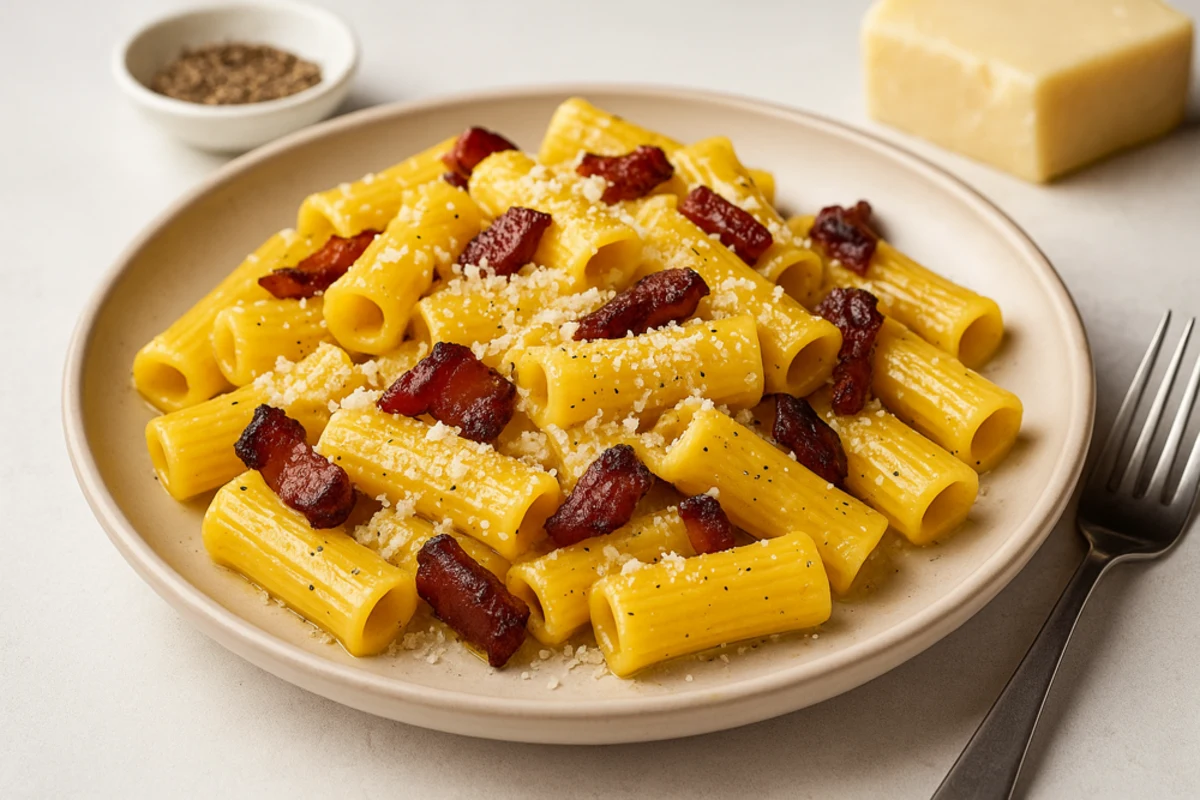
Rigatoni Carbonara with Perfect Wine Pairings at Home
Rigatoni Carbonara: A Cozy Classic with Serious Wine Pairing Potential
Rich, silky, and unapologetically comforting, rigatoni carbonara is one of those pastas that feels like a night out in Rome, even if you’re just in your PJs on a Tuesday. The sauce is creamy without a drop of cream, the guanciale is salty and crisp, and every tube of pasta is filled with that glossy, peppery goodness. It also happens to be one of the best pasta dishes you can make if you love exploring wine pairing at home.
In this guide, we’ll walk through an authentic-style rigatoni alla carbonara recipe, then dive into which wines make it shine—from affordable California bottles to Italian classics you can grab at Total Wine, Trader Joe’s, BevMo, or your favorite local shop. Vinomat can then take you the last mile, helping you fine‑tune the perfect match for your exact bottle.
About This Dish: Why Rigatoni alla Carbonara Is So Special
Carbonara is one of the four legendary Roman pastas (along with cacio e pepe, amatriciana, and gricia), and rigatoni alla carbonara is a heartier, more textured twist on the more common spaghetti version. Instead of long noodles, you get big, ridged tubes that trap sauce and bits of crispy guanciale in every bite.
Traditionally, carbonara rigatoni is made with just a handful of ingredients:
- Pasta (rigatoni)
- Guanciale (cured pork jowl)
- Eggs
- Pecorino Romano
- Black pepper
That’s it—no cream, no garlic in the classic Roman approach. The creaminess you taste comes from emulsifying egg yolks, cheese, rendered pork fat, and starchy pasta water into a glossy, velvety sauce that clings to the pasta.
What makes rigatoni alla carbonara so beloved is the balance:
- Salty and savory from the guanciale and Pecorino Romano
- Creamy and rich from the eggs and fat
- Peppery and aromatic from freshly cracked black pepper
That salty, creamy profile is a dream playground for wine lovers. The dish has richness that begs for acidity, a bit of fat that can handle moderate tannins, and a salty, cheesy backbone that makes certain whites absolutely sing. When you treat rigatoni carbonara as both comfort food and a wine‑pairing canvas, you get a meal that feels truly elevated—but still accessible for a weeknight.
Key Ingredients & Their Role (and How They Guide the Wine)
The magic of rigatoni alla carbonara is that every ingredient has a job. Understanding those roles helps you choose the best wine.
Rigatoni
Rigatoni are large, ridged tubes that soak up sauce and hold tiny nuggets of guanciale inside each piece. Their size and shape create a hearty mouthfeel and a lot of surface area for the carbonara sauce.
- Wine implication: This fuller texture pairs best with medium- to full-bodied wines—light, delicate styles can get lost.
Guanciale
Guanciale is cured pork jowl, and it’s non‑negotiable if you want true Roman character. When rendered, it becomes crisp and golden, releasing deeply savory, almost sweet, porky fat into the pan.
- Flavor: intensely savory, salty, and meaty with a rich, silky fat.
- Substitutes: pancetta or thick‑cut bacon if guanciale is hard to find.
- Wine implication: That salty fat loves acidity to keep the palate refreshed, and it’s sturdy enough for moderate tannins (think Pinot Noir or a soft Sangiovese) rather than big, drying tannins.
Eggs
The sauce is built on egg yolks (sometimes with a whole egg or extra yolks, depending on the cook). When warmed gently with pasta water, cheese, and pork fat, they transform into a silky coating.
- Texture: creamy, velvety, almost custardy.
- Wine implication: Richness calls for wines with good freshness. Whites with bright acidity or reds that aren’t too heavy on alcohol or oak work beautifully.
Pecorino Romano
Pecorino Romano brings sharp, salty, and slightly tangy flavors made from sheep’s milk.
- Intensity: more salty and punchy than Parmigiano‑Reggiano.
- Role: deepens umami and adds a firm backbone of flavor.
- Wine implication: Salty, tangy cheese sings with wines that have zesty acidity (Italian whites, many sparkling wines) and can also soften perceived tannins in reds.
Black Pepper
Freshly ground black pepper is not just a seasoning—it’s a core flavor in carbonara.
- Adds gentle heat and spice.
- Wine implication: Peppery notes can echo the subtle spice you find in many European reds and some New World Pinot Noirs.
Put together, the dish is salty, creamy, and savory with a peppery lift—exactly the kind of flavor profile that rewards thoughtful wine pairing.
Rigatoni alla Carbonara Recipe
Below is a classic, restaurant‑worthy rigatoni carbonara recipe adapted for home cooks, inspired by traditional Roman methods.
Recipe Overview
- Servings: 4
- Prep Time: 10 minutes
- Cook Time: 20 minutes
- Total Time: ~30 minutes
- Difficulty: Easy–Moderate (technique-focused, but totally doable at home)
Ingredients
For the pasta:
- 12 oz rigatoni
- 7 oz guanciale, cut into small cubes (or pancetta or thick‑cut bacon if needed)
- 4 large eggs
- 3.5 oz (about 1 cup packed) Pecorino Romano, finely grated
- 2 tsp freshly ground black pepper, plus more to taste
- Kosher salt for pasta water
Instructions
1. Prepare the sauce base
- In a medium mixing bowl, add the eggs, grated Pecorino Romano, and freshly ground black pepper.
- Whisk until smooth, thick, and creamy. Set aside. The mixture should be pourable but not runny.
2. Cook the guanciale
- Place the guanciale in a large skillet or sauté pan (no oil needed if your guanciale is fatty; use a small splash of olive oil only if it’s very lean).
- Cook over medium heat, stirring occasionally, until the fat renders and the pieces turn golden and crisp, about 7–10 minutes.
- Turn off the heat. Use a slotted spoon to transfer the crispy guanciale to a plate, leaving the rendered fat in the pan.
3. Cook the rigatoni
- Bring a large pot of water to a boil. Salt generously (the water should taste pleasantly salty).
- Add rigatoni and cook until al dente according to package instructions.
- Just before draining, reserve about 1 cup of the starchy pasta cooking water.
- Drain the rigatoni.
4. Emulsify pasta and fat
- Return the skillet with guanciale fat to medium heat.
- Add the drained rigatoni and toss to coat, letting the pasta sizzle briefly so it absorbs some of the fat.
- Turn off the heat (this is crucial to avoid scrambling the eggs).
5. Create the carbonara sauce
- Immediately pour the egg‑and‑cheese mixture over the hot pasta.
- Toss vigorously with tongs, adding a splash of hot pasta water as needed to loosen and create a silky, glossy sauce that coats every piece. Work quickly so the residual heat cooks the eggs gently rather than scrambling them.
- When the sauce looks smooth and creamy and clings to the rigatoni, fold in the crispy guanciale.
6. Taste and finish
- Adjust with more black pepper and, if needed, a pinch of extra Pecorino Romano.
- Serve immediately in warm bowls so the sauce stays fluid and luscious.
Nutrition & Dietary Information (Approximate per serving)
- Calories: ~650–750
- Protein: ~25–30 g
- Carbohydrates: ~55–65 g
- Fat: ~35–45 g
- Vegetarian: No (contains pork)
- Gluten‑Free: No, unless using gluten‑free rigatoni
- Contains: Eggs, dairy (sheep’s milk cheese)
This rigatoni alla carbonara recipe is rich and indulgent—exactly the kind of dish where portion size and a bright, food‑friendly wine make all the difference.
Perfect Wine Pairings for Rigatoni Carbonara
Now to the fun part: what wine goes with rigatoni carbonara?
When pairing wine with this dish, think about balancing its richness, salt, and umami. You want:
- Medium body (to match the hearty pasta)
- Good acidity (to cut through fat and cheese)
- Moderate tannins (too much will clash with the salty guanciale)
- Subtle oak at most (heavy oak plus salty cheese can feel bitter)
Here are excellent styles to reach for—most can be found around $15–$30 at Total Wine, Trader Joe’s, BevMo, or your local shop.
1. Italian White: Frascati, Soave, or Verdicchio
Staying in Italy is never a bad idea. A crisp, medium‑bodied Frascati from Lazio (near Rome), a well‑made Soave, or a Verdicchio dei Castelli di Jesi brings citrus, stone fruit, and a slightly saline edge that mirrors the salty Pecorino.
- Why it works: Bright acidity plus a subtle mineral note clean up the richness of the sauce without overpowering it.
- Where to find: Look for DOC bottles at Total Wine or local stores; Trader Joe’s sometimes carries great value Italian whites.
2. California Chardonnay (Unoaked or Lightly Oaked)
If you love Chardonnay, reach for a Sonoma Coast or Monterey Chardonnay that’s more about freshness than butter.
- Style to look for: Unoaked or lightly oaked, with citrus, green apple, maybe a bit of stone fruit and a clean finish.
- Why it works: The creamy texture of Chardonnay echoes the sauce, while acidity slices through the guanciale fat. Too much oak or butter, though, can feel heavy—so keep it on the fresher side.
- Where to find: Total Wine and BevMo carry a wide range in the $15–$25 range; Trader Joe’s often stocks solid value labels.
3. Oregon Pinot Noir
For red wine lovers, Oregon Pinot Noir is a fantastic match for carbonara rigatoni.
- Profile: Red cherry, raspberry, gentle earthiness, and soft tannins.
- Why it works: The wine’s elegance and acidity complement the pork and pepper without overwhelming the dish. Soft tannins mean it won’t fight with the salty cheese.
- Where to find: Look for Willamette Valley Pinot Noir in the $20–$30 range at Total Wine, BevMo, and many grocery store wine sections.
4. Italian Red: Chianti Classico or Montepulciano d’Abruzzo
If you want to stay in Italy but drink red, a Chianti Classico or a juicy Montepulciano d’Abruzzo is a smart bet.
- Chianti Classico: Medium‑bodied, bright acidity, red cherry, and herbal notes—great if you like a bit of savory edge.
- Montepulciano d’Abruzzo: Darker fruit, plush texture, and typically softer tannins at everyday prices.
- Why they work: The acidity handles richness, while the savory notes mirror the guanciale and pepper.
- Where to find: Widely available at all major retailers; you can find good bottles under $20.
5. Bonus: Spanish Cava or Italian Franciacorta (Sparkling)
Sparkling wine is an underrated but brilliant partner for rigatoni carbonara.
- Profile: High acidity, bubbles that scrub the palate, flavors of citrus, green apple, and toast.
- Why it works: The carbonation and acid are like a reset button after each creamy, salty bite.
- Where to find: Cava is widely available at very friendly prices; Italian Franciacorta will be higher but is a stunning treat for a special night.
If you’re torn between options, plug your exact bottle into Vinomat and let the app guide you to the best pairing style—and even tweak side dishes to fit what’s in your glass.
Cooking Tips & Techniques for Flawless Rigatoni Carbonara
The difference between a great rigatoni carbonara recipe and a disappointing one usually comes down to technique, not ingredients.
1. Control the Heat
- Turn the heat off before adding the egg mixture.
- Use the residual heat of the pasta and pan, plus a bit of hot pasta water, to gently thicken the sauce.
- If you’re nervous, you can place the pan over a pot of hot (not boiling) water to create a gentle, bain‑marie‑style heat source.
2. Work Quickly
- Have your egg‑and‑cheese mixture fully ready before you drain the pasta.
- Toss continuously as soon as the mixture hits the hot rigatoni.
3. Use Good Cheese and Fresh Pepper
- Freshly grated Pecorino Romano melts better and tastes brighter than pre‑grated cheese.
- Grind black pepper fresh—its aroma is a key part of the dish’s personality.
4. Don’t Overcook the Pasta
- Aim for true al dente—the pasta will continue to cook slightly as you toss it with the sauce.
- Overcooked pasta plus a rich sauce quickly becomes heavy.
5. Adjust Consistency with Pasta Water
- If the sauce looks too thick or clumpy, add a spoonful of hot pasta water and toss again.
- You want a shiny, fluid coating that clings to each piece of rigatoni but still moves on the plate.
Master these moves once, and your rigatoni alla carbonara will taste like it came from your favorite pasta house every single time.
Serving Suggestions: Building a Full Dining Experience
To turn rigatoni carbonara into a full, restaurant‑worthy evening, think about balance and simplicity.
Star of the Table
- Serve the pasta in warm, shallow bowls, with an extra sprinkle of Pecorino and a crack of black pepper right before it hits the table.
- Portion slightly modestly—it’s rich—and let the wine and sides complete the meal.
Easy, Fresh Sides
- A simple green salad with lemony vinaigrette or bitter greens (arugula, radicchio) offers needed freshness.
- Lightly roasted or steamed seasonal vegetables (asparagus, broccolini, or green beans) with olive oil and salt keep things from feeling too heavy.
The Wine Moment
- Chill whites and sparkling wines a bit cooler than you think (but not ice‑cold); slightly cool reds (around 55–60°F) are ideal with a rich pasta.
- Pour smaller glasses and top up often, so the wine stays at the right temperature while you eat.
Dim the lights a touch, put on a favorite playlist, and you’ve transformed a simple rigatoni carbonara recipe into a memorable, wine‑centric evening at home.
Conclusion: Make Rigatoni Carbonara Your New Wine Night Ritual
With its salty guanciale, creamy egg‑and‑cheese sauce, and peppery finish, rigatoni carbonara is the kind of dish that feels decadent but is surprisingly fast to make. It’s also one of the best pastas for exploring wine at home, from crisp Italian whites to Oregon Pinot Noir and California Chardonnay.
Next time you’re browsing the aisles at Total Wine, Trader Joe’s, or BevMo, grab a bottle in the $15–$30 range, cue up this rigatoni alla carbonara recipe, and let Vinomat guide you to a spot‑on pairing. Once you experience how the right wine lifts every bite, you might just turn rigatoni carbonara night into a weekly ritual.