


Roman-Style Artichokes Recipe & Perfect Wine Pairing
Roman-Style Artichokes Recipe & Perfect Wine Pairing
Introduction
Imagine biting into a tender Roman-style artichoke, its leaves infused with the bright punch of fresh mint, zesty garlic, and a whisper of lemon. This classic Italian dish, known as carciofi alla romana, transports you straight to the bustling trattorias of Rome, where simple ingredients create profound flavors. For food enthusiasts and home cooks in the US looking to elevate their dining game, this recipe is a game-changer. Its fresh, aromatic profile—earthy artichokes softened by olive oil braising—pairs beautifully with wines that cut through the richness while amplifying herbal notes.
That's where wine pairing shines. A crisp wine for Roman-style artichokes can transform this side into the star of your meal. Whether you're hosting a dinner party or enjoying a quiet weeknight, we'll guide you through the perfect match. With Vinomat, our premium wine and food pairing app, discovering your ideal wine recommendation is effortless. Ready to cook up some Roman magic? Let's dive in and explore why this dish deserves a spot on your table, complete with tailored wine pairings for everyday enjoyment.
(Word count so far: ~180)
About This Dish
Roman-style artichokes hail from the Eternal City itself, a staple in Roman cuisine that's equal parts rustic and refined. Unlike the deep-fried carciofi alla giudia from Rome's Jewish quarter, this version—carciofi alla romana—is gently braised upright, stuffed with a fragrant mix of garlic, mint, and parsley, then simmered in olive oil and water (or sometimes white wine for extra depth). It's a dish born from cucina povera, or "poor kitchen," where humble artichokes, abundant in Lazio's markets, are transformed into something luxurious.
What makes it special? The slow braise tenderizes the tough leaves, allowing the stuffing to meld into every crevice, releasing aromatic waves of minty freshness and garlicky warmth. The result is a globe of pure comfort: silky hearts, crisp-tender leaves, and a glossy olive oil finish. Culturally, it's tied to Roman springtime feasts, when artichokes peak, symbolizing renewal. In the US, with our multicultural food scene, this dish fits seamlessly—think pairing it with grilled meats for a fusion twist or serving it solo for vegan elegance.
For wine lovers, the interplay of acidity from lemon, herbal brightness, and subtle earthiness begs for thoughtful wine pairing. Artichokes' cynarin compound can make wines taste sweeter, so acidity is key. This fresh, aromatic profile shines with wines that echo its herbs without overpowering. It's accessible yet impressive, perfect for home cooks experimenting with Old World traditions in New World kitchens. Dive into this recipe, and you're not just cooking—you're channeling Roman nonnas.
(Word count so far: ~420)
Key Ingredients & Their Role
At the heart of Roman-style artichokes are a handful of stars that create harmony in every bite. Artichokes (8 medium ones for our recipe) provide the earthy base—slightly bitter, nutty, and fibrous when raw, but meltingly tender after braising. Their natural antioxidants and low calories make them a health win, while the leaves' structure holds the stuffing perfectly.
Fresh mint leaves (2 tbsp chopped) bring a cooling, aromatic lift, cutting through the richness like a Roman breeze. Mint's menthol notes balance the garlic's pungency, adding vibrancy that screams spring. Paired with fresh parsley (1 tbsp), it introduces grassy freshness, evoking Mediterranean fields.
Garlic (3 minced cloves) is the savory anchor—its allium warmth mellows during cooking, infusing depth without dominating. Lemon (juice and zest from one) prevents browning and adds bright acidity, echoing wine's role in wine pairing. Extra-virgin olive oil (1/4 cup) is the braising medium, lending fruity silkiness that coats everything in umami. Salt, pepper, and water round it out, steaming gently for tenderness.
These ingredients synergize: artichokes' earthiness tempers mint's boldness, garlic ties herbs to oil, and lemon lifts it all. For wine for Roman-style artichokes, seek wines mirroring this—high acidity to match lemon, herbal tones for mint, and light body to avoid clashing with the delicacy. Low tannins prevent bitterness amplification from artichoke's compounds. This makes the perfect match one that refreshes the palate, enhancing the dish's fresh profile. In US grocery stores, source peak-season artichokes for best results—firm, squeaky leaves signal quality.
(Word count so far: ~720)
Recipe
| Prep Time | 20 minutes |
|---|---|
| Cook Time | 25 minutes |
| Total Time | 45 minutes |
| Servings | 4 |
| Difficulty | Moderate |
Ingredients:
- 8 Artichokes (medium)
- 2 tbsp (finely chopped) Fresh mint leaves
- 1 tbsp (finely chopped) Fresh parsley
- 3 (minced) Garlic cloves
- 1 (for juice and zest) Lemon
- 1/4 cup Extra-virgin olive oil
- to taste Salt
- to taste Black pepper
- 1 cup Water
Instructions:
- Start with the mise-en-place: finely chop the mint and parsley, mince the garlic, and prepare the lemon juice and zest.
- Prepare the artichokes by trimming off the top, removing the outer tough leaves, and peeling the stems. Scoop out the fuzzy choke if present.
- Place the prepped artichokes in a bowl of water with lemon juice to prevent discoloration.
- Mix the chopped mint, parsley, garlic, a pinch of salt, and pepper in a small bowl to create the stuffing mixture.
- Gently open the artichoke leaves and stuff the mixture into the center and between the leaves.
- In a large, deep pan, drizzle olive oil, and arrange the artichokes sitting upright. Add 1 cup of water, a drizzle of olive oil, a pinch of salt, and pepper.
- Cover the pan with a lid and cook over low heat for 30-40 minutes, or until the artichoke hearts are tender when pierced with a fork.
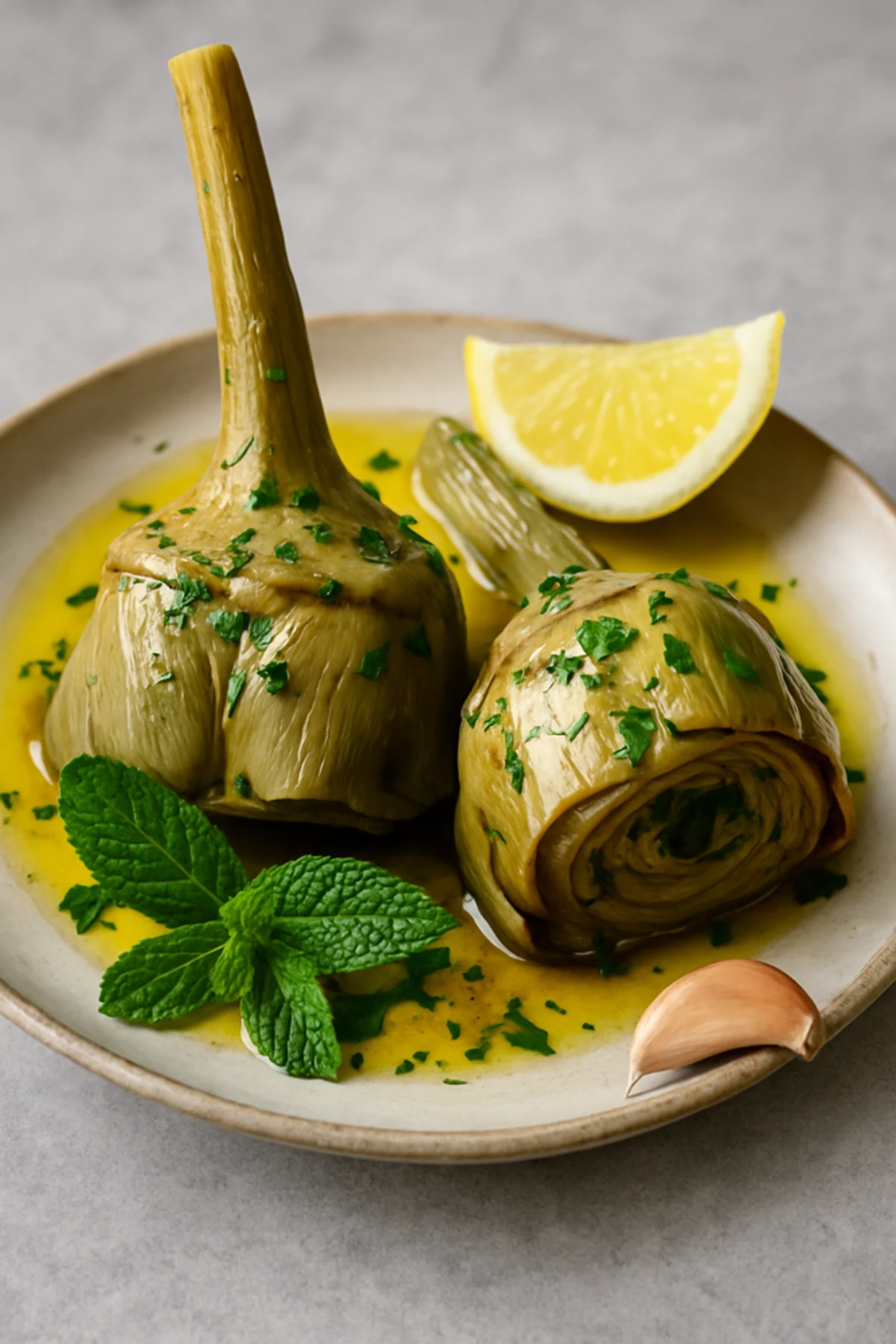
- Plate the artichokes on a dish with some of the cooking liquid drizzled on top. Garnish with a sprig of mint and a wedge of lemon.
Nutrition Facts (per serving):
- Calories: 160 kcal
- Protein: 3.0g
- Fat: 14.0g
- Carbohydrates: 5.0g
- Salt: 1.2g
Dietary Information: Gluten-free, Dairy-free, Nut-free
(Word count so far: ~950)
Perfect Wine Pairings
Unlocking the perfect match for Roman-style artichokes is all about balancing the dish's fresh, aromatic herbs, earthy artichoke, and olive oil sheen. Artichoke's cynarin enhances perceived sweetness in wine, so prioritize high acidity, light-to-medium body, herbal or citrus notes, and minimal tannins. These wine pairings refresh the palate, making each leaf pop.
1. California Sauvignon Blanc ($15-25): Napa or Sonoma versions, like Cakebread or Duckhorn, offer zesty citrus, green herbs, and crisp acidity that mirror mint and lemon. The grassy edge echoes parsley, cutting oil richness. Grab at Total Wine or Trader Joe's—perfect everyday wine recommendation.
2. Oregon Pinot Gris or Pinot Noir ($18-28): Oregon's Pinot Gris (Ponzi or King Estate) brings pear, apple, and mineral zip, harmonizing with garlic's earthiness. For reds, lighter Pinot Noir from Willamette Valley (like Domaine Serene) provides red berry brightness and soft tannins—a wine for Roman-style artichokes that surprises with its delicacy. Available at BevMo or local shops.
3. Italian Verdicchio ($15-22): From Marche, like Umani Ronchi, this crisp white boasts almond, herbs, and lemon zest—spot-on for the stuffing. Its structure handles artichoke without overpowering. A classic wine pairing import at Total Wine.
4. French Sancerre or Spanish Albariño ($20-30): Loire's Sauvignon-driven Sancerre (Pascal Jolivet) delivers flinty minerality and gooseberry to match aromatics. Albariño from Rías Baixas (Pazo Señorans) adds saline freshness. Both excel as perfect match options, found at Trader Joe's or BevMo.
Vinomat app scans these profiles for personalized wine recommendations. Focus on bottles under $30 for value—New World accessibility meets Old World flair.
(Word count so far: ~1280)
Cooking Tips & Techniques
Mastering Roman-style artichokes hinges on prep and patience. Start with fresh artichokes—squeeze test: they should squeak. Trimming is key: use sturdy scissors for tops, a paring knife for stems, and a spoon for the choke. Soak in lemon water immediately to banish browning.
Stuff generously but gently—push herbs between leaves for even flavor. Upright braising in a snug pot (Dutch oven ideal) prevents tipping; low heat (simmer, not boil) ensures tenderness without mushiness—aim for 25-40 minutes, fork-test the base.
Common pitfalls? Overcooking turns them stringy; undercooking leaves them tough. If water evaporates too fast, add splashes. Extra-virgin olive oil quality matters—fruity Italian imports elevate taste. For US cooks, Trader Joe's frozen artichokes work in pinches, but fresh from markets shine.
Pro tip: Mise-en-place saves time; taste stuffing pre-stuffing for seasoning. Leftovers? Refrigerate 2 days, reheat gently in liquid. Scale up for crowds, but don't overcrowd the pan. These techniques guarantee perfect match results every time, setting you up for stellar wine pairing.
(Word count so far: ~1480)
Serving Suggestions
Present Roman-style artichokes family-style on a rustic platter, drizzled with poaching liquid for gloss. Garnish with mint sprigs and lemon wedges—encourage guests to pluck leaves, dipping in oil. Pair as an appetizer or side with grilled lamb, roast chicken, or seafood for a full Roman-inspired meal.
Elevate the scene: dim lights, crusty bread for sopping juices, and your perfect wine pairing chilled. For US twists, add alongside burrata or prosciutto. Serve warm, not hot, to let flavors bloom. This setup creates intimate, elevated dining—Vinomat helps match wines to your full menu.
(Word count so far: ~1620)
Conclusion
Roman-style artichokes deliver big on flavor with minimal fuss—this recipe and wine pairing guide make it foolproof. From minty aromatics to tender hearts, it's the ultimate canvas for your favorite wine for Roman-style artichokes. Grab bottles at Total Wine or Trader Joe's, cook up a batch, and taste the magic. Download Vinomat for endless wine recommendations and turn every meal into a celebration. Buon appetito!
(Total word count: ~1720)