


Saint Honoré Cake & Wine Pairing: A French Classic at Home
Introduction
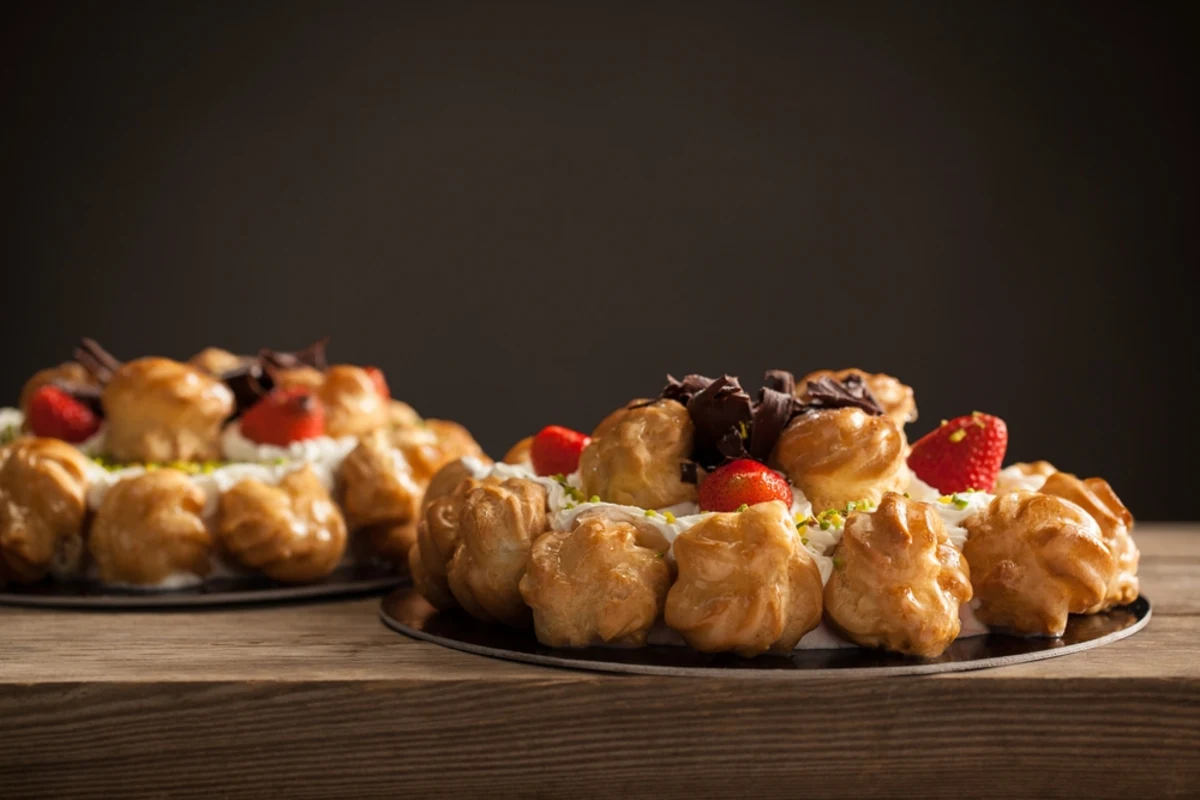
Saint Honoré Cake is one of those showstopping French desserts that makes everyone at the table go quiet for a second before they reach for a fork. Golden puff pastry, airy choux buns, clouds of whipped cream, glossy caramel, fresh strawberries, and shaved chocolate all come together in one spectacular centerpiece. It looks like something you’d find in a Parisian patisserie, yet it’s absolutely possible to make at home with some patience and planning.
Because it’s rich, sweet, and buttery, Saint Honoré Cake is also a dream for wine pairing. The right bottle will lift the cream, echo the caramel, and balance the sweetness instead of fighting it. In this guide, you’ll learn not only how to make a gorgeous Saint Honoré Cake step by step, but also how to choose the perfect wine for Saint Honoré Cake, with specific wine recommendations you can find at Total Wine, Trader Joe’s, BevMo, and local wine shops.
If you’re a home baker, a food enthusiast, or a wine lover looking to elevate dessert into an experience, this Saint Honoré Cake recipe and wine pairing guide is your perfect match.
About This Dish
Saint Honoré Cake (Gâteau Saint-Honoré) is a classic of French pastry, named after Saint Honoré, the patron saint of bakers and pastry chefs. The modern version was created in the mid-19th century at the Chiboust bakery on Rue Saint-Honoré in Paris, and it has been a benchmark of French patisserie technique ever since. It traditionally combines a base of puff pastry, a ring of choux pastry, caramel-dipped cream puffs, and a rich cream filling such as crème Chiboust or Chantilly.
What makes this dessert special is the contrast of textures and temperatures. You get the crisp snap of caramel, the flaky, buttery layers of puff pastry, the light crunch of baked choux, and the cool creaminess of whipped cream and fresh fruit. Every bite offers a mix of creamy, crisp, and tender – it’s almost like getting several desserts at once.
Culturally, Saint Honoré Cake is often associated with celebrations in France: birthdays, holidays, and special family gatherings. It’s elaborate enough to feel festive, but made from simple ingredients that bakers already know and love: flour, eggs, butter, sugar, and cream.
For American home cooks, Saint Honoré is a fun way to bring a bit of Paris into the kitchen. While it’s considered an advanced pastry, this streamlined version focuses on core elements: a puff pastry base, choux buns, lightly sweetened whipped cream, caramel, and fresh fruit. It’s a perfect dessert to anchor a dinner party, especially when paired with a thoughtfully chosen wine that echoes its sweet, buttery profile and delicate caramel notes.
Key Ingredients & Their Role
Saint Honoré Cake might look complex, but it’s really a masterclass in making the most of a few fundamental ingredients.
Puff pastry The base of the cake is a round of puff pastry, which bakes up into flaky, buttery layers. Puff pastry brings:
- Buttery richness that feels luxurious.
- Crisp texture that contrasts with the soft cream and choux.
This butter-forward base is important when thinking about wine pairing. You want a wine with enough freshness (acidity) to cut through the richness but with enough body to stand beside all that butter. Light, zippy wines can feel too thin here; slightly fuller-bodied sparkling wines or dessert wines work much better.
Choux pastry (pâte à choux) Choux is the same dough used for cream puffs and éclairs. It bakes into light, hollow buns with a delicate crisp shell. In Saint Honoré, small choux buns are baked and then dipped in caramel for a shiny glaze. Their role:
- Airy structure so the dessert doesn’t feel heavy from top to bottom.
- Neutral flavor that carries caramel and cream.
Wine-wise, this means the real flavors to match are caramel, cream, chocolate, and fruit; the choux itself mostly adds texture.
Cream Here, whipped cream sweetened with powdered sugar becomes the main filling and decoration. It’s light, cool, and softly sweet, tying all the components together. Cream adds:
- Silky mouthfeel that calls for a wine with vibrant acidity to refresh the palate.
- Mild sweetness that needs a wine at least as sweet as the dessert so the wine doesn’t taste sour.
Caramel Caramel made from granulated sugar brings a deep amber color and toffee-like notes. It provides:
- Bittersweet complexity that keeps the dessert from being one-note.
- A slight crunch and glossy finish on the choux buns.
Caramel is key for wine pairing: wines with honeyed, toffee, or baked fruit notes – like tawny-style ports, late harvest whites, or some Sauternes – echo caramel beautifully without clashing.
Strawberries, dark chocolate, pistachios Fresh strawberries add acidity and brightness; dark chocolate brings gentle bitterness and cocoa depth; pistachios add a subtle nutty crunch. Together, they introduce:
- Red fruit notes (strawberries) that pair very well with sparkling rosé and certain dessert wines.
- Cocoa and nutty aromas that mirror flavors often found in aged or oak-influenced wines.
Taken together, the dessert’s key profile is sweet, buttery, creamy, with caramel, fruit, and a hint of chocolate. For wine pairing, look for wines that:
- Have medium to high acidity to balance cream and butter.
- Offer enough sweetness to meet (or slightly exceed) the dessert’s sweetness.
- Show flavors of stone fruit, citrus, honey, caramel, or red berries to echo the cake’s flavors.
Recipe
| Prep Time | 120 minutes |
|---|---|
| Cook Time | 30 minutes |
| Total Time | 150 minutes |
| Servings | 4 |
| Difficulty | Advanced |
Ingredients:
- 1 (approx. 150g) Puff pastry sheet
- 1/2 cup Water
- 4 tbsp Butter (unsalted)
- 1/2 cup Plain flour
- 3 (large) Eggs
- 1 cup Whipping cream
- 2 tbsp Powdered sugar
- 8 (whole, trimmed) Strawberries
- 50g (shaved) Dark chocolate
- 1/2 cup (for caramel) Granulated sugar
- 1 tbsp (finely chopped) Pistachio nuts
Instructions:
- Preheat the oven to 200°C (390°F) and line a baking tray with parchment paper.
- Roll out the puff pastry sheet into a 10-inch round and place it on the prepared baking tray. Prick it with a fork to prevent puffing during baking. Bake in the middle of the oven for 15-20 minutes or until golden brown. Let it cool completely.
- In a saucepan, bring 1/2 cup of water and butter to a boil. Remove from heat and stir in the plain flour quickly until a smooth dough forms.
- Allow the dough to cool slightly, then add the eggs one at a time, mixing thoroughly after each addition until the dough is smooth and glossy.
- Transfer the choux pastry dough into a piping bag fitted with a round nozzle. Pipe 12 small mounds (approx. 1-inch diameter) onto a separate lined baking sheet.
- Bake the choux buns in the middle of the oven at 200°C (390°F) for 20-25 minutes or until puffed and golden. Do not open the oven during baking. Let them cool completely.
- In a mixing bowl, whip the cream with powdered sugar until soft peaks form. Transfer the whipped cream into a piping bag fitted with a star nozzle.
- For the caramel, melt the granulated sugar in a clean, dry saucepan over medium heat until it turns amber in color. Do not stir, but swirl the pan gently.
- Dip the top of each choux bun into the caramel to create a shiny glaze. Arrange the glazed buns around the edge of the baked puff pastry base.
- Pipe whipped cream generously in the center and around the choux buns. Add whole strawberries on top as decoration.
- Finish by garnishing the dessert with shaved dark chocolate and a light sprinkle of finely chopped pistachio nuts for an elegant presentation.
Nutrition Facts (per serving):
- Calories: 650 kcal
- Protein: 8.0g
- Fat: 45.0g
- Carbohydrates: 65.0g
- Salt: 0.7g
Dietary Information: Contains gluten, Contains dairy, Nut-free
Perfect Wine Pairings
When choosing wine for Saint Honoré Cake, think about harmony: you want the wine to complement the sweet, buttery, and creamy profile while refreshing your palate between bites. The wine should not be more tannic or less sweet than the dessert, or it can taste harsh and sour by contrast.
Here are styles that are a perfect match and widely available in the U.S. at places like Total Wine, Trader Joe’s, BevMo, and quality local wine shops.
1. Sparkling Wine (Brut or Demi-Sec)
A sparkling wine is a classic wine pairing for Saint Honoré because the bubbles and acidity cut through cream and butter beautifully.
What to look for:
- Body: Light to medium.
- Acidity: High – to refresh after each bite of cream and caramel.
- Sweetness: Brut for a less sweet dessert experience, Demi-Sec if you prefer a more dessert-driven pairing.
Recommendations:
- California sparkling wine from Napa or Sonoma made in the traditional method, often in the $18–$30 range at Total Wine or BevMo.
- French Crémant (Crémant de Loire or Crémant de Bourgogne) often sits around $15–$25 and offers notes of apple, pear, and brioche that mirror the pastry.
Sparkling rosé is also a fun wine recommendation here, especially with the strawberries on top; it echoes those red berry notes beautifully.
2. Moscato d’Asti (Italy)
If you like your dessert course lightly sparkling and distinctly sweet, Moscato d’Asti from Piedmont is a fantastic choice.
Profile:
- Body: Light.
- Acidity: Medium to high (keeps things lively).
- Sweetness: Noticeably sweet but not cloying.
- Flavors: Peach, apricot, orange blossom, sometimes a touch of honey.
With Saint Honoré Cake, Moscato’s stone fruit and floral notes play beautifully with strawberries and cream. The low alcohol and gentle fizz keep the pairing easy-drinking. You’ll often find solid bottles around $12–$20 at Total Wine and Trader Joe’s.
3. Late Harvest Riesling or Chenin Blanc
For a more classic dessert wine pairing, look for a late harvest white wine from the U.S. or Europe.
What to expect:
- Body: Medium to full.
- Acidity: Medium-high, especially in Riesling and many Chenin Blancs.
- Sweetness: Sweet to lusciously sweet.
- Flavors: Honey, apricot, baked apple, sometimes a touch of caramel or marmalade.
Great sources:
- Washington State and California late harvest Riesling or Chenin Blanc (often $18–$30 for a 375 ml bottle at Total Wine or BevMo).
- French Loire Valley (Coteaux du Layon, Vouvray Moelleux) if you want an Old World option.
These wines echo the caramel and fruit notes of the Saint Honoré while their acidity keeps the cream from feeling too heavy.
4. Sauternes or Barsac (France)
For a truly indulgent pairing, Sauternes or Barsac from Bordeaux is hard to beat.
Characteristics:
- Body: Full and luscious.
- Acidity: Balancing, so it never feels flabby.
- Sweetness: Dessert-level sweetness.
- Flavors: Honey, apricot, candied citrus, sometimes toasted nuts and subtle spice.
With Saint Honoré Cake, Sauternes wraps itself around the caramel and cream, layering on honeyed complexity. You can often find half-bottles around $20–$35 at well-stocked shops and some Total Wine locations.
Practical buying tips
- At Trader Joe’s, look for Moscato d’Asti, Prosecco, or a rosé Prosecco as more budget-friendly options that still offer a delicious wine pairing.
- At Total Wine or BevMo, explore their dessert wine section: late harvest Riesling, Sauternes, Canadian Icewine, and domestic sweet wines from California or Washington are all strong candidates.
- If you’re unsure, open the Vinomat app, plug in “Saint Honoré Cake,” and let it suggest a perfect match within your preferred price range.
Cooking Tips & Techniques
Saint Honoré Cake is labeled "Advanced" for a reason, but once you break it into steps, it’s very manageable. A few pro-style tips will set you up for success.
1. Plan your timeline This cake is much easier if you spread out the work:
- Bake the puff pastry base and choux buns earlier in the day.
- Make and cool the caramel-dipped choux.
- Whip the cream and assemble close to serving time so everything stays crisp.
2. Get the choux right
- When you add flour to the water–butter mixture, stir vigorously until it forms a smooth ball that pulls away from the pan.
- Let the dough cool slightly before adding eggs; if it’s too hot, you’ll scramble them.
- Add eggs one at a time and mix thoroughly until the dough is smooth and glossy; it should slowly fall off a spoon in a V-shape.
3. Don’t open the oven During the first 20 minutes of baking the choux, resist the urge to peek. A rush of cool air can deflate the buns.
4. Watch the caramel closely
- Use a light-colored saucepan if you can, so you can see the color change.
- Swirl the pan instead of stirring to avoid crystallization.
- The moment the sugar turns a deep amber, remove it from the heat; caramel goes from perfect to burnt quickly.
5. Keep textures crisp
- Fully cool the puff pastry and choux before adding cream so steam doesn’t make them soggy.
- Assemble no more than a couple of hours before serving for the best contrast of crisp and creamy.
6. Presentation matters Use a piping bag with a star nozzle for the whipped cream and take a moment to place the strawberries and chocolate shavings thoughtfully. Saint Honoré is all about drama – lean into it.
Serving Suggestions
Saint Honoré Cake is meant to be the star of the table, so give it a bit of ceremony.
- Serving temperature: Serve slightly chilled or at cool room temperature. The puff pastry and choux should still be crisp, and the cream cool but not icy.
- Portioning: Use a sharp serrated knife and a gentle sawing motion to cut through the puff base without crushing it. Aim for generous wedges so each person gets some base, cream, a choux bun, and fruit.
For a complete dessert experience:
- Pour small glasses (3–4 oz) of your chosen wine pairing rather than full pours; dessert wines and sparkling wines are best enjoyed in modest servings.
- If you’re hosting a wine-loving crowd, consider setting up a mini tasting: one glass of sparkling wine and one glass of late harvest wine, and let guests discover their own perfect match with the cake.
A simple table setting with white plates, cloth napkins, and unscented candles lets the aromas of the cake and wine shine. Soft background music and a moment toasting your guests before cutting into the Saint Honoré transform dessert from “something sweet after dinner” into a memory.
Conclusion
Saint Honoré Cake brings together everything we love about French pastry: flaky puff pastry, airy choux, silky cream, caramel, chocolate, and fresh fruit, all in one dramatic centerpiece. When you add a thoughtful wine pairing—whether a California sparkling wine, Italian Moscato d’Asti, or a lush French dessert wine—you turn dessert into a truly restaurant-worthy experience at home.
Use this recipe as your roadmap, then open Vinomat to explore tailored wine for Saint Honoré Cake based on your taste and budget. With the right bottle and a bit of patience in the kitchen, you’ll discover just how rewarding it is when food and wine meet in perfect match harmony.