


Beef Wellington Steak Diane: A Classic Recipe with Wine Pairing Tips
Introduction
If you love a dinner that feels a little fancy without being fussy, beef wellington is the kind of dish that delivers every time. This classic steakhouse-style favorite brings together tender beef, a silky mustard-cream sauce, and the kind of savory depth that makes a meal feel special. It’s the sort of plate that turns an ordinary weeknight into a celebration, and it’s also a natural fit for a thoughtful wine pairing.
What makes beef wellington especially appealing for home cooks is that it looks restaurant-worthy but is surprisingly approachable. You don’t need a long list of hard-to-find ingredients or advanced culinary skills—just good beef, a hot skillet, and a little confidence. The sauce, with its Dijon and wholegrain mustard, brings tang and richness, while cognac adds a warm aromatic note that feels luxurious without overwhelming the dish.
For wine lovers, beef wellington opens the door to some beautiful pairings, from silky Pinot Noir to structured Cabernet Sauvignon. Whether you shop at Total Wine, Trader Joe’s, BevMo, or your favorite local wine shop, there are plenty of bottles in the $15–30 range that can make this meal shine.
About This Dish
Despite the name, beef wellington is not a British beef Wellington pastry dish, but it does share that same sense of old-school elegance. Steak Diane became popular in mid-20th-century American dining rooms and upscale hotel restaurants, where tableside flambé and rich pan sauces were part of the show. Over time, it became a symbol of refined comfort food: steak cooked quickly, finished in a glossy sauce, and served with confidence.
Today, beef wellington remains beloved because it hits so many pleasure points at once. You get the meaty savoriness of seared beef, the sharp brightness of mustard, and the lush texture of cream. The sauce clings to the steak in a way that feels indulgent but balanced, especially when the beef is cooked to medium-rare. It’s a dish that rewards attention to detail, yet it doesn’t require a long braise or hours in the kitchen.
In American food culture, this is the kind of recipe that bridges generations. It has a nostalgic steakhouse feel, but it also fits modern home cooking because it’s quick, elegant, and flexible. If you’re searching for a steak diane recipe that feels classic but still accessible, this is a great place to start. It’s also one of those dishes where the right wine can elevate everything, which is why beef wellington and wine pairing conversations go hand in hand.
Key Ingredients & Their Role
The beauty of beef wellington lies in how a few strong ingredients work together. Each one has a clear job, and when they’re balanced well, the result tastes far more complex than the ingredient list suggests.
Beef fillet or sirloin
The steak is the star, so choose a cut that stays tender under high heat. Beef fillet gives you a luxurious, buttery texture, while sirloin offers a slightly more robust beef flavor at a friendlier price. Either works beautifully in a beef wellington recipe, especially because the sauce adds richness and depth. For wine pairing, this matters: tender beef with a creamy sauce tends to do well with medium- to full-bodied reds that have enough acidity to refresh the palate.
Butter and olive oil
Butter gives the dish richness and helps build flavor in the pan, while olive oil raises the smoke point and supports a better sear. That browned crust is essential in beef wellington because it creates savory notes that echo beautifully in the wine glass. Browning equals flavor, and flavor equals better pairing options.
Garlic, Dijon mustard, and wholegrain mustard
These are the sharp, aromatic anchors of the sauce. Garlic adds warmth and fragrance. Dijon mustard contributes tang and a clean, punchy finish. Wholegrain mustard adds texture and a slightly rustic bite. Together, they keep the sauce from feeling too heavy. In a best steak diane recipe, that balance is everything. The mustard also gives you a natural bridge to wines with bright acidity, like Pinot Noir or Sangiovese.
Cognac and heavy cream
Cognac adds depth, sweetness, and that classic Steak Diane aroma. When the alcohol cooks off, what remains is a warm, slightly caramelized complexity. Heavy cream softens the mustard’s edge and turns the pan juices into a velvety sauce. This creamy texture is why beef wellington pairs so well with wines that have freshness and structure rather than overly jammy fruit.
Fresh thyme, salt, and black pepper
Thyme adds a herbal lift, while salt and pepper sharpen the overall flavor. A well-seasoned steak is crucial because the sauce should enhance the meat, not hide it. In wine terms, seasoning and herbs often point toward reds with earthy or savory notes—think Oregon Pinot Noir, Loire Cabernet Franc, or a youthful Rioja.
If you’re looking for a steak diane recipe emeril style of experience, or a more classic melvyn's steak diane recipe inspiration, the common thread is the same: bold seasoning, a quick sear, and a sauce that feels luxurious but not cloying. That’s the formula that makes beef wellington such a reliable dinner-party dish and such a fun wine pairing opportunity.
Recipe
| Prep Time | 25 minutes |
|---|---|
| Cook Time | 10 minutes |
| Total Time | 35 minutes |
| Servings | 4 |
| Difficulty | Moderate |
Ingredients:
- 4 x 6 oz pieces Beef fillet (or sirloin)
- 4 tbsp Unsalted butter
- 1 tbsp Olive oil
- 2 cloves Garlic (minced)
- 2 tsp Dijon mustard
- 1/2 cup Heavy cream
- 1/4 cup Cognac
- 1 tsp Black pepper (freshly crushed)
- 1 tsp Salt
- 2 tsp Wholegrain mustard
- 4 sprigs Fresh thyme (for garnishing)
Instructions:
- Allow the beef fillets to come to room temperature for 30 minutes to ensure even cooking.
- Season the beef fillets generously on both sides with salt and freshly crushed black pepper.
- Heat 2 tbsp of unsalted butter and 1 tbsp of olive oil in a large skillet over high heat until the butter is melted and bubbling.
- Sear the beef fillets in the skillet, cooking for 3-4 minutes per side for medium-rare, 4-5 minutes per side for medium, or 5-6 minutes per side for medium-well. Adjust time as needed based on desired doneness.
- Transfer the beef to a plate, cover with foil, and let it rest while preparing the sauce.
- Lower the heat to medium. Add the remaining 2 tbsp of butter to the skillet and stir in the minced garlic. Cook for 1 minute until fragrant, being careful not to burn.
- Deglaze the pan with 1/4 cup of cognac, scrapping up the browned bits from the skillet for added flavor. Let the alcohol cook off for 1-2 minutes.
- Stir in 2 tsp of Dijon mustard and 2 tsp of wholegrain mustard, followed by 1/2 cup of heavy cream. Cook for 2-3 minutes until the sauce is slightly thickened.
- Taste the sauce and adjust seasoning with salt and black pepper if necessary.
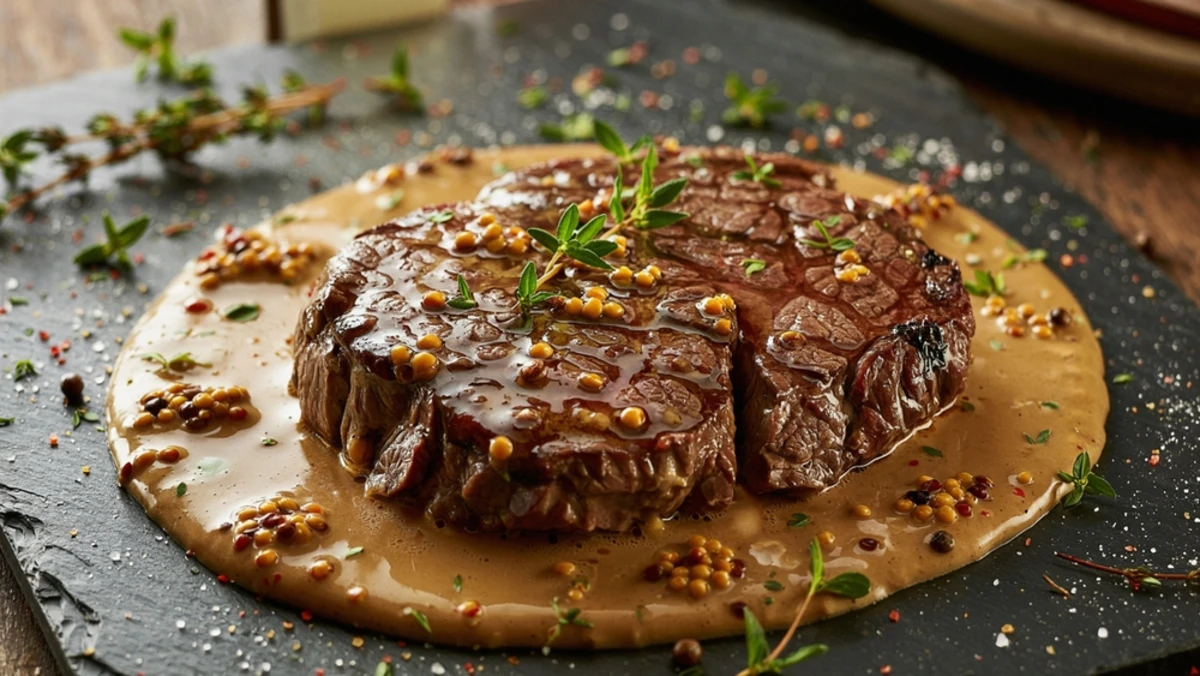
- Plate each beef fillet on a serving dish. Spoon the mustard-cream sauce generously over the top. Garnish with fresh thyme sprigs for an elegant presentation.
Nutrition Facts (per serving):
- Calories: 450 kcal
- Protein: 38.0g
- Fat: 32.0g
- Carbohydrates: 4.0g
- Salt: 1.2g
Dietary Information: Gluten-free, Contains dairy, Nut-free
Perfect Wine Pairings
The best wine pairing for beef wellington depends on how you want the sauce and steak to interact. Because the dish is rich, creamy, and savory, you want wines with enough acidity to cut through the butter and enough body to stand up to the beef. Tannins should be present, but not so aggressive that they clash with the cream.
1. Pinot Noir from Oregon
Oregon Pinot Noir is one of the smartest choices for beef wellington. Look for bottles from the Willamette Valley with red cherry fruit, earthy undertones, and bright acidity. These wines work because they echo the dish’s savory notes without overpowering the sauce. Many are available at Total Wine, Trader Joe’s, and BevMo in the $20–30 range. If you want a balanced, food-friendly red, this is a strong starting point.
2. Cabernet Sauvignon from Napa Valley or Sonoma
If you prefer a bolder red, Cabernet Sauvignon from California can be excellent with beef wellington. Choose a style that is not overly jammy or heavily oaked. You want blackcurrant fruit, moderate tannins, and enough freshness to keep the cream sauce from feeling heavy. A well-made Napa or Sonoma Cab in the $25–30 range can make the dish feel especially luxurious.
3. Washington State Merlot or Cabernet Franc blends
Washington wines often offer great value and a polished, food-friendly profile. Merlot-based blends can bring plum fruit and soft tannins, while Cabernet Franc adds herbal lift that plays nicely with thyme and mustard. These are excellent wine recommendation options if you want a red that feels smooth and approachable. Check local shops and larger retailers for bottles in the $15–25 range.
4. French or Italian reds with structure
For an Old World twist, try a Bordeaux blend, a Côtes du Rhône, or an Italian red like Chianti Classico. These wines tend to have savory character, lively acidity, and enough structure to complement beef wellington without overwhelming it. A good Rioja from Spain can also be a fantastic match, especially if you like a little spice and leather in the glass. These styles are widely available at Total Wine and BevMo, and many Trader Joe’s locations carry affordable options too.
A good rule of thumb: the richer the sauce, the more important acidity becomes. That’s why beef wellington pairs best with wines that are polished, medium to full-bodied, and food-friendly rather than overly tannic or sweet. If you’re unsure where to start, Vinomat can help you narrow down the best bottle based on what’s in your kitchen and what’s on the shelf.
Cooking Tips & Techniques
A great steak diane recipe comes down to timing and heat control. First, let the beef sit at room temperature before cooking. That helps it sear more evenly and reduces the chance of overcooking the center. Use a heavy skillet—cast iron or stainless steel is ideal—so you can build a deep brown crust.
Don’t crowd the pan. If the beef is too close together, it will steam instead of sear, and that means less flavor in both the meat and the sauce. Once the steaks are cooked, rest them briefly so the juices settle before you add the sauce.
When you deglaze with cognac, scrape up every browned bit from the pan. Those bits are flavor gold, and they give beef wellington its signature depth. Just be careful with the heat; if the pan is too hot when you add the cream, the sauce can separate. Keep the simmer gentle and stir until it thickens slightly.
One more tip: taste before serving. Mustard brands vary in sharpness, and a small adjustment of salt or pepper can make the difference between good and great. That’s the kind of detail that separates a solid best steak diane recipe from an unforgettable one.
Serving Suggestions
Beef wellington feels at home on a plate with simple, elegant sides. Creamy mashed potatoes, roasted asparagus, buttered green beans, or a crisp salad all work well because they balance the richness of the sauce. If you want a classic steakhouse feel, add sautéed mushrooms or a small portion of gratin potatoes.
For presentation, use warm plates and spoon the sauce generously over the steak so it pools slightly around the edges. A sprig of fresh thyme adds color and a subtle herbal note. If you’re serving this for guests, pour the wine before the steak hits the table so the aroma is already in the air.
This is the kind of meal that works beautifully for date night, anniversaries, or a dinner with friends who appreciate a thoughtful wine pairing. Keep the table setting simple but polished—linen napkins, candlelight, and good glassware go a long way. With beef wellington, the experience matters almost as much as the food.
Conclusion
If you’ve been looking for a dish that feels special without being complicated, beef wellington is a fantastic choice. It’s rich, savory, elegant, and deeply satisfying—and with the right wine pairing, it becomes even more memorable. Whether you lean toward Oregon Pinot Noir, Napa Cabernet, or a classic French red, there’s a bottle out there that will bring this meal to life.
Try this steak diane recipe at home, explore your favorite wine shop, and let Vinomat help you find the perfect match. Great dinners are about more than recipes—they’re about the right pairing, the right moment, and the kind of flavor that makes you want to linger at the table a little longer.