


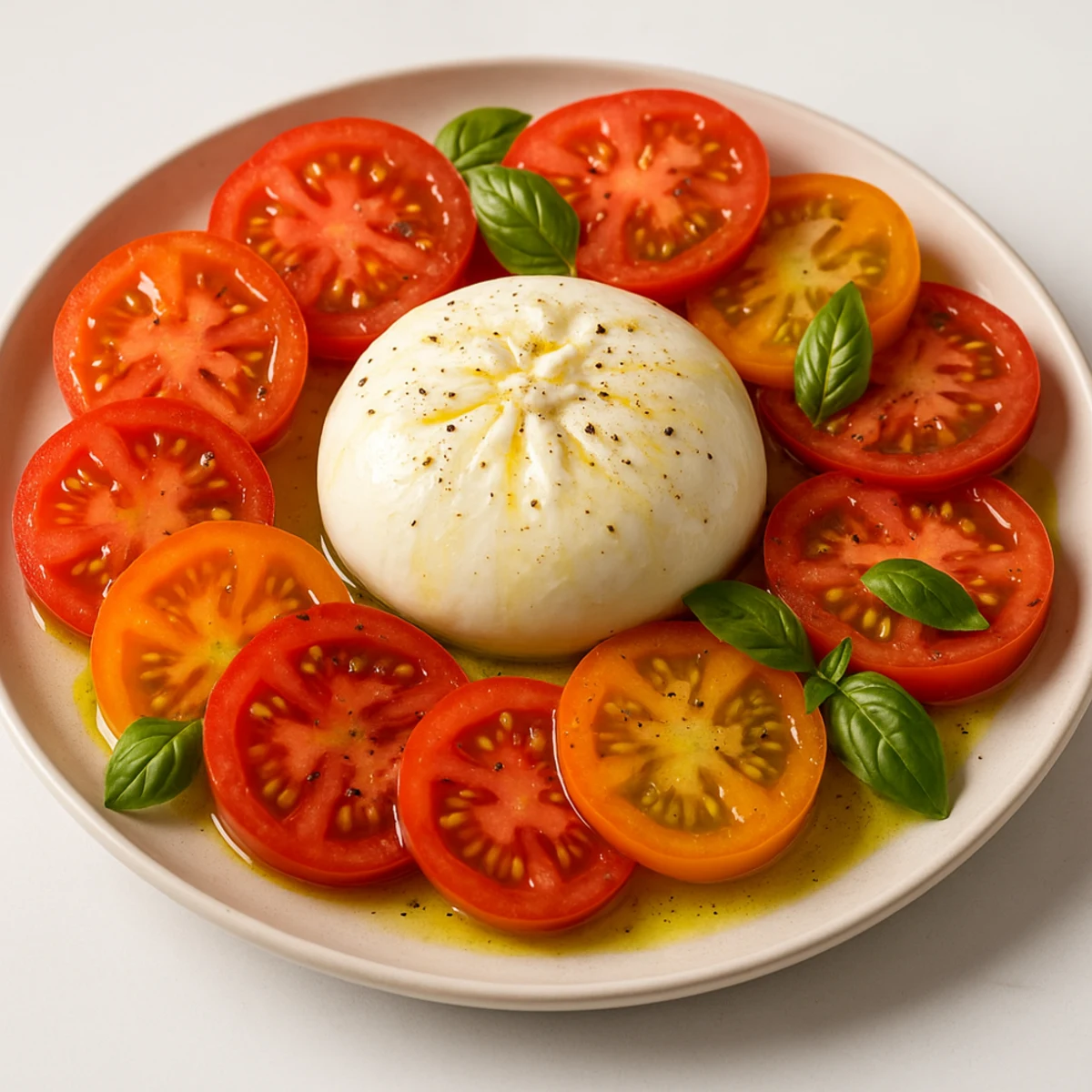
Tomato Burrata Salad with Basil & Provençal Olive Oil
Tomato Burrata Salad with Basil and Provençal Olive Oil
There are summer dishes you like, and then there are dishes you plan your entire evening around. This burrata salad with ripe tomatoes, fragrant basil, and silky Provençal olive oil is absolutely the latter. It’s a plate that looks like it came straight from a sun‑drenched café in the South of France, but it’s effortless enough for a Tuesday night in your own kitchen.
With just a handful of ingredients, this tomato burrata salad recipe delivers big on contrast: juicy, sweet tomatoes; rich, creamy cheese; peppery basil; and a luxurious drizzle of olive oil. It’s naturally gluten‑free, takes only 15 minutes to make, and is made for sharing with friends, a loaf of crusty bread, and a perfectly chilled glass of wine.
Because the flavors are so pure, it’s also a dream for wine pairing. A bright, aromatic white, a zesty rosé, or even a silky Pinot Noir can each highlight a different side of the dish. Below, you’ll find the exact burrata salad recipe plus sommelier‑style pairing tips you can easily shop for at Total Wine, Trader Joe’s, BevMo, or your local bottle shop.
About This Dish
This burrata and tomato salad recipe is a minimalist love letter to Mediterranean cooking: a few great ingredients treated simply and respectfully. If you’ve ever had a classic Caprese salad, think of this as its more indulgent cousin.
Instead of mozzarella, burrata takes center stage. Burrata began in Puglia, in Southern Italy, as a clever way to use leftover mozzarella curds. Cheesemakers stretched mozzarella into a pouch, then filled it with ribbons of creamy curd and cream. The result: a delicate shell that gives way to a luscious, almost whipped center.
Pair that with peak‑season tomatoes and fragrant basil and you have a salad that’s all about seasonality and texture. It feels right at home in Provençal cooking too, where market‑fresh produce, good olive oil, and herbs are the stars of the table. Here, using olive oil from Provence nods to that French coastal vibe: sunny, herbal, and effortlessly elegant.
For American home cooks and wine lovers, this dish is a perfect “bridge” recipe. It’s restaurant‑quality but genuinely easy, and it offers an ideal canvas to explore Old World wines from France, Italy, and Spain alongside favorites from California, Oregon, and Washington State. Whether you’re hosting a dinner party, bringing a dish to a potluck, or building a light summer meal, this burrata salad delivers huge flavor with almost no cooking.
Key Ingredients & Their Role
A great burrata salad recipe rises or falls on ingredient quality. With so few elements, each one has a clear job to do.
Tomatoes Use the ripest, most fragrant tomatoes you can find. This recipe calls for 3 medium ripe red tomatoes and 2 medium ripe yellow tomatoes. Red tomatoes bring sweetness and acidity, while yellow tomatoes tend to be milder and lower in acid, adding balance and beautiful color contrast. Together, they create a flavor profile that’s both juicy and refreshing, ideal for pairing with wines that have good acidity and fruit.
Burrata cheese At the center of the plate is creamy burrata cheese (200 grams). Where fresh mozzarella is bouncy and elastic, burrata is all about creaminess. When you cut into it, the interior gently spills out, mingling with tomato juices and olive oil. That rich, milky texture loves wines with bright acidity (to cut through the cream) and gentle fruit (to complement, not overwhelm). Think crisp Italian whites, Provençal rosé, or lighter‑bodied reds like Pinot Noir.
Fresh basil leaves With 12 fresh basil leaves, you get a pop of peppery, anise‑like freshness. Basil lifts the entire plate, adding aroma and a green, herbal note reminiscent of the garrigue (wild herbs) of Provence. Herbaceous wines or those with subtle herbal notes—like some Sauvignon Blancs or Mediterranean rosés—play especially well here.
Olive oil from Provence Using 3 tablespoons of olive oil from Provence adds a distinctly Southern French touch. Provençal oils are typically elegant and aromatic, often with hints of artichoke, almond, and herbs. This oil forms the “sauce” of the burrata salad, carrying flavor and adding a silky mouthfeel. Wines with good acidity and a clean finish balance that richness and keep the dish feeling light.
Fleur de sel and black pepper A teaspoon of fleur de sel (delicate French sea salt) and freshly ground black pepper finish the dish. The salt heightens every flavor: making tomatoes taste sweeter, the burrata more savory, and the olive oil more nuanced. Pepper adds a gentle bite that works nicely with wines that have a bit of spice or earthiness.
Because the salad is so simple and so fresh, it’s incredibly flexible with pairings: you can pour crisp whites, pale rosés, or elegant reds and find a good match. This is exactly the kind of dish where a tool like Vinomat shines—letting you plug in your ingredients and instantly see what style and bottle will elevate your plate.
Recipe
Prep Time | 10 minutes Cook Time | 5 minutes Total Time | 15 minutes Servings | 4 Difficulty | Easy
Ingredients:
- 3 medium Ripe red tomatoes
- 2 medium Ripe yellow tomatoes
- 200 grams Creamy burrata cheese
- 12 leaves Fresh basil leaves
- 3 tbsp Olive oil from Provence
- 1 tsp Fleur de sel
- 1/2 tsp Freshly ground black pepper
Instructions:
- Mise-en-place: Rinse all tomatoes under cool water and pat dry. Pluck fresh basil leaves and set aside.
- Slice the red and yellow tomatoes into approximately 1/4 inch thick round slices, trying to keep them uniform for an elegant presentation.
- Arrange the sliced tomatoes in a circular pattern around the edge of a large, shallow serving plate, alternating colors for a vibrant look.
- Place the whole burrata cheese gently in the center of the plate, keeping its round intact shape for visual appeal.
- Drizzle the olive oil from Provence evenly over the tomatoes and burrata to enhance aroma and flavor.
- Scatter fresh basil leaves over the tomatoes and around the burrata to add bright green color and fresh herbal notes.
- Season the entire dish with fleur de sel evenly to enhance natural flavors, followed by a light grind of freshly ground black pepper to taste.
- For final presentation, serve at room temperature so that the flavors of burrata, tomatoes, basil, and olive oil are fully appreciated.
Nutrition Facts (per serving):
- Calories: 230 kcal
- Protein: 10.0g
- Fat: 18.0g
- Carbohydrates: 7.0g
- Salt: 0.6g
Dietary Information: Gluten-free, Contains dairy, Nut-free
Perfect Wine Pairings
Because this tomato burrata salad is all about freshness, creaminess, and gentle acidity, you want wines that are vibrant, not heavy; refreshing, not oaky or overly tannic. Here’s how to think about it.
What to Look For
- Body: Light to medium‑bodied wines work best, so the wine doesn’t overpower the delicate burrata.
- Acidity: Moderate to high acidity is key. It cuts through the creaminess of the cheese and echoes the natural acidity of the tomatoes.
- Tannins: Keep tannins low. Big, grippy reds can clash with tomatoes and make the dish taste metallic.
- Fruit & Herbs: Bright red or citrus fruit and subtle herbal notes mirror the tomatoes and basil.
1. Crisp Whites
Great styles: Sauvignon Blanc, Vermentino, Pinot Grigio, Albariño.
- From the U.S.: Look for a Sonoma or Napa Sauvignon Blanc in the $15–$25 range at Total Wine or BevMo. These wines usually offer zesty citrus, green apple, and a hint of fresh herbs that pair beautifully with basil and Provençal olive oil.
- From Europe: An Italian Vermentino or a Spanish Albariño (often available in the $15–$20 range) adds saline, coastal notes that make the salad taste even more Mediterranean.
2. Provençal & American Rosé
A pale, dry rosé is arguably the most classic partner for this burrata salad.
- Provence Rosé: Look for Côtes de Provence or Provence‑labeled bottles at Trader Joe’s or Total Wine around $12–$22. You’ll get delicate red berries, citrus, and a whisper of herbs—perfect with tomatoes, basil, and that Provençal olive oil.
- California Rosé: Many producers in Sonoma and Paso Robles make dry, food‑friendly rosés in the same style. These often have slightly riper strawberry and watermelon notes that play well with the sweetness of summer tomatoes.
3. Elegant Pinot Noir
If you’re in the mood for red, choose a light, silky Pinot Noir.
- Oregon Pinot Noir: Willamette Valley Pinot in the $20–$30 range (found at BevMo or specialty shops) offers bright cherry, cranberry, and subtle earth—lovely against the basil and black pepper. Serve it slightly chilled (about 55°F) to keep the pairing refreshing.
- California Pinot Noir: Look for cooler‑climate regions like Sonoma Coast or Santa Barbara. These Pinots tend to be delicate enough for a cheese‑and‑tomato dish, especially when you want a red at a summer gathering.
4. Italian Whites & Sparkling
To echo burrata’s Italian roots, consider:
- Italian Pinot Grigio (Veneto or Alto Adige): Clean, crisp, citrusy; easy to find under $20 at Trader Joe’s or Total Wine.
- Frizzante / Prosecco: A dry, lightly sparkling Prosecco adds a festive touch, with bubbles that cut through the richness of the burrata.
For tailored suggestions based on what’s actually available near you, open Vinomat, plug in “burrata salad with tomatoes and basil,” and let it suggest specific bottles by region, grape, and price point.
Cooking Tips & Techniques
Even though this recipe for tomato and burrata salad is simple, a few small details make the difference between “pretty good” and unforgettable.
- Use room‑temperature ingredients: Cold tomatoes and burrata can taste muted. Pull the cheese and tomatoes from the fridge 30–45 minutes before serving, so their flavors and textures fully shine.
- Choose ripe, in‑season tomatoes: This dish lives or dies on tomato quality. In summer, farmers’ markets, local co‑ops, or the best‑looking heirlooms at your grocery store are worth seeking out. In off‑season months, look for smaller vine‑ripe or Campari tomatoes, which tend to have better flavor.
- Don’t skimp on olive oil: This isn’t the time for generic cooking oil. Use a good Provençal olive oil with character; it’s effectively the dressing for your burrata salad.
- Season at the end: Salt draws moisture from tomatoes. For the best texture, slice and arrange the tomatoes first, then season with fleur de sel and pepper just before serving.
- Handle burrata gently: Burrata is fragile. Pat it dry if it’s very wet, then place it on the plate with your hands rather than utensils so it keeps its beautiful round shape.
- Keep it simple: You don’t need extra vinegar or a heavy dressing; the tomatoes provide acidity, and the fleur de sel sharpens every flavor.
Common mistakes to avoid: overdressing with oil (you want sheen, not a pool), serving straight from the fridge, or using out‑of‑season, pale tomatoes. Follow the recipe steps and you’ll get a consistently excellent burrata and tomato salad recipe every time.
Serving Suggestions
This tomato burrata salad is versatile and fits into many kinds of meals.
- As a starter: Serve it on a large platter in the center of the table with warm, crusty bread or toasted baguette slices. Invite guests to tear into the burrata and scoop up the creamy cheese with tomato and basil.
- As a light main: For a warm‑weather dinner, pair the salad with grilled chicken, shrimp, or simply a generous basket of good bread and a chilled bottle of rosé. For a more substantial plate, you can set it alongside the best cucumber and tomato salad recipe or the best corn and tomato salad recipe for a summery spread.
- For entertaining: Arrange the tomatoes in a neat spiral, alternate red and yellow slices, and scatter basil leaves so there’s color in every bite. The whole dish should look like edible confetti—vibrant reds, golds, and greens against the milky white burrata.
Table‑setting tip: use a wide, shallow platter so the juices and olive oil pool slightly around the edges. That flavorful liquid is gold—perfect for mopping up with bread and sipping with your chosen wine. If you’re hosting a wine‑tasting evening, this salad is an ideal anchor dish to compare whites vs. rosés vs. light reds in real time.
Conclusion
If you’re looking for a dish that feels like a vacation on a plate, this burrata salad with tomatoes, basil, and Provençal olive oil is it. It’s fast, fresh, unfussy, and endlessly elegant—all while being weeknight‑friendly and naturally gluten‑free.
Use this tomato burrata salad recipe as your go‑to when tomatoes are at their peak, and let wine pairings turn it into a full experience. Open Vinomat, choose your mood and budget, and let it guide you to a bottle that makes every bite taste even better. Simple ingredients, thoughtful wine pairing, and a little curiosity—that’s all you need for a truly memorable meal.