


Tuna Carpaccio & Wine Pairing: A Fresh, Elegant At‑Home Feast
Introduction
Silky, paper-thin slices of tuna, a shimmer of extra virgin olive oil, a squeeze of lemon, peppery arugula, and a snowfall of Parmesan – Tuna Carpaccio is one of those dishes that feels like a special-occasion restaurant order, yet it’s surprisingly doable at home.
What makes it truly unforgettable is the wine pairing. The right bottle turns this simple plate of umami-rich, salty-fresh tuna into a full dining experience: the citrus in your glass echoing the lemon, bright acidity lifting the richness of the fish and olive oil, and subtle herbal notes playing beautifully with arugula and thyme.
In this post, you’ll learn how to make an elegant Tuna Carpaccio from start to finish, plus how to choose the perfect match in your glass. Whether you’re shopping at Total Wine, Trader Joe’s, BevMo, or your local wine shop, you’ll find a wine for Tuna Carpaccio that fits the $15–$30 range and feels like it was made for this recipe. Vinomat can then help you fine‑tune your wine recommendation to your personal taste.
About This Dish
Carpaccio began in mid‑20th‑century Venice as thinly sliced raw beef served with a punchy sauce. Over time, chefs fell in love with the technique and applied it to seafood, vegetables, and even fruit. Tuna Carpaccio is a modern classic in that family: raw tuna, sliced wafer-thin and dressed so simply that freshness and texture take center stage.
In the United States, it sits at the intersection of several food traditions: Italian carpaccio, Japanese sashimi, and the broader raw seafood culture you see at sushi bars and crudo-focused restaurants. It feels luxurious but also light and clean – a dish that works as an upscale appetizer, a date‑night starter, or the centerpiece of a warm‑weather dinner.
What makes this particular version special is its balance:
- Umami & richness from the tuna and Parmesan
- Brightness from lemon juice and zest
- Peppery, green freshness from arugula and thyme
- Silky, glossy texture from high‑quality extra virgin olive oil
That interplay of rich and fresh is exactly why it’s so fun to match with wine. Raw tuna loves lively acidity and citrusy, mineral whites like Sancerre or Chablis, which highlight its delicate flavor while cutting through its natural fattiness. At the same time, its meaty texture can also stand up to very light, low‑tannin reds like Pinot Noir, especially when the preparation is simple and lemony.
In short, Tuna Carpaccio is a dish that looks impressive, tastes refined, and gives you lots of room to play with pairings – ideal for curious home cooks and wine lovers.
Key Ingredients & Their Role
Understanding the role of each ingredient helps you cook more intuitively – and choose a wine pairing that really sings.
Fresh Tuna
The star of the plate is fresh tuna fillet. Its flavor is clean, slightly sweet, and deeply savory, with a texture that’s almost buttery when sliced thin. Because the tuna is raw, quality and freshness are non‑negotiable. Look for sushi‑grade or sashimi‑grade tuna with a deep, even color and no fishy odor.
From a wine perspective, this rich, silky texture calls for high acidity in the glass to refresh your palate between bites. Whites like Sauvignon Blanc or Pinot Gris work beautifully because their brightness cuts through the richness while staying delicate enough not to overpower the fish.
Extra Virgin Olive Oil
A generous drizzle of extra virgin olive oil brings fruity, sometimes grassy notes and a smooth, luxurious mouthfeel. It deepens the dish’s richness, which again points you toward wines with good acidity and a clean finish.
Olive oil’s subtle bitterness is another clue. Wines with too much oak or sweetness can clash with that bitterness, while crisp, unoaked whites and dry sparkling wines tend to be the perfect match.
Lemon (Zest and Juice)
Lemon is the bridge between the plate and the glass. The zest perfumes the tuna with bright, aromatic citrus, while the juice adds tang and lifts all the flavors.
In wine terms, think of lemon as your roadmap: if a dish has lemon, reach for wines with citrusy, zesty profiles and lively acidity. Sancerre, Chablis, and many Oregon Pinot Gris bottles line up perfectly here, echoing the lemon while sharpening the tuna’s freshness.
Arugula (Rucola)
Arugula adds a peppery, slightly bitter green note and a fresh crunch. This introduces a herbal, salad‑like element that plays well with wines that have herbal or grassy nuances – for example, Sauvignon Blanc from California or the Loire Valley, or certain coastal Italian whites.
Parmesan Cheese
A snowfall of finely grated Parmesan introduces nutty, salty umami and just a touch of creaminess. This is what lets the dish flirt with very light reds like Pinot Noir as well as richer whites. The cheese also boosts the overall savoriness, which can be beautifully balanced by wines with bright fruit and a dry, clean finish.
Fresh Thyme
Thyme leaves are a small detail with a big aromatic impact. They add a gentle earthiness and floral herb character that echo similar notes in many Old World wines. Think mineral whites from France or Italy, or a dry, herbal‑tinged rosé.
Together, these ingredients create a dish that is:
- Umami‑rich and savory (tuna, Parmesan)
- Salty and tangy (salt, lemon)
- Fresh, green, and aromatic (arugula, thyme)
- Silky yet light (olive oil, raw tuna)
That combination is your roadmap for choosing a wine for Tuna Carpaccio that feels seamless rather than competing with the food.
Recipe
| Prep Time | 15 minutes |
|---|---|
| Cook Time | 5 minutes |
| Total Time | 20 minutes |
| Servings | 4 |
| Difficulty | Moderate |
Ingredients:
- 400g Fresh tuna fillet
- 4 tbsp Olive oil (extra virgin)
- 1 (zested and juiced) Lemon
- 100g Arugula (rucola)
- 50g (finely grated) Parmesan cheese
- To taste Salt
- To taste Black pepper (freshly ground)
- 1 tsp (for garnish) Fresh thyme leaves
Instructions:
- Place the tuna fillet in the freezer for 15 minutes to make it easier to slice thinly without breaking.
- While the tuna is chilling, prepare the garnish. Wash the arugula and pat it dry. Finely grate the parmesan cheese using a microplane or fine grater. Zest the lemon and set the zest aside. Reserve the lemon juice.
- Remove the tuna from the freezer and slice it into very thin pieces using a sharp knife. Arrange the slices evenly on 4 serving plates in a circular pattern.
- Drizzle 1 tbsp of olive oil and a few drops of lemon juice over each plate of tuna. Season lightly with salt and freshly ground black pepper.
- Place a small handful of arugula in the center of each plate over the sliced tuna. Sprinkle the finely grated parmesan cheese over the arugula and tuna.
- Garnish each plate with a pinch of fresh thyme leaves and a lemon wedge on the side for an elegant presentation.
- Serve the tuna carpaccio immediately, allowing the freshness of the ingredients and the dressing to shine.
Nutrition Facts (per serving):
- Calories: 180 kcal
- Protein: 22.0g
- Fat: 15.0g
- Carbohydrates: 3.0g
- Salt: 0.5g
Dietary Information: Gluten-free, Contains dairy, Nut-free
Perfect Wine Pairings
Now for the fun part: what wine pairing will turn your Tuna Carpaccio into a restaurant‑worthy experience at home?
For this dish, look for wines that are:
- Light to medium‑bodied
- High in acidity (to cut through tuna and olive oil)
- Dry (or bone‑dry)
- Minimal oak influence
- Citrus, mineral, or green/herbal‑driven
Here are styles and regions – all generally available in the US around $15–$30 at places like Total Wine, Trader Joe’s, BevMo, or well‑stocked local shops.
1. Zesty Sauvignon Blanc (Loire, California, New Zealand)
Sommelier guides often recommend Sancerre or other Loire Valley Sauvignon Blanc for raw tuna dishes, including carpaccio, thanks to their racy acidity, citrus, and gooseberry notes that cut through richness and highlight delicacy. A Sancerre or Pouilly‑Fumé is a textbook choice: lemon, lime, subtle grassiness, and a stony finish that mirrors the lemon and arugula on the plate.
For an American twist, look for a Sonoma or Napa Sauvignon Blanc with bright citrus and minimal oak. It will still deliver crisp acidity, maybe with a bit more tropical fruit.
- Where to find: Sancerre‑style Sauvignon Blancs are common at Total Wine and BevMo; Trader Joe’s often has value‑driven Loire or Loire‑inspired bottles in the $15–$20 range.
2. Oregon Pinot Gris / Italian Pinot Grigio
Educational materials on food and wine pairing specifically call out Pinot Gris as a natural match for raw fish dishes like tuna carpaccio, especially when lemon is in the picture. The so‑called “lemon‑wedge rule” says that if a dish is served with lemon, a bright, unoaked white with similar acidity and citrus works beautifully.
An Oregon Pinot Gris typically brings crisp acidity, notes of pear and citrus, and a clean, mineral finish – excellent with the tuna’s richness and the Parmesan’s umami. Italian Pinot Grigio (especially from the alpine regions) offers a similarly refreshing profile, sometimes even more linear and mineral.
- Where to find: Oregon Pinot Gris is easy to spot at Total Wine and many local shops. Trader Joe’s and BevMo often stock Italian Pinot Grigio under $15, which is a budget‑friendly wine for Tuna Carpaccio.
3. Mineral Chardonnay or Chablis
For those who love Chardonnay, choose it unoaked or lightly oaked, with a clean, mineral spine rather than heavy butter and toast. A classic Chablis from France offers bright acidity, green apple, lemon, and wet‑stone minerality – ideal with raw tuna and lemon‑based dressings.
Similarly styled California Chardonnays from cooler regions (Sonoma Coast, Santa Barbara County) that emphasize citrus and salinity over oak can work very well. They echo the lemon and Parmesan, while their texture harmonizes with the tuna.
- Where to find: Look for Chablis or “un‑oaked Chardonnay” at BevMo and Total Wine in the $18–$28 range.
4. Light, Elegant Pinot Noir (Oregon, Sonoma, or Burgundy)
Tuna is one of the rare fish that can successfully meet a red wine halfway thanks to its meaty texture and deeper flavor. Expert guides note that tuna (especially grilled or seared) can pair beautifully with Pinot Noir, provided the wine is light, fresh, and low in tannin.
For this raw, lemony preparation, think of Pinot Noir as a more adventurous choice. Look for:
- Bright red berry fruit (strawberry, raspberry, cherry)
- High acidity
- Very soft tannins
- Minimal new oak
An Oregon Pinot Noir or a lighter Sonoma Coast bottling can be lovely if served slightly chilled (about 55°F). A Bourgogne Rouge from Burgundy is another classic option.
- Where to find: Trader Joe’s often has good value Oregon Pinot; Total Wine and BevMo carry a wide range from Oregon, Sonoma, and Burgundy in the $15–$30 range.
5. Bonus: Dry Sparkling and Rosé
Dry sparkling wines like Brut Champagne or quality domestic brut are excellent with seafood carpaccio thanks to their acidity and bubbles, which cleanse the palate. A dry, pale Provence‑style rosé or a crisp rosé from California or Spain also works nicely, especially if you serve the carpaccio as part of a summery spread.
Not sure which direction to go? Open Vinomat, indicate you’re serving Tuna Carpaccio, and the app will offer a tailored wine recommendation based on your preferred styles and what’s available at your favorite stores.
Cooking Tips & Techniques
Even though this recipe is quick, a few pro tips will help you nail both flavor and presentation.
1. Choose and Handle Tuna Carefully
- Buy the best you can: Look for sushi‑grade tuna from a trusted fishmonger or high‑quality grocery store. The color should be vibrant, with a clean, ocean‑fresh smell.
- Keep it cold: Chilling the fillet briefly in the freezer, as the recipe instructs, firms it up so you can get those beautifully thin slices without tearing.
- Use a very sharp knife: A long, thin, sharp blade (like a sashimi or carving knife) will slice cleanly. Cut in smooth, confident strokes rather than sawing motions.
2. Slice Thinly and Evenly
The magic of carpaccio lies in its texture. You’re aiming for slices that are almost translucent. If some pieces are thicker, place them between two sheets of parchment and gently flatten them with a flat‑bottomed pan or meat mallet.
3. Season Gently
The flavors here are delicate. Go light on the salt and black pepper at first; you can always add a touch more at the table. Remember that Parmesan adds extra saltiness, so taste before you over‑season.
4. Balance the Lemon
Lemon should brighten, not dominate. Start with a few drops on each plate and add more only if needed. The goal is a lively, tangy accent that plays nicely with your chosen wine.
5. Serve Immediately
Tuna Carpaccio is at its best right after plating, while the tuna is still cool and the arugula is crisp. If it sits too long, the fish texture can change and the greens may wilt.
6. Common Mistakes to Avoid
- Using low‑quality or not‑fresh tuna
- Over‑salting (especially with Parmesan in the mix)
- Drowning the tuna in lemon juice
- Letting the dish sit out before serving
Follow the steps in the recipe and keep these techniques in mind, and you’ll have a dish that tastes like it came from a serious restaurant kitchen.
Serving Suggestions
To really elevate your Tuna Carpaccio, think about the whole experience – plate, table, and glass.
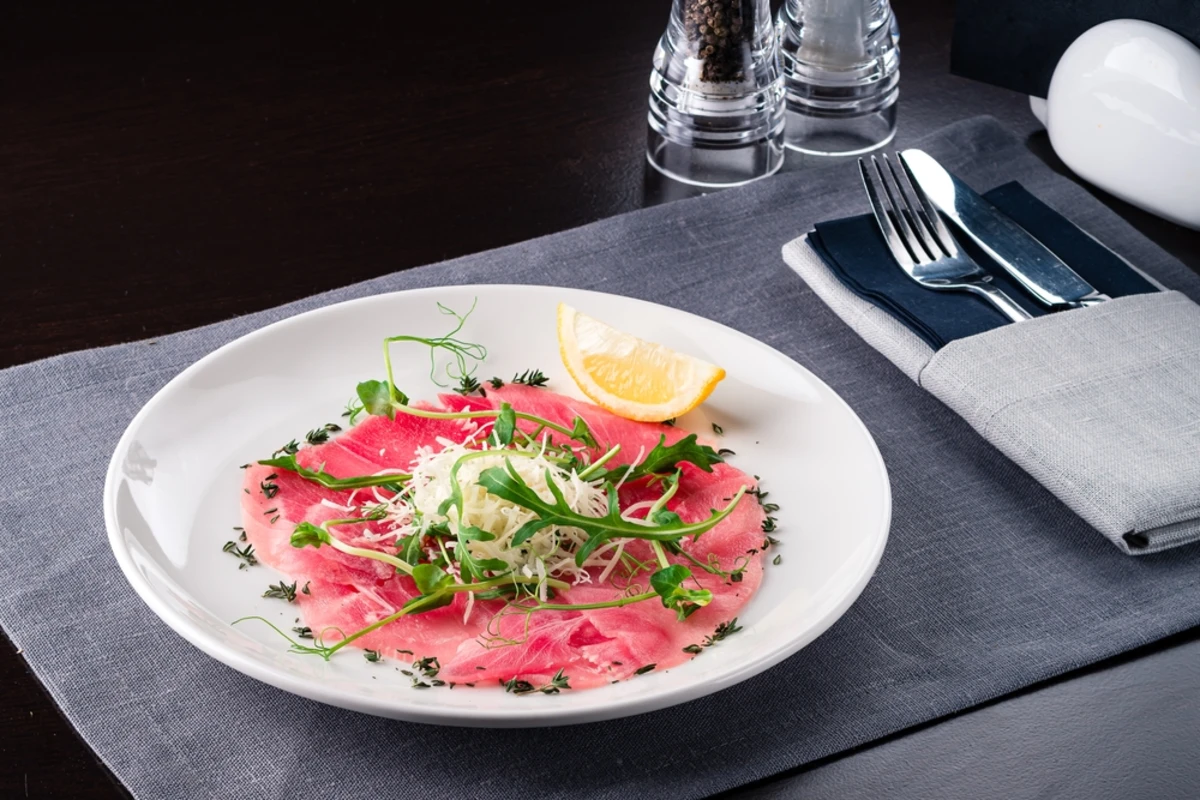
- Plating: Use chilled, flat white plates to show off the colors. Arrange the tuna slices in a neat circle, then mound the arugula in the center and let the Parmesan fall naturally over both. A final drizzle of olive oil and a scatter of thyme leaves add a restaurant‑style finish.
- Garnish: Add a lemon wedge to each plate for guests who like extra acidity. A few flakes of sea salt right before serving can give tiny pops of texture and flavor.
- Portioning: As written, this is a refined appetizer for 4. For a light summer main, divide between 2 plates and serve with a simple green salad or crusty bread on the side.
- Side dishes: Keep sides fresh and simple – maybe a shaved fennel salad, grilled vegetables, or a lightly dressed cucumber salad. You want to complement, not compete.
- Serving temperature: Serve the tuna cool but not icy cold, so its flavor and texture can shine. Pour your white or sparkling wine well‑chilled; if you’re going with Pinot Noir, serve it slightly cool rather than room temperature.
Set the table with nice stemware, put on a relaxing playlist, and you’ve got a relaxed yet sophisticated evening that feels far beyond the effort it took.
Conclusion
Tuna Carpaccio is one of those rare dishes that’s incredibly simple yet feels instantly special – especially when you find the perfect match in your glass. With just a few high‑quality ingredients and 20 minutes in the kitchen, you can create a restaurant‑worthy plate at home and experiment with everything from zesty Sauvignon Blanc to elegant Oregon Pinot Gris or light Pinot Noir.
Next time you’re wondering what wine pairing to try or which wine for Tuna Carpaccio to grab from Total Wine, Trader Joe’s, BevMo, or your neighborhood shop, open Vinomat. The app will help you explore tailored wine recommendations, fine‑tune your preferences, and turn this simple recipe into a signature dish in your own wine‑loving kitchen.